Before a single euro, dollar or pound enters a fund, administrators face a crucial question: who is investing and are they above board? It may appear administrative on the surface, but investor onboarding is one of the most important steps within fund administration. It is here that Anti-Money Laundering (AML) risk is first assessed, marking the first line of defence against fraud and financial crime.
At the heart of investor onboarding are two key processes: Know Your Customer (KYC) and Know Your Business (KYB) checks. These inform how investors are identified, how corporate ownership is verified, and how financial crime risk is understood before capital is accepted.
KYC and KYB form the foundation of investor onboarding as they answer the most fundamental question when it comes to AML compliance: who is really behind the money?
What investor onboarding means in fund administration
Investor onboarding is the process through which a fund administrator or transfer agent identifies, assesses and formally accepts an investor into a fund. A regulatory requirement, it applies to both individual investors and institutional or corporate entities and establishes the foundation for the entire investor relationship. At a minimum, onboarding determines who the investor is, who will ultimately benefit from the investment, and whether this relationship aligns with your firm’s risk appetite and regulatory obligations.
For individual investors, onboarding is driven by KYC. This includes verifying the investor’s identity, screening for sanctions, politically exposed status and adverse media, confirming residential details and understanding the source of funds being invested.
For institutional and corporate investors, the process shifts into KYB. Here, the assessment extends to the legal entity as well as the people behind it. Fund administrators are required to understand corporate ownership and control structures, identify directors and people with significant control, and trace ownership through to the ultimate beneficiaries.
A UK-based individual investing directly into a domestic fund presents a very different risk profile from a corporate entity investing through an offshore subsidiary. A comprehensive investor onboarding process provides the framework to recognise those differences and apply proportionate controls from the outset.
Step 1: Initial investor risk assessment and screening
Investor onboarding typically begins with an initial assessment of risk to set the direction for the onboarding process and determine how much scrutiny is required. That is, whether routine due diligence or enhanced due diligence (EDD) is required due to any red flags that have been identified.
Information is usually gathered from subscription forms, investor questionnaires and initial declarations. Depending on whether the investor is an individual or entity, administrators may review factors such as nationality, jurisdiction, legal form, and high-level source of wealth information. The goal is the flag any early indicators of heightened risk such as exposure to high-risk jurisdictions, complex ownership structures of links to adverse media.
Step 2: Identity verification for individuals and entities
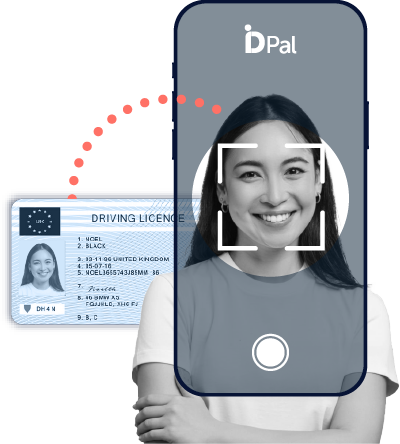
Identity verification processes underpin both KYC and KYB checks. For individuals, this involves confirming personal details through government-issued photo identification and proof of residential address.
For corporate and institutional investors, identity verification extends to the entity itself, and the people behind it. Administrators must confirm the legal existence of the entity, and identify (and, in turn, verify the identities of) directors, people with significant control and beneficial owners. This often involves reviewing company registries, legal documents, and ownership charts. Where entities are registered in other countries, additional steps to certify or translate documents may be required.
Electronic identity verification tools are increasingly used to capture, verify and authenticate these documents to speed up the document gathering and onboarding process without the need for paper-based, manual reviews.
What is typically collected?
- Government-issued photo identification
- Proof of address
- Corporate registry and incorporation documents
- Details of directors, authorised signatories and beneficial owners
- Organisational structure charts
Step 3: PEP, sanctions and adverse media screening
Once identified, individual and institutional investors must be screened against sanctions lists, PEP databases, and adverse media sources.
Sanctions screening seeks to identify whether and investor or connected individual is subject to UK, UN or other relevant restrictions. PEP screening identifies individuals who hold, or have held, prominent public positions, along with their close associates and family members. Adverse media searches look for credible reports of any misconduct or negative news.
A match does not automatically lead to rejection, but it will change the risk profile of an investor and the level of scrutiny required.
Step 4: Enhanced Due Diligence (EDD) for higher-risk investors
When an investor is flagged as higher risk, EDD is applied. This involves additional documentation and verification to address the risks identified. Triggers for EDD include complex corporate structures, PEP status, adverse media or links to high-risk jurisdictions.
EDD may require detailed ownership charts, certified verification of documents and expanded source of wealth evidence. What’s more, EDD cases will require further verification to mitigate any undue risk and are often referred to senior management for review and approval.
Step 5: Risk rating and onboarding approval
Before an investor is successfully onboarded and after collecting the required information for KYC or KYB, there must be a clear, documented decision that the relationship falls within your firm’s risk appetite. For higher-risk cases, this approval may be escalated to senior management rather than being handled at analyst level.
At this stage, the entire onboarding file is vetted and risk indicators evaluated to prevent non-compliant investors from being accepted into a fund.
Many firms apply automated risk scoring models to assign a Red, Amber or Green status based on the information gathered during onboarding. Automated scoring tools can assess a number of factors based on pre-defined rules are customised to your business’ unique risk appetite such as jurisdiction, ownership complexity, screening results and more.
Step 6: Ongoing monitoring and periodic reviews
Onboarding doesn’t end once an investor is accepted. Without ongoing monitoring, onboarding files can quickly become outdated. Ownership structures evolve, individuals move into public or politically exposed roles, jurisdictions shift and investor activity can change. What looked low risk at initial onboarding doesn’t always stay that way.
Ongoing monitoring involves periodic reviews, re-screening against sanctions and PEP lists, and reviewing activity during key events such as redemptions, changes in control or additional subscriptions. Using specialised software such as ID-Pal’s suite of KYB and KYC tools allows fund admins to quickly and automate these checks on corporate and individual investors with a structured, consistent process.
With ID-Pal, you can:
- Replace manual KYC and KYB checks with automation you can trust
- Reduce the risk of non-compliance and human error
- Access global data coverage to validate identities and businesses effortlessly
- Onboard individual and corporate investors into funds faster
- Gain a single view of the customer through an intuitive case-based design
Streamline risk, detect fraud and automate compliance with ID-Pal. Find out more here.