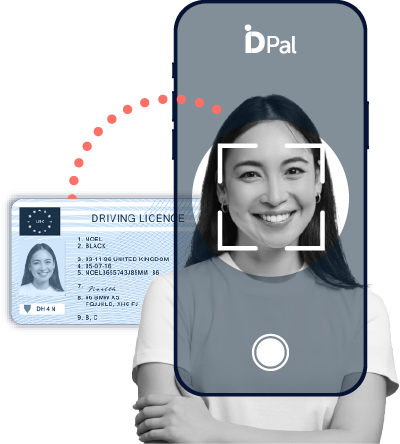
NorthRow, the leading KYB and AML compliance platform, is now part of ID-Pal!
KYB compliance software for faster business checks
ID-Pal’s Know Your Business (KYB) verification platform is the smarter way to verify businesses, identify beneficial owners and make confident onboarding decisions.
Verify and onboard businesses faster
Identify beneficial owners and screen for financial crime risks
Reduce manual reviews for improved operational efficiency
Why KYB compliance software matters more than ever
Regulatory expectations continue to evolve. Authorities increasingly expect organisations to demonstrate that they understand not only the legal entities they onboard but also the individuals who ultimately own, control or benefit from them. At the same time, fraudsters are becoming more sophisticated. Shell companies, nominee arrangements, synthetic identities and opaque ownership structures are commonly used to obscure illicit activity.
Without effective verification processes, organisations can face:
- Increased exposure to money laundering risks and other financial crime
- Greater risk of onboarding sanctioned or high-risk businesses
- Costly fraud losses that could have been prevented
- Regulatory action, fines and increased scrutiny from supervisors
- Reputational damage
- Increased operational costs as compliance teams spend more time on repetitive checks
A strong KYB process helps you identify risks earlier, make informed onboarding decisions and build trusted business relationships with greater confidence.
Fully certified and industry accredited


The business onboarding challenges facing compliance teams
Manual ownership analysis is inefficient
Understanding beneficial ownership structures can be time-consuming. Analysts may spend hours tracing shareholders across multiple jurisdictions, reviewing company filings and documenting relationships. Manual investigations become difficult when ownership chains span numerous entities or countries.
Inconsistent decision-making creates risk
Without standardised workflows, onboarding decisions may vary between analysts, particularly when cases are being reviewed manually. This inconsistency can create compliance gaps and make it difficult to demonstrate governance controls during audits or regulatory reviews.
Poor customer experience is costly
Legitimate businesses expect timely, efficient onboarding. Lengthy requests for documentation, repeated information gathering and prolonged review periods can damage customer relationships and reduce conversion rates, leading to loss of revenue and potentially reputational damage.
Scale KYB compliance globally
Supporting 16,000+ ID documents and 400+ data sources, expand into 250+ jurisdictions faster while maintaining consistent KYB controls across different regions and industries.

A modern approach to business verification - why enterprises choose ID-Pal for KYB software
ID-Pal’s fully configurable KYB verification platform and integrated approach is designed for regulated organisations that need to handle high volumes of business customers while keeping oversight clear, decisions consistent and audit trails complete.
Trusted data sources
End-to-end business verification using 400+ trusted data sources.
Ownership intelligence
Enjoy full visibility on business ownership and control structures.
Directorship checks
Identify and verify company directors.
Beneficial owner analysis
Understand who ultimately owns or controls the business being screened.
Identity verification checks
Verify the identities of directors, PSCs and beneficial owners.
AML and sanctions screening
Check for PEPs and sanctions against international watchlists.
Adverse media monitoring
Screen and monitor for adverse media across a range of channels.
Reporting and case management
Keep every decision traceable with an automated audit trail.
One KYB platform. Complete business due diligence
Whether onboarding multinational corporations, merchants, counterparties or professional clients – organisations can conduct due diligence more efficiently, improve customer experiences and strengthen compliance operations with ID-Pal.
ID-Pal brings business verification, ownership insight and risk screening into a single configurable workflow, replacing manual due diligence with a structured, rules-based approach that keeps onboarding moving.
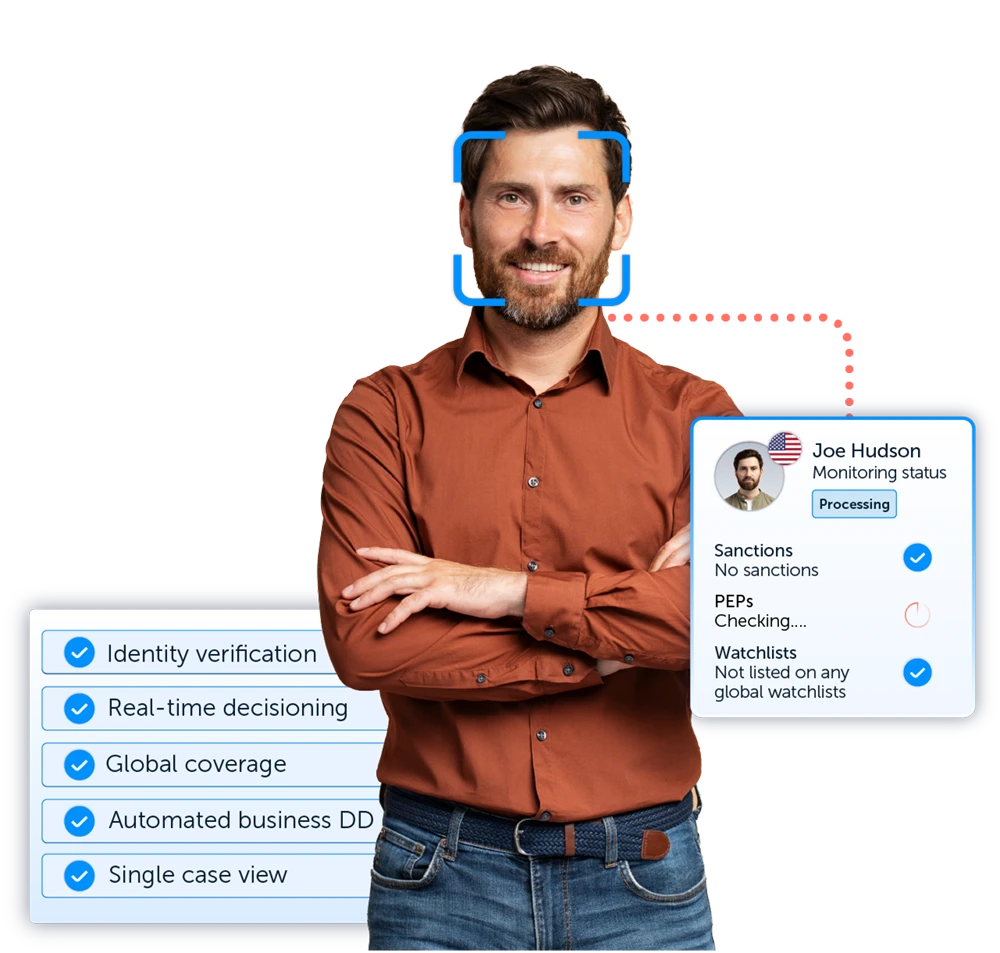
Global sanctions watchlists
Adverse media sources
Daily
Monitoring
refresh rate
Sanctions
updates
Why businesses choose ID-Pal for effective KYB compliance solutions
Achieve effortless compliance with leading KYB software that meets the needs of any business type or jurisdiction and instantly adapts to regulatory changes.
Assess complex corporate structures
Complex ownership models such as holding companies and layered shareholdings can make it difficult to establish who ultimately owns and controls a business. ID-Pal helps teams bring scattered information together, map control relationships and document findings in a clearer, more efficient way, reducing reliance on manual, time-heavy research.
Check and verify high-risk customers
Higher-risk businesses, such as those operating in certain jurisdictions, with politically exposed stakeholders or complex ownership structures, may require enhanced due diligence. Configurable workflows support enhanced due diligence, case escalation and risk-based policies aligned with internal governance requirements.
Support cross-border expansion
International onboarding often comes with uneven access to company registries, differing levels of transparency and varying due diligence standards. A consistent verification framework supports standardised risk assessments across jurisdictions while still accommodating local compliance obligations.
Strengthen existing compliance programmes
ID-Pal complements existing compliance processes by adding automation, workflow orchestration and intelligence capabilities. Teams retain decision-making control while reducing the volume of repetitive manual tasks that slow operations down, freeing up time for more strategic activities.
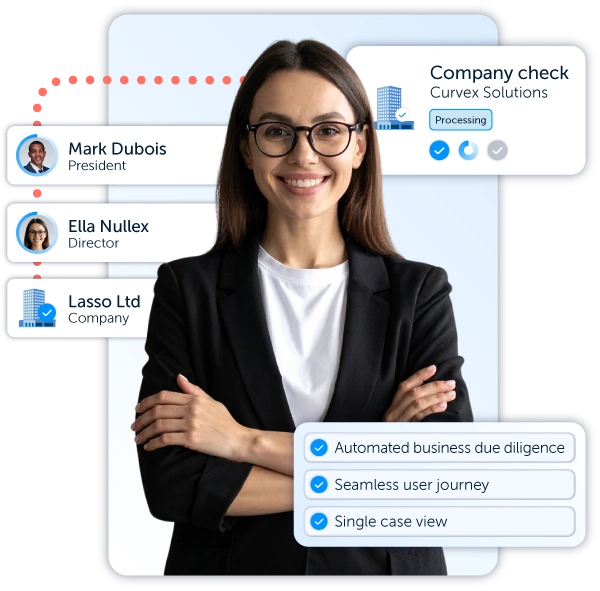
Automate business due diligence
Stay ahead with continuous, automated monitoring of your clients. Our KYB solution tracks changes in ownership, sanctions, PEPs and adverse media, alerting your team to new risks in real time. Continuous monitoring provides greater visibility throughout the customer lifecycle, helping organisations remain informed of changes so they can reassess risk when circumstances evolve.
Trust UBO and PSC identification globally
Access structured ownership data from multiple global sources to identify beneficial owners, map control structures and make sense of complex corporate arrangements through automated UBO and PSC discovery. Our coverage spans more than 250+ jurisdictions worldwide, ensuring compliance wherever your business client is based.
KYB software for seamless business verification: our four-step approach
Using ID-Pal for KYB checks makes it easy for compliance teams to onboard new business clients, streamline workflows and reduce manual effort and only focus on decisions that matter, not repetitive checks.
Make business onboarding easier in just four simple steps:
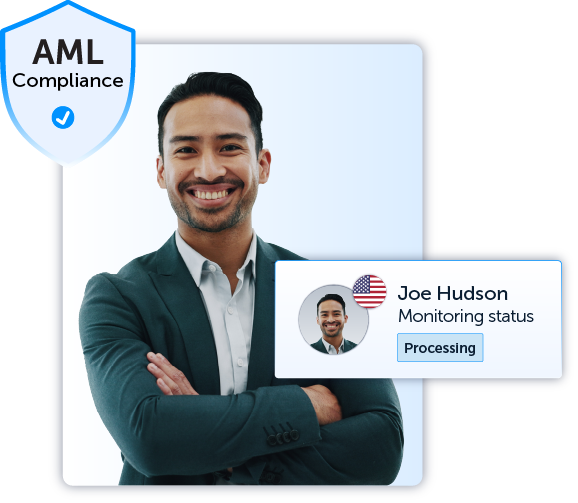
Step one: capture information
Collect company identifiers, registration details and supporting documentation through configurable onboarding journeys, including a client self-service portal option.
Step two: verify the business
Validate corporate information against trusted, agnostic global data sources.
Step three: understand ownership
Identify directors, shareholders and beneficial owners.
Step four: assess and approve
Apply screening policies, conduct enhanced reviews where required and maintain an audit trail of decisions.
Focus on real risk, make faster decisions and scale confidently – get a demo of our KYB solution today
Have questions about using ID-Pal for business verification and KYB checks? Speak with our team to see how we can strengthen enhanced due diligence, speed up validation times and simplify KYB compliance.
Fully customisable rule-based engine to meet your specific KYB requirements
Automated checks and due diligence
Verify businesses globally
How we helped Open Banking meet their KYB requirements
Helping Open Banking to set the standard for securely managing customer financial data
Open Banking needed a technology partner to deliver straightforward client onboarding experiences for their third-party developers who wanted to gain access to the Open Banking network. NorthRow (now an ID-Pal company) worked with Open Banking to deliver an identity verification solution that met their demands and particular security and customer requirements.

Deep dive into KYB compliance with our knowledge base

KYB checks: the ultimate handbook
For compliance professionals in regulated firms and complex industries across the world, the battle against fraud is an ongoing challenge that demands vigilance, expertise, and proactive measures.

PEPs, sanctions and adverse media guide
Sanctions, politically exposed persons, and adverse media checks are often treated as separate boxes to tick. In reality, they each point to different risks, and it’s how they work alongside each other that gives them value.

A complete guide to financial crime and AML compliance
This guide brings together the key elements of financial crime and AML compliance to give a clear, practical view of what AML looks like today and what it takes to get it right.
Frequently asked questions
What is Know Your Business (KYB) compliance?
Know Your Business is the process organisations use to verify the identity, legitimacy and ownership of corporate customers.
KYB forms a critical component of anti-money laundering (AML), counter-terrorist financing (CTF) and broader financial crime prevention frameworks.
While Know Your Customer (KYC) focuses on verifying individuals, KYB extends these principles to legal entities and the people connected to them.
A comprehensive KYB programme typically seeks to answer several key questions:
- Does the company legally exist?
- Is the business active and operating legitimately?
- Who owns or controls the company?
- Who benefits financially from its activities?
- Are any associated individuals subject to sanctions or heightened scrutiny?
- Does the business present risks requiring enhanced due diligence?
- How can the organisation remain aware of material changes after onboarding?
Why does KYB matter?
Regulators increasingly expect firms to verify both the business entity and the people behind it. This includes understanding ownership structures, identifying beneficial owners, and monitoring ongoing risk.
Traditionally a KYB verification platform’s processes are often manual, fragmented, and slow, making them costly to maintain and difficult to scale. As a result, businesses face increased compliance risk, inconsistent audit trails, and poor onboarding experiences for legitimate customers.
What does KYB include?
KYB includes the checks used to verify that a business is legitimate, active and safe to onboard. This typically involves confirming company registration details, business status, registered address, directors and ownership structure.
A strong KYB process should also include UBO identification to understand who ultimately owns or controls the business, director checks, and identity verification for relevant individuals such as directors, beneficial owners or authorised representatives.
KYB also includes AML checks, such as screening the business and associated individuals against PEPs and sanctions lists, adverse media sources and other risk indicators. Ongoing monitoring is also important, as a company’s ownership, directors, status or risk profile can change after onboarding.
In short, KYB helps businesses verify both the company itself and the people behind it, giving compliance teams a clearer view of risk before and after onboarding.
Is KYB different from KYC?
Yes. KYC, or Know Your Customer, is the process of verifying an individual’s identity. KYB is the process of verifying a company or business entity and understanding who owns, controls or benefits from it.
In practice, KYC usually focuses on checks such as identity document verification, biometric facial matching, liveness testing, address verification and AML screening against sanctions, PEPs and adverse media lists. KYB goes further by checking business registration details, company status, directors, shareholders, beneficial owners, ownership structures and, where required, the individuals behind the business.
The two processes are closely connected. A business may pass basic company checks, but regulated firms often still need to verify the people associated with that business, such as directors, UBOs or authorised representatives. This means KYB will often include KYC checks as part of the wider business verification process.
For regulated businesses, the difference matters because onboarding a company introduces risks that do not exist in the same way when onboarding an individual. These can include shell companies, complex ownership structures, hidden beneficial ownership, sanctioned entities, fraudulent business applications or changes in company status after onboarding.
A strong compliance process should therefore treat KYC and KYB as related but distinct controls. KYC helps confirm that an individual is who they claim to be. KYB helps confirm that a business is legitimate, active, properly registered and not exposing your organisation to unacceptable financial crime or regulatory risk.
What are the benefits of using an automated KYB solution?
An automated KYB solution like ours will streamline onboarding, reduce manual effort and uncover hidden ownership or risk faster than traditional, manual checks by utilising KYB compliance tools. It ensures consistent, defensible decisions, provides real-time alerts for emerging risk, and keeps your compliance team audit-ready while allowing your business to scale efficiently.
Why does Ultimate Beneficial Owner (UBO) identification matter?
UBO identification matters because it helps businesses understand who ultimately owns, controls or benefits from a company. A business may appear legitimate at company level, but the real risk often sits behind the business, within its ownership structure or through controlling individuals.
A UBO, or Ultimate Beneficial Owner, is typically a person who directly or indirectly owns or controls a meaningful share of a company, or who otherwise exercises significant influence over it. Identifying these individuals helps regulated businesses check that they are not onboarding companies linked to sanctioned individuals, politically exposed persons, financial crime, fraud, corruption or hidden ownership structures.
Without UBO identification, a company can be used to obscure who is really behind a transaction or business relationship. This is a common risk in money laundering and other forms of financial crime, where bad actors may use shell companies or layered corporate structures to avoid scrutiny.
Save time and onboard faster with automated KYB checks