AML and KYC for wealth managers
Automate KYC, KYB and AML checks to onboard wealth clients faster, reduce compliance risk, and resolve the trusts, holding companies and family-office structures behind every relationship.
KYC, KYB and AML compliance in one configurable platform
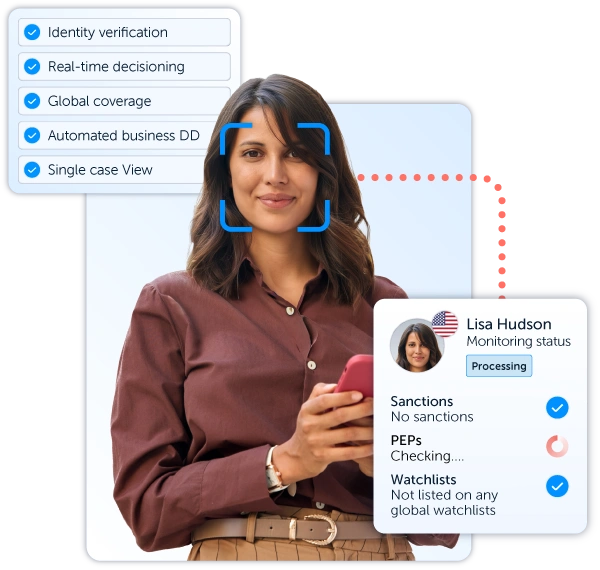
PEP, sanctions and adverse media screening, kept live after onboarding
250+ jurisdictions and 16,000+ ID documents
KYC and AML screening for wealth managers
How does ID-Pal support wealth managers?
ID-Pal delivers KYC, KYB and AML compliance in a single configurable platform, which matches the layered nature of wealth onboarding.
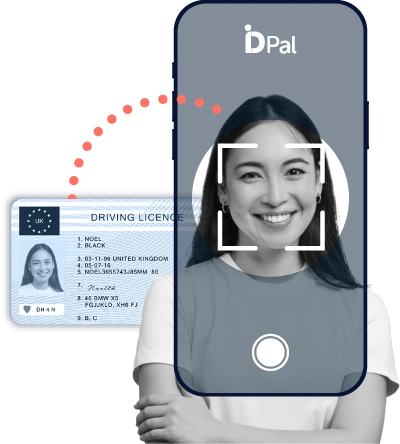
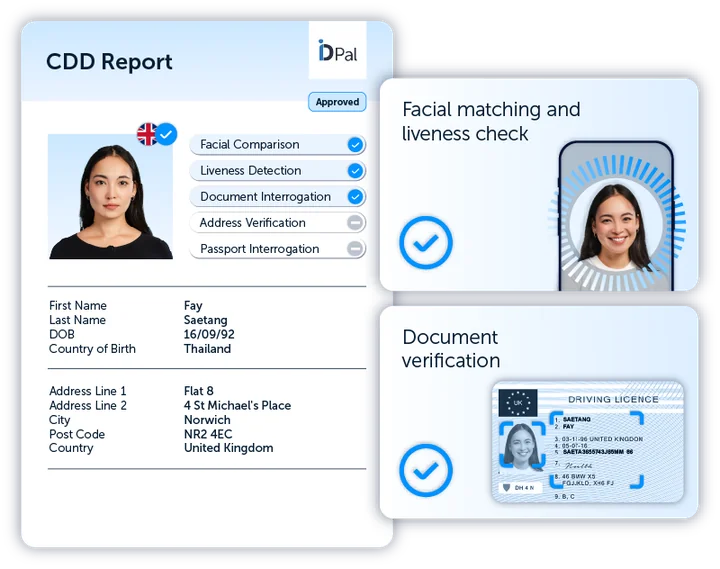
For the individual, it applies document authentication across 16,000+ identity documents, thousand-dimension biometric facial matching, and independently certified liveness detection (iBeta Level 1 and Level 2). For AML, it screens against PEP, sanctions and adverse media sources and keeps monitoring the relationship over time, so risk is flagged in real time rather than at a periodic review.
Comply with regulations in any jurisdiction
Verify individuals and businesses effortlessly
Where a trust, holding company or other entity sits behind a client, the same platform resolves that structure through its KYB suite, screening financial and shareholder information and identifying the ultimate beneficial owners even for the most complex structures. That enterprise KYB depth followed the integration of NorthRow’s KYB and AML compliance platform into ID-Pal. Because it is one workflow, the individual, the entities behind them and the ongoing screening sit in a single case view with one audit trail, and the checks align with frameworks such as MiFID II and the firm’s fiduciary obligations.
The platform draws on global market-leading data sources across 250+ jurisdictions, is ISO 9001 and ISO 27001 certified and GDPR compliant, and can be customised and deployed quickly, out of the box or via API and SDK.
Fully certified and industry accredited


AML and KYC for wealth managers: key takeaways
Effective AML and KYC help wealth managers assess and monitor risk without delaying onboarding. Explore the key takeaways for verifying entities, understanding ownership structures and monitoring ongoing risk.
What to shortlist for
A wealth manager’s shortlist should favour platforms that verify individuals to a high standard, screen thoroughly for PEP, sanctions and adverse media, resolve beneficial ownership through complex structures, and keep screening live after onboarding.
Complex structures, higher PEP risk
Wealth clients bring complex, cross-border structures (trusts, holding companies, family offices) and a higher incidence of politically exposed persons, so onboarding needs KYC on the individual and KYB on the entities behind them.
One configurable platform
ID-Pal delivers KYC, KYB and AML compliance in one configurable platform, with UBO discovery on the most complex structures following the integration of NorthRow’s KYB platform, across 250+ jurisdictions and 16,000+ documents.
Five things that matter
The strongest platforms combine five things: verification quality, screening depth, structure and UBO resolution, ongoing monitoring and a defensible audit trail.
All features rolled into one solution
What the platform covers
Explore the features and capabilities for wealth managers available via the ID-Pal platform.
| Capability | What it does |
|---|---|
| Document Authentication | Verifies government-issued identity documents, across 16,000 or more document types |
| Biometric facial matching | Thousand-dimension facial matching confirms the client is the document holder |
| Liveness detection | Independently certified to iBeta Level 1 and Level 2, so a photo or replay does not pass |
| Address verification | Electronic verification against trusted data sources, removing separate proof of address |
| KYB and UBO resolution | Trust, holding company and family-office entity confirmation, with UBO and PSC identification through intermediate structures, across 250 or more jurisdictions |
| AML screening | PEP, sanctions and adverse media, on individuals and entities |
| Ongoing monitoring | Screening stays live across the relationship, not just at onboarding |
| Case management and audit trail | Every check, decision and piece of evidence in a single case view |
| Deployment | Out of the box, via API and SDK, or through a native Salesforce integration |
Book a walkthrough of our IDV and AML solution for wealth managers
Supporting 16,000+ ID documents and 400+ data sources, expand into 250+ jurisdictions faster while maintaining consistent controls across regions and customer types.

Trusted by leading wealth management firms
ID-Pal helped us achieve our goal of onboarding new clients completely digitally and, for standard risk cases, in around 30 minutes, without any human intervention. ID-Pal’s facial matching, liveness and biometric checks have proved very robust and secure. It has considerably reduced the time it takes to onboard new clients onto our wealth platform.
Richard Gerrard, Head of Operations
Ardan International
The AML compliance platform for wealth managers
What are the biggest AML challenges for wealth managers?
Wealth managers onboard clients who are often high or ultra-high net worth, whose wealth arrives through layered, cross-border structures and who carry a higher likelihood of being politically exposed. The verification is rarely a single passport check. It is confirming the individual, understanding and evidencing where their wealth and the specific funds come from, and resolving the trusts, holding companies and family-office entities that sit around the relationship.
Several pressures compound the work. Regulatory demands to track beneficial ownership and meet cross-border obligations keep rising. Fragmented, outdated data systems make ongoing due diligence harder. Clients expect a fast, low-friction, transparent experience, including on ESG. And monitoring has to be continuous, because a client who was clean at onboarding can become a risk later. When this is handled across manual or disconnected tools, it is slow where it needs to be smooth and thin where it needs to be deep.
AML for wealth managers explained
What should a fund administrator's verification process cover?
A wealth onboarding process should confirm the individual, screen them properly, resolve the structures behind the relationship, then keep all of it under monitoring and evidenced. The five components:
Individual client verification
Document authentication, biometric facial matching, liveness detection and address verification, so the client is confirmed as real and correctly identified.
AML screening
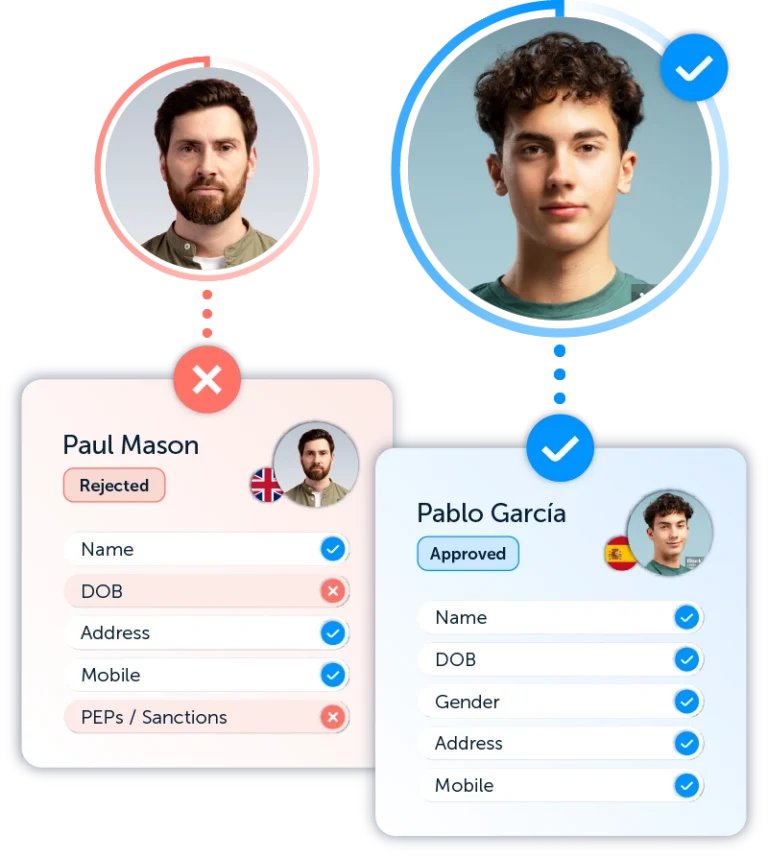
Screen against PEP, sanctions and adverse media sources, with the depth wealth clients require given the higher PEP incidence, and record the outcome.
Structure and UBO resolution
Where a trust, holding company or family-office entity sits behind the client, verify the entity and identify the ultimate beneficial owners, even in complex structures.
Ongoing monitoring
Keep screening live so a change in a client’s status, or a new sanctions or adverse-media match, is caught while the relationship is active, rather than at the next periodic review.
Audit trail
Hold every check, decision and piece of evidence in a single case view, so the firm can evidence a specific onboarding decision when a supervisor asks.
Customer success stories
See how wealth managers use ID-Pal to simplify client verification and onboarding
In practice: Ardan International
Ardan International, an international wealth management platform, used ID-Pal to enhance its onboarding while maintaining stringent fraud prevention, moving to a seamless, secure digital process. It is a useful reference point for managers weighing the same balance between a smooth client experience and real compliance depth.
Complying with changing AML regulations
When does a wealth client need enhanced due diligence?
Most clients are handled with standard due diligence, but wealth management sees a higher share of cases that need enhanced due diligence, and getting that judgement right, then evidencing it, is central to a defensible file. Enhanced due diligence commonly applies to a politically exposed client, a client connected to a higher-risk jurisdiction, or one whose wealth sits inside a complex or opaque structure, all of which are routine in wealth management.
Enhanced due diligence means going further: establishing and evidencing source of wealth and source of funds, obtaining senior sign-off, and applying closer, more frequent monitoring. A process that cannot tell standard and enhanced cases apart, and show which was applied to which client, is exposed when a supervisor reviews a file. The precise triggers depend on the client and the firm’s supervisor, so firms should confirm against current guidance.
KYB vs KYC for wealth managers
How is KYB different from KYC for a wealth manager?
KYC verifies the individual client. KYB verifies the entities behind them, a trust, holding company or family-office structure, and identifies who ultimately owns and controls those entities. Wealth management often needs both, because the money frequently sits inside a structure whose beneficial owners have to be identified and screened.
| KYB (the individual client) | KYC (the structures behind them) | |
|---|---|---|
| What it verifies | The client as a person | The trust, company or family-office entity |
| Core checks | Document, biometric, liveness, address, PEP and sanctions screening | Entity status, UBO and PSC identification, entity screening |
| Key question answered | Is this client who they claim to be? | Who ultimately owns and controls the structure? |
Running both on one platform gives a single case view and one audit trail across individual and corporate clients, rather than reconciling separate tools.

Choosing the right solution
What should a wealth manager ask when shortlisting a platform?
How thoroughly do you screen for PEPs, sanctions and adverse media, given our client base?
Can you verify the individual and resolve the trust, holding company or family-office entity behind them in one workflow?
How deep does UBO resolution go when control runs through several intermediate entities?
How does ongoing monitoring surface a change in a client’s risk, and how quickly?
What does the audit trail look like when a supervisor asks us to evidence a specific onboarding decision?
Frequently asked questions
Why is wealth-management onboarding more complex than standard KYC?
Does a wealth manager need KYB as well as KYC?
Often, yes. Where a trust, company or family-office entity sits behind a client, the entity has to be verified and its beneficial owners identified, which is KYB, alongside the KYC on the individuals.
How does ID-Pal ensure compliance with AML regulations?
ID-Pal screens against global watchlists, PEP databases and sanctions lists, with adverse media checks, and keeps those checks current. Screening continues over the life of the relationship, so a change in a client’s status is picked up while it matters.
How does ID-Pal handle beneficial ownership in complex structures?
The KYB suite screens financial and shareholder information and identifies ultimate beneficial owners even for complex, multi-layered structures, with the depth that followed the integration of NorthRow’s KYB platform into ID-Pal.
What does ID-Pal do with our data?
ID-Pal adheres to rigorous data, privacy and security standards and is ISO 27001 and ISO 9001 certified, with data encrypted in transit and at rest. It uses client data only to complete the verification checks, and can share its list of sub-processors for transparency.
How fast can a wealth manager be up and running?
ID-Pal can be customised and deployed in as little as a day, out of the box or via API and SDK, without complex integrations.
Find out how we can help your business grow