

UBO stands for Ultimate Beneficial Owner. It refers to the individual (or individuals) who ultimately owns or controls a company or legal entity. A UBO is the person who benefits from ownership, such as receiving profits or exercising decision-making control, even where ownership is held through layers of intermediaries or complex corporate structures. Depending on the jurisdiction, a UBO is typically defined as someone who owns or controls a significant share of a company (commonly 10–25%) or holds voting rights.
Identifying the UBO is critical for transparency, anti-money laundering (AML), and fraud prevention. It helps prevent the misuse of corporate structures for illicit purposes and supports accountability in business relationships. In practice, identifying and verifying UBOs can be complex and time-consuming, particularly where ownership structures span multiple jurisdictions or entities.
The importance of identifying UBOs during onboarding is well established. A widely reported case involving Javad Marandi highlighted how funds linked to a money laundering scheme were moved through companies where beneficial ownership was obscured. Investigations by the National Crime Agency (NCA) uncovered links between overseas entities and illicit financial activity, resulting in the confiscation of £5.6 million connected to individuals involved. Cases like this illustrate the risk of failing to properly identify who ultimately controls an entity.
How to identify and verify UBOs with KYB/KYC
To identify a UBO, organisations need to apply KYB (Know Your Business) and KYC (Know Your Customer) processes, supported by structured Customer Due Diligence (CDD). This involves collecting, verifying, and monitoring information about both the business and the individuals behind it.
While processes vary, the standard approach includes:
Obtain relevant documents: Collect company formation documents, shareholder registers, articles of association, and other required filings.
Review ownership structure: Analyse the ownership chain to understand how the entity is controlled, including any intermediary companies.
Identify significant shareholders: Determine which individuals or entities meet ownership or control thresholds based on regulatory or internal criteria.
Request UBO information: Collect key details for each UBO, such as full name, date of birth, residential address, and nationality.
Validate UBO information: Cross-check submitted data against independent and reliable sources, including public records and trusted databases.
Enhanced Due Diligence (EDD): Apply additional scrutiny for high-risk cases or complex structures, including deeper investigation or third-party intelligence sources.
Ongoing monitoring: Continuously review UBO information to reflect changes in ownership, sanctions status, or risk profile over time.
How should UK firms verify Ultimate Beneficial Owners?
Under the UK’s Money Laundering Regulations, firms within the regulated sector must take reasonable measures to identify and verify the identity of Ultimate Beneficial Owners (UBOs) as part of Customer Due Diligence (CDD). The objective is not simply to record who owns a business, but to establish who ultimately owns or controls it and to have confidence that the information is accurate.
A risk-based approach should be applied throughout the verification process. While the level of scrutiny will depend on the nature of the customer and the risks involved, UK firms should generally:
Confirm the ownership and control structure
Start by obtaining reliable information about the business, including its legal name, registration details, directors, shareholders, and Persons with Significant Control (PSC), where applicable. This helps establish the ownership chain and identify individuals who ultimately exercise ownership or control, whether directly or indirectly.
Verify the identity of each UBO
Once the UBOs have been identified, firms should verify their identities using independent and reliable sources. This may include government-issued identity documents, biometric identity verification, proof of address, and trusted electronic identity verification services. The verification process should provide sufficient confidence that the individual is who they claim to be.
Cross-check information against independent sources
Information supplied by the customer should be validated against authoritative sources wherever possible. Depending on the business type and jurisdiction, this may include Companies House records, corporate registries, sanctions lists, politically exposed person (PEP) databases, adverse media screening, and other trusted commercial data sources.
Apply Enhanced Due Diligence where appropriate
Additional verification measures should be taken where higher risks are identified. This may include businesses with complex ownership structures, overseas entities, high-risk jurisdictions, politically exposed persons, or customers where the source of funds or source of wealth requires further investigation.
Keep ownership information up to date
UBO verification is not a one-off exercise. Firms should carry out ongoing monitoring throughout the customer relationship to identify changes in ownership, control, sanctions exposure, or other risk factors. Periodic reviews and event-driven updates help ensure customer records remain accurate and compliant.
Using ID-Pal to verify UBOs
For many organisations, identifying UBOs is not straightforward. Traditional approaches often rely on complex corporate structure diagrams that require manual interpretation, slowing down onboarding and increasing the risk of oversight.
ID-Pal’s solution is designed to simplify this process. It enables compliance teams to identify Ultimate Beneficial Owners and company directors globally, without needing to manually interpret complex ownership structures. The platform allows users to trace ownership, extract key attributes such as company details and control relationships, and verify identities through a structured workflow.
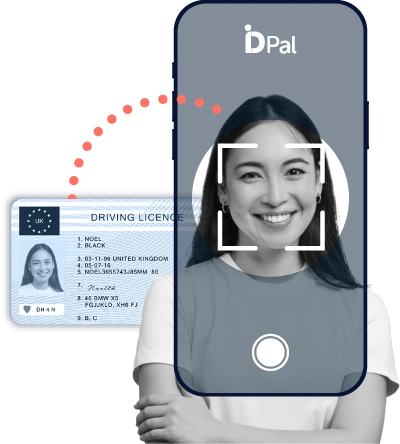
The verification process includes identity checks, document validation, liveness testing, and address verification, all delivered through a progressive web app. This reduces manual effort and supports a more consistent, auditable onboarding process.
If you would like to learn more about simplifying beneficial ownership verification, you can book a demo.