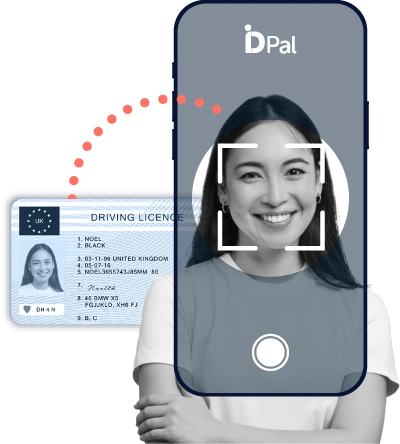


Identity fraud across the UK and EEA has shifted quickly over the past two years, driven by faster attack cycles, lower-cost tooling and generative AI that now makes impersonation far easier to scale and refine. What once required technical skill and time can now be produced in minutes, putting new pressure on onboarding systems and the teams responsible for controlling risk.
In this article, we examine the identity fraud trends shaping 2026 and look at operational eKYC approaches being used by compliance teams managing remote customer onboarding.
What has changed in identity fraud in 2026?
Key findings:
- UK financial services compliance spend has reached £38.3 billion a year, up 12%, and 98% of businesses have adopted or plan to adopt AI and machine learning for financial crime screening by 2026
- The UK public sector delivered £480 million in audited counter-fraud benefits in 2024–25, a 28.5% year-on-year increase
- Consumers are becoming more aware of AI-driven fraud and more willing to accept stronger identity checks if it improves security
Identity fraud is the use of stolen, fake or manipulated identity information to access services, move money or commit fraud under a false identity. In 2026, the challenge of combatting fraud is being shaped by three connected pressures: growing consumer awareness of deepfake and impersonation risks, rapid adoption of AI-driven screening and rising compliance costs for businesses.
The cost pressure is significant. Research by Oxford Economics found that UK financial services now spend £38.3 billion each year on compliance, with costs rising 12% in 2023. Most compliance teams are investing in AI and machine learning to strengthen and scale customer screening.
At the same time, the UK public sector is showing that modern counter-fraud tools can deliver measurable impact. The Public Sector Fraud Authority recorded £480 million in audited counter-fraud benefits in 2024–25, up 28.5% on the previous year.
According to Deloitte’s Connected Consumer Survey, public awareness of AI-driven fraud is growing, alongside concern around privacy and digital trust. Unsurprisingly, consumers are also becoming more willing to accept stronger identity checks when they believe it improves security and protects their data. People want to feel protected during identity verification, not just processed quickly.
Why identity fraud is escalating
Deepfakes and AI-generated deception are making impersonation easier to scale in 2026. Rising compliance costs are pushing organisations towards automation and rapid adoption of AI and machine learning tools to strengthen identity fraud detection and financial crime screening.
That is why multi-layered identity verification matters. No single check catches everything. Document verification, biometrics, liveness detection, database checks and AML screening each help identify different types of risk.
In 2026, the fraud challenge is not simply more attacks. It is faster, cheaper impersonation combined with growing expectations for seamless remote onboarding.
Key identity fraud attack types targeting customer onboarding in 2026
To understand where identity fraud happens, it helps to think about customer onboarding in four stages:
- Capture – when the customer submits information or documents
- Validate – when the system checks the evidence
- Decide – when an approval or rejection decision is made
- Monitor – when ongoing checks continue after onboarding
If your onboarding process relies on a single check, attackers will eventually learn how to bypass it. Multi-layered identity verification makes fraud much harder by forcing attackers to defeat multiple independent controls.
Document fraud
Document fraud involves the use of forged, tampered or stolen identity documents. Common warning signs include mismatched data, inconsistent fonts and image-quality issues.
Modern document verification technology can analyse security features and subtle alterations at a level that is difficult to replicate consistently through manual review alone. This helps identify manipulation that could easily pass a visual inspection.
Biometric spoofing and deepfake attacks
Fraudsters increasingly use replay videos, printed photos and AI-generated synthetic faces to bypass biometric verification checks.
Passive checks on their own are often not enough. Active liveness testing and injection attack detection help confirm that the person on camera is real, physically present and not being digitally inserted into the verification session. Biometric face matching then checks whether that live person matches the document image provided.
Different identity verification providers approach liveness detection in different ways, but the core principle remains the same: biometric checks should form part of a wider, risk-based verification process rather than acting as a single gatekeeper.
Synthetic identity fraud
Synthetic identity fraud involves creating a fake identity using a mixture of real and invented information. For example, a genuine National Insurance number combined with a false name and address may pass basic database checks.
Detecting synthetic identities requires multiple layers of verification, including cross-checking trusted data sources, identifying inconsistencies and flagging profiles that lack a credible digital footprint.
Account takeover (ATO)
Account takeover happens when a fraudster gains unauthorised access to an existing verified account.
The risk does not end once onboarding is complete. Ongoing monitoring and step-up re-authentication during higher-risk actions, such as changing payment details, help reduce the opportunity for exploitation.
Mule onboarding
Mule accounts are opened specifically to move or launder illicit funds. Weak identity verification directly weakens an organisation’s AML controls.
Screening against sanctions lists, politically exposed persons (PEP) databases and adverse media during onboarding remains one of the strongest first lines of defence.
AI and machine learning technologies are expected to play an increasingly important role in reducing fraud losses and improving detection rates, although results will always depend on the quality of implementation and ongoing monitoring.
Operational compliance approaches in 2026: KYC, KYB and beyond
As fraud tactics evolve, the operational side of identity verification is under more pressure to keep pace without slowing onboarding down. Most organisations are moving away from single-point checks and towards layered, risk-based workflows that combine KYC, KYB and ongoing monitoring into one connected process.
KYC in practice: strengthening individual identity checks
Know Your Customer (KYC) processes remain the foundation of remote onboarding, but the way they are applied has shifted. Document verification is now paired more consistently with biometric checks and liveness detection, reducing reliance on static data alone. Rather than treating KYC as a one-off gate, many teams now run it as a sequence of checks that test consistency across multiple signals. Identity data, document authenticity and live interaction all feed into the final decision, helping to surface manipulation that would be missed in a single-step review.
KYB: understanding the business behind the customer
Know Your Business (KYB) has become just as important as individual identity verification, particularly in sectors exposed to financial crime risk. Fraudulent or opaque business structures are often used to open accounts that appear legitimate at first glance. KYB processes now tend to combine company registry data, ownership structures and director verification with sanctions and adverse media screening. The focus is on linking the legal entity to real individuals and understanding control relationships that may sit beneath the surface.
Risk-based workflows
Instead of treating every applicant the same way, onboarding flows are increasingly shaped by risk signals. Lower-risk users may move through a lighter verification path, while higher-risk cases trigger additional checks such as enhanced document review or step-up authentication. This approach helps reduce friction for genuine users while still maintaining stronger controls where patterns look unusual or inconsistent. It also allows compliance teams to focus attention where it matters most rather than spreading resources evenly across all applications.
Ongoing monitoring after onboarding
Verification does not stop once an account is approved. Continuous monitoring has become a standard part of KYC programmes, particularly for higher-risk customers or accounts involved in financial activity. Behavioural changes, unusual transaction patterns and sudden updates to personal or business details can all indicate account takeover or mule activity. Bringing these signals into a live monitoring layer helps teams respond faster when risk levels change after onboarding.
Meeting the identity fraud challenge in 2026
Defending against identity fraud in 2026 tends to come down to how well controls work together rather than how strong any single check appears on its own.
A layered approach tends to work best. Document verification sets a foundation by checking authenticity and structure, while biometric checks confirm the person interacting with the system matches the identity being presented. Liveness detection adds another signal by helping distinguish between a real person and synthetic or replayed inputs.
Database screening still plays a key role, particularly when cross-referencing identity data against trusted sources. This is where inconsistencies often surface, especially in synthetic identity cases where fragments of real and fake data are stitched together.
Ongoing monitoring also matters once onboarding is complete. Behavioural changes, unusual account activity and high-risk requests can all signal account takeover attempts. Step-up authentication during sensitive actions adds a layer of friction at the right moments without slowing down everyday use.
Fraud tactics are evolving quickly, but so are detection methods. The organisations that perform best tend to focus less on adding isolated tools and more on how those tools interact across the full customer lifecycle.