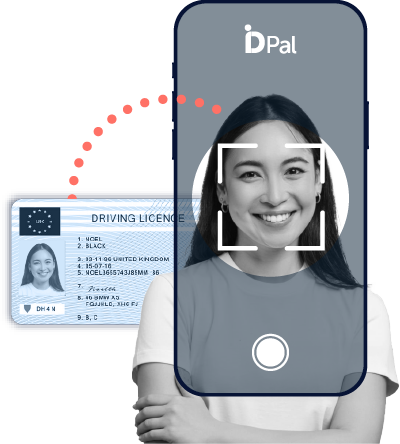


In an age where financial transactions happen in seconds and fraudsters are increasingly sophisticated, verifying who your customers really are has never been more important. For regulated businesses in the UK, identity verification (ID&V) is a frontline defence against fraud, money laundering, and reputational risk.
Yet, many firms still rely on manual or outdated ID&V processes that slow onboarding, frustrate customers, and strain internal teams. The shift to digital and remote verification is changing that, allowing businesses to meet regulatory obligations while providing a faster, smoother, and more secure experience for clients.
This blog explores how modern digital ID&V tools and remote onboarding can protect your business, improve operational efficiency, and keep customers happy.
Table of contents
▸ What is customer identity verification (ID&V)?
▸ A new era of remote verification
▸ How manual customer verification is harming your business
▸ The costs of manual ID&V processes
▸ How poor ID&V processes fail customers – and your business
▸ The benefits of digital ID verification tools
▸ Digital ID&V FAQs
What is customer identity verification (ID&V)?
Identity and Verification (ID&V) refers to the process of confirming an individual’s identity to ensure they are who they claim to be. This is a critical component of compliance within regulated industries, particularly in preventing fraud, money laundering, and financial crime. ID&V combines document verification, biometric authentication, and real-time data checks to validate personal details and detect potential risks.
Verifying a customer’s identity might seem straightforward, but in practice, it’s one of the biggest pain points compliance managers face. Fraudsters are more sophisticated than ever, regulations are tightening, and customer expectations for seamless onboarding are sky-high. If your ID&V process is slow, inaccurate, or full of friction, it’s not just frustrating – it’s a risk to your business.
One of the biggest challenges in ID&V is balancing security with speed. Traditional methods like manual document checks take time, introduce human error, and can frustrate legitimate customers. On the other hand, fully automated solutions that lack robust fraud detection leave gaps for bad actors to exploit. A hybrid approach—leveraging AI-driven document verification alongside human oversight – helps strike the right balance, ensuring accuracy without bottlenecks.
Deepfake technology and synthetic identities are also making it harder to spot fraud. Liveness detection and biometric verification are now essential in preventing impersonation attacks. Simply collecting a photo ID isn’t enough, advanced ID&V solutions use facial recognition, motion analysis, and multi-factor authentication to confirm that the person onboarding is real and present.
Another challenge is meeting evolving regulatory requirements. UK regulators are increasing scrutiny on ID&V processes, and firms must be able to demonstrate a clear audit trail. Automated ID&V tools that log every check, decision, and document in a secure, tamper-proof manner make compliance far easier. They also provide real-time risk scoring, so higher-risk applicants go through enhanced due diligence while low-risk customers onboard quickly.
Firms that treat ID&V as a compliance tick-box will struggle. The right technology not only ensures compliance but protects your business from fraud, improves customer experience, and reduces operational strain. If your ID&V process is slow, outdated, or inconsistent, now is the time to rethink it.
A new era of remote verification
Technology and improved digital infrastructure continue to advance, regardless of sector, but some have adapted and moved to digital onboarding quicker than others. Some would say the slow adoption has been due to the absence of a regulatory body requiring that client onboarding needs to be done this way. Others may be concerned about business interruption or cost. However – 2020 drove rapid change to create a new norm.
This new norm is driven by 3 key areas:
- Customer demand: An example of customer demand is evidenced in the growth of the number of challenger banks. The digitisation of customer identification and verification is prioritised in order to achieve competitive advantage rather than seen as just an overhead cost.
- Regulatory compliance: Regulatory compliance will continue to be a focus area and the need to comply with existing and emergent regulatory and industry initiatives continue. Businesses will need to be efficient and build their processes to minimise costs when developing solutions for onboarding, remediation and monitoring.
- Cost rationalisation: Given recent trends, and the current economic situation, cost reduction and rationalisation are an important focus. The adoption of automation will be key; digital onboarding and verification will support a smaller and focussed team that can implement the initial process and then focus on monitoring and remediation of exceptions or incidents that require expertise.
How manual customer verification is harming your business
Manual customer verification may seem like a reliable approach to ensure accuracy and security, but in reality, it can significantly hinder your business’ growth and efficiency. Here’s a closer look at the hidden costs of sticking to outdated processes and why it’s time to embrace a better solution.
One of the most glaring issues with manual verification is its time-consuming nature. The process often takes hours or even days to complete, creating unnecessary delays for both your customers and your team. This slow pace can frustrate customers, especially in industries where fast onboarding is a key competitive advantage.
In addition to being slow, manual verification is prone to human error. Even the most diligent team members can make mistakes when entering data or assessing documentation, which can lead to delays, inaccuracies, and even security risks. These errors can erode customer trust and result in operational inefficiencies.
Manual processes are also resource-intensive, requiring teams to dedicate countless hours to repetitive tasks. This not only drives up operational costs but also prevents your team from focusing on higher-value initiatives, such as improving customer experiences or developing new products. As customer volumes increase, these workflows quickly become unsustainable, limiting your business’ scalability.
Moreover, manual verification often fails to provide customers with timely updates, leading to a lack of communication. Customers left in the dark about their verification status may lose trust in your business and seek out competitors offering more seamless experiences.
All of these factors combined – slow processes, errors, resource drain, and poor communication – can result in customer abandonment and lost revenue. To stay competitive and improve efficiency, businesses should consider automating their customer onboarding processes. Automation can reduce processing times, improve accuracy, and free up resources, helping your business thrive in today’s fast-paced market.
The costs of manual ID&V processes
Manual ID verification might seem a simple task, but its hidden costs quickly become evident. Labour-intensive processes demand significant time to review documents, cross-check data, and validate identities. These tasks are not only costly but also prone to human error, leading to compliance breaches, financial losses, and reputational damage.
Manual systems also fail to scale effectively. As businesses grow, the demand for ID verification increases, putting pressure on teams or requiring expensive new hires. This approach isn’t sustainable. For customers, delays caused by manual checks can be frustrating. Long onboarding times or repeated requests for documents create bottlenecks and drive potential customers toward competitors with faster processes.
Record-keeping is another challenge. Manual processes often rely on fragmented or outdated filing systems, making audits or investigations cumbersome. Missing or poorly maintained records can lead to non-compliance and damage trust. For today’s customer, manual ID verification is an inefficient and costly liability.
Outdated or slow systems turn what should be a straightforward process into an ordeal. Lengthy waits, unclear instructions, and repeated document requests drive customers away.
These inefficiencies also make manual systems expensive. From staffing costs and increased risk to missed instances of suspicious activity and financial crime; the adverse impact on a business can be significant, harming customer satisfaction and directly impacting your bottom line.
How poor ID&V processes fail customers – and your business
Getting identity verification right is one of the cornerstones of strong AML compliance, but when ID&V processes aren’t designed with care and modern tools, the impact is more than just regulatory risk, it affects real people and your bottom line. An outdated or manual process might seem safe at first glance, but in practice it can slow everything down, frustrate customers, and drain internal resources. That frustration starts at the point of onboarding, where customers expect swift, straightforward interactions. When verification systems are slow or convoluted, a significant portion of users simply abandon the process, and that’s effectively lost business that you’ll never get back.
From the perspective of your team, clunky ID&V workflows mean compliance professionals spend far too much time on repetitive, low‑value tasks. Every time a document fails a manual check or an employee has to cross‑reference details by hand, it adds delay and distracts from the higher‑impact work of evaluating genuine risk. By shifting these tasks to automated systems that handle document validation, facial match checks and global database screening in seconds, you can free up compliance teams to focus on cases that truly need human judgment.
Compliance itself suffers when the wrong balance is struck. If your ID&V process is too lax, you risk letting bad actors slip through undetected, which exposes your business to fraud, sanctions breaches, and regulatory penalties. But if it’s rigid in all situations, it creates unnecessary friction for legitimate customers, leading to confusion, repeated document requests, and overall dissatisfaction. Today’s customers simply won’t tolerate long delays or unclear instructions — many will abandon their onboarding altogether if the process feels overly burdensome.
Another hidden cost of poor verification is the problem of false positives. These happen when legitimate individuals are wrongly flagged as high‑risk because of manual errors or inconsistent checks, which can disproportionately affect people from certain regions or with common names. Customers caught up in this cycle often have to submit extra documentation or wait for manual review, creating a sense of unfair treatment that can damage their trust in your brand. In some cases, they may share negative experiences publicly, harming your reputation and even attracting extra regulatory scrutiny.
The way forward lies in modern, remote identity verification solutions that combine speed with accuracy. With features like secure document uploads, biometric selfie checks, address verification, and access to up‑to‑date watchlists and sanctions data, these tools let you tailor verification journeys based on risk. A person from a low‑risk profile can move through a streamlined process, while higher‑risk cases trigger enhanced due diligence, all without creating unnecessary obstacles for the customer. This kind of smart automation improves the experience for users and strengthens your compliance posture at the same time.
In short, poor ID&V processes don’t just slow you down, they cost you customers, reduce operational efficiency, and introduce unnecessary risk. By rethinking verification with the right technology and workflows, you can protect your business while making onboarding faster and less frustrating for the people you’re trying to serve.
The benefits of digital ID verification tools
Despite these advancements, many businesses are stuck with outdated systems, missing out on the benefits of digital verification.
Digital ID verification platforms address the shortcomings of manual processes, delivering a streamlined experience for businesses and customers alike. These tools can verify liveness, vet identity documents, spot inconsistencies, cross-check data with global databases, and apply biometric checks to confirm authenticity.
For customers, the process is seamless. Intuitive platforms guide users through straightforward steps, with real-time feedback keeping them informed. Whether using a smartphone, tablet, or desktop, verification becomes simple and efficient, building trust and loyalty.
For regulated firms, digital tools simplify compliance during the onboarding process. Automated record-keeping ensures accurate, accessible audit trails, while global and local standards are met without the risks associated with manual errors. By reducing friction, businesses can balance regulatory demands with a customer-centric approach.
Using technology for ID&V checks
Improving customer verification starts with adopting remote verification tools and software designed to streamline the process without compromising accuracy or compliance. These solutions offer a faster, more secure way to verify customers, enhancing both their experience and your operational efficiency.
Remote verification tools allow customers to complete ID checks from anywhere, eliminating the need for in-person visits or cumbersome paperwork. With features like document upload portals, selfie verification, and address checks, these tools simplify the process for customers while giving your business the confidence that verification is thorough and compliant with global regulations.
More importantly, modern verification solutions don’t stop at basic ID checks – you can also create custom, end-to-end workflows and user journeys depending on the compliance case at hand. These workflows could also include further client due diligence tasks such as screening against PEP and sanctions lists, adverse media checks, and document authenticity verification.
For instance, onboarding a customer from a high-risk jurisdiction might trigger enhanced due diligence, such as additional document requests or closer scrutiny of PEP and sanctions databases. Conversely, a customer considered to be low-risk may follow a simpler, more streamlined verification process.
Remote identity verification software allows businesses to strike the perfect balance between compliance and customer convenience. These tools enable efficient, accurate, and secure onboarding, helping your business build trust while meeting regulatory requirements with ease.
Digital ID&V FAQs
What is digital ID&V?
Digital ID&V (Identity and Verification) is the process of confirming a person’s identity using online tools, often combining document uploads, biometric checks, and database screening to ensure accuracy and reduce the risk of fraud.
Why is digital ID&V important?
Digital ID&V protects businesses from fraud, identity theft, and regulatory breaches while providing a faster, more seamless onboarding experience for legitimate customers. It helps ensure compliance with AML and KYC regulations and reduces the likelihood of costly errors.
What information is collected during digital ID&V?
Digital ID&V typically collects government-issued ID documents, a selfie or live biometric verification, proof of address, and may cross-check this information against watchlists, sanctions lists, and other data sources to assess risk.
How does digital ID&V improve the customer experience?
Digital ID&V speeds up onboarding by automating verification steps, reducing the need for manual checks. Customers can complete verification quickly and securely from anywhere, minimizing friction while maintaining compliance standards.
What are the risks of poor digital ID&V processes?
Ineffective digital ID&V can lead to false positives, onboarding delays, frustrated customers, and increased exposure to fraud or regulatory penalties. Manual or outdated processes often waste time and resources, harming both operational efficiency and customer trust.