KYC (Know Your Customer) is a core control for preventing fraud, money laundering, and identity misuse. Weak identity checks expose businesses to regulatory penalties, financial loss, and reputational damage.
It also underpins trust. Customers are more likely to engage with services that demonstrate strong security and data protection, particularly as fraud and breaches become more common.
What does Know Your Customer (KYC) mean?
KYC is the process businesses use to identify and verify customers. Its purpose is to reduce financial crime risk, including fraud, money laundering, and identity theft.
What is KYC in practice?
The KYC process typically includes:
Customer identification: Collecting core details such as name, address, date of birth, and contact information.
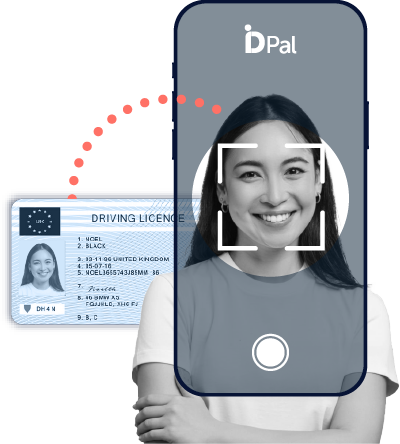
Document verification: Validating identity documents (passport, driver’s licence, national ID).
Address verification: Confirming residency using documents such as utility bills or bank statements.
Risk assessment: Evaluating customer risk based on activity, geography, and source of funds.
Enhanced due diligence (EDD): Applying deeper checks for higher-risk individuals, such as PEPs.
Ongoing monitoring: Continuously reviewing activity and updating risk profiles.
Why do businesses need to do KYC checks?
KYC forms part of broader due diligence and AML checks. It ensures customers are who they claim to be and helps detect warning signs of financial crime.
Core objectives of KYC:
- Identify the customer
- Verify their true identity
- Understand their activities and source of funds
- Monitor behaviour over time
In more complex cases, businesses must also identify the beneficial owner behind a transaction or entity.
Manual approaches using public data are slow and inconsistent, which is why many firms adopt RegTech to scale verification and monitoring.
Ongoing monitoring should capture changes such as:
- Adverse media exposure
- Legal or financial events
- Credit changes
- Ownership or director changes
Common KYC challenges
KYC introduces friction. For customers, the process can feel slow and repetitive. For businesses, it requires ongoing investment in systems, data, and compliance resources.
The main issue is balance: excessive friction increases abandonment, while weak controls increase fraud risk.
Types of KYC checks
Simplified KYC: Minimal checks for low-risk customers.
Enhanced KYC: Deeper checks for high-risk scenarios.
Corporate KYC (KYB): Verification of company structure, ownership, and control.
Ongoing due diligence: Continuous monitoring of behaviour and risk.
Importance of KYC verification
KYC reduces exposure to financial crime and protects institutions from regulatory action and reputational damage. By verifying identity and monitoring behaviour, firms can detect suspicious activity early and maintain compliance.
KYC also supports better customer understanding, enabling more accurate risk decisions and tailored services.
How do KYC checks work?
Overview: Collect data, verify identity, assess risk, and monitor activity.
KYC onboarding software: Automates document collection, identity verification, screening, and workflow management to reduce manual effort and improve accuracy.
KYC lifecycle:
Onboarding: Initial identity verification and risk assessment.
Customer due diligence (CDD): Ongoing review based on risk level.
Enhanced due diligence (EDD): Additional checks for higher-risk customers.
Ongoing reviews: Triggered by profile changes or regulatory updates.
KYC remediation: Fixing gaps in data, documentation, or verification where deficiencies are identified.
KYC is not static. It requires continuous updates to maintain accuracy and compliance.
What is the risk of getting KYC wrong?
Failure to perform adequate KYC and AML checks exposes businesses to enforcement from UK regulators, including the FCA and HMRC, as well as potential investigation by agencies such as the NCA and SFO.
Consequences include fines, operational restrictions, asset freezes, and criminal liability.
The future of KYC: what’s changing?
KYC is shifting from manual processes to automated, real-time verification. AI-driven identity checks, biometrics, and data integrations are reducing onboarding time while improving fraud detection.
Biometric verification, such as facial recognition, enables near-instant identity confirmation and reduces reliance on manual document review.
At the same time, regulation is tightening. Firms are expected to combine faster onboarding with stronger controls, not trade one for the other.
Regulations are also changing, with governments and financial regulators introducing stricter compliance requirements to combat financial crime. Businesses need to stay ahead of these changes to avoid fines and maintain customer trust. The future of KYC is all about using smarter technology to make the process quicker and more secure while ensuring businesses remain compliant with ever-changing regulations.