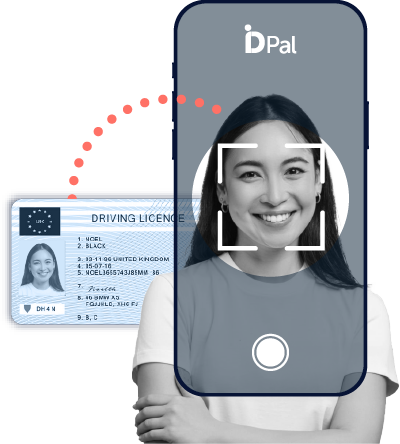


In today’s fast-paced and interconnected financial landscape, the risk of fraud looms large over businesses, threatening their integrity, financial stability, and reputation. For compliance professionals in regulated firms across the UK, the battle against fraud is an ongoing challenge that demands vigilance, expertise, and proactive measures.
Table of contents
What is Know Your Customer (KYC)?
KYC stands for Know Your Customer, and refers to the process that businesses and financial institutions use to verify the identity of their customers or clients. The primary goal of a KYC check is to prevent identity theft, fraud, money laundering, and other illicit activities by ensuring that customers are who they claim to be and that they are using legitimate and legal financial services
During a KYC check, businesses collect and verify various pieces of information about their customers, which can include:
- Personal information: This includes details such as the customer’s full name, date of birth, address, and contact information.
- Identification documents: Customers are often required to provide official identification documents, such as a passport, driver’s licence, or national ID card. These documents are used to verify the customer’s identity.
- Proof of address: Customers might need to provide documents that prove their residential address, such as utility bills or bank statements.
- Source of funds: Businesses may ask customers to provide information about the source of the funds they are using for transactions. This helps ensure that the funds being used are obtained through legal means.
- Risk assessment: Businesses may assess the risk associated with a customer’s profile and transaction history. Higher-risk customers or transactions might be subjected to more rigorous scrutiny.
Why is the KYC process important?
KYC checks are mandated by various regulatory bodies and laws around the world as a way to combat financial crimes and protect the integrity of the financial system. In most cases, financial institutions and other businesses are legally obligated to perform these checks on their customers before establishing a business relationship or allowing transactions to take place.
Here are some of the reasons why KYC checks are crucial:
Prevention of crimes: including money laundering, terrorist financing, fraud, and identity theft. By verifying the identities of customers and understanding the sources of their funds, businesses can identify and deter individuals or entities attempting to engage in illegal activities.
Detecting suspicious activities: KYC processes enable businesses to identify and report unusual or suspicious activities. When a customer’s behaviour changes from their typical transaction patterns, it can indicate potential wrongdoing.
Regulatory compliance: Many countries have laws and regulations that require financial institutions and businesses to implement KYC procedures. Failing to comply with these regulations can lead to severe legal consequences, including hefty fines and penalties.
Risk management: KYC checks allow organisations to assess the risk associated with each customer. This risk assessment helps determine the level of due diligence required for each customer. Higher-risk customers, such as politically exposed persons (PEPs) or customers from jurisdictions with weak anti-money laundering controls, may undergo more thorough checks to mitigate potential risks.
Preservation of reputation: Businesses that lack in their efforts to prevent financial crimes can suffer reputational damage. A tarnished reputation can lead to decreased customer trust, loss of business, and negative media coverage.
Support for law enforcement: Effective KYC checks provide law enforcement agencies with valuable information that can aid investigations into financial crimes. Accurate and comprehensive customer records can be instrumental in tracking down criminals and building strong legal cases.
Global efforts against financial crimes: KYC checks contribute to international efforts to combat these crimes by creating a standardised approach to customer verification and due diligence.
What happens if you get KYC wrong?
Getting it wrong can bring a whole world of pain to your business, because, as a regulated entity, you have certain obligations and responsibilities to ensure that you are doing ‘your bit’ in the fight against money laundering and other criminal activity, such as terrorist financing and human trafficking. Not doing anything isn’t an option; whilst doing it badly will inevitably lead to fines and/or other sanctions for you and your business.
To be fair, it isn’t difficult to get it right, if you follow your obligations under government legislation. HM Government is very clear about your obligations as a regulated entity:
- Firstly, you must perform Customer Due Diligence, and
- Secondly, you must perform a risk assessment of your business
The second requirement is down to the fact that, as a regulated entity, you are expected to run your business using a ‘risk-based approach’. This means that you have to:
- Identify the money laundering risks relevant to your business
- Perform a detailed risk assessment of your business, including elements such as customer behaviour and delivery channels
- Carry out a risk assessment of your customers
- Implement controls designed to manage and reduce the impact of these risks
- Continually monitor and improve the process
- Keep a detailed audit trail of what actions you performed and the reasons behind them
This might all sound daunting, but, in fact, it helps you enormously in determining the best way of tackling your AML/KYC obligations, by identifying the most efficient and cost-effective methods of managing the risks. Of course, the size and structure of your business will determine how simple or complex this assessment process is going to be.
What is KYC remediation?
KYC remediation is the process of cleaning and updating your client’s data to ensure compliance with the latest regulations. In today’s ever-changing business environment, your customer today may no longer be the customer you originally onboarded. For this reason, delivering efficient KYC remediation is critical to your business success.
Each customer’s assigned risk must continue to reflect the appropriate risk rating. The frequency of periodic reviews on your data will be reflected in your company’s approach and risk assessment, but should generally fall within a 6-36 month cycle depending on the high, medium or low flag you allocate. An efficient KYC remediation process can significantly reduce your business risk whilst also creating an opportunity for you to better understand who your customers are and how best you can further serve them.
Strict regulations are in place and financial institutions have a duty to report any suspicious activity and help to fight the war against money laundering. For companies to do this, they must implement KYC remediation. Understanding continued risk exposure and how it can evolve over time is vital when it comes to remediation. Businesses need to be aware of the impact of constant regulation changes and how to avoid penalties.
Financial institutions must also keep records of all clients updated, flagging those that pose an elevated risk or have made suspicious transactions. Any behaviour changes must also be recorded. This requirement for KYC remediation aids the continuous tracking and prosecution of financial criminals, aiming to minimise their effect.
Inaccurate or out-of-date personal information is an offence under GDPR and poses regulatory risks of fines. This isn’t always easy to manage with legacy or manual systems and a lack of direction from regulators. A risk-based approach will, however, demonstrate an understanding of risk exposure and ensure your business can adopt a ‘Business As Usual’ approach. Deploying an effective remediation solution will reduce risk, manage costs and ensure regulatory compliance, through configurable automation.
It’s important to go beyond Knowing Your Customer and implement organised and straightforward information and risk assessments about them. This is pivotal in protecting your business against money laundering, corruption or terrorist financing. The sheer volume and complexity of client data that needs to be updated, means remediation projects are often resource-intensive, manual and costly. By using KYC information that firms need to hold, and which must be monitored for any change in status or abnormal behaviour, data points can be flagged as key risk records to sit against a company’s pre-defined risk appetite. Automating KYC remediation enables businesses to follow a risk-based approach to remediation and data collection processes ensuring that risks of financial crime posed by a customer are understood and mitigated.
Using technology for KYC checks
Today, firms are looking to technology as a way of improving the efficiency and accuracy of KYC checks. Some are using innovative software solutions to automate certain KYC processes, such as information collection, document verification and screening.
Staying up-to-date on regulatory changes is a key part of conducting effective KYC checks and ensuring AML compliance. Most technology providers will provide tools and solutions that manage regulatory change, with systems that are customisable to your firm’s risk appetite and processes.
What poses a risk to your business, may not be considered as such by another – this is why it is important that you are able to personalise rules, workflows and risk factors when selecting a technology partner for KYC checks and overall AML compliance.
By remaining informed, adapting your KYC programme accordingly, and leveraging technology where appropriate, you can help protect your company from the risks of money laundering and terrorist financing.
Know Your Customer (KYC) FAQs
What is a KYC check?
A KYC (Know Your Customer) check is a process where businesses verify the identity, background, and risk profile of individual clients before providing financial services or establishing a relationship. It involves collecting personal identification, proof of address, and assessing potential risks related to fraud, money laundering, or illegal activities.
Why are KYC checks important?
KYC checks protect businesses from fraud, identity theft, and regulatory violations. By confirming a customer’s identity and monitoring risk factors, companies reduce financial loss and reputational damage while complying with anti-money laundering (AML) regulations and building trust with clients.
What information is typically collected in a KYC check?
KYC checks generally collect personal identification documents (passport, driver’s license), proof of address (utility bills, bank statements), and sometimes financial or employment information. Additional risk assessments may include screening against sanctions lists or adverse media for suspicious activity.
How do KYC checks help prevent fraud?
By verifying customer identities and assessing their risk profiles, KYC checks prevent fraudulent individuals from accessing services. They reduce the likelihood of money laundering, account takeovers, and other financial crimes, helping businesses maintain a secure and compliant operation.
What are the consequences of skipping KYC checks?
Skipping KYC checks can expose businesses to fraud, money laundering, and legal penalties. It can damage reputations, result in financial losses, and lead to non-compliance with regulatory requirements. Proper due diligence ensures safer client relationships and long-term business sustainability.