Proving identity online sounds simple on paper. In practice, it’s one of the biggest pressures facing regulated businesses. Fraud tactics are advancing quickly, regulators expect tighter controls, and customers still want sign-up processes that feel quick and effortless. Striking that balance isn’t easy.
2+2 verification has long been a trusted way to strengthen electronic identity checks, particularly in sectors bound by Anti-Money Laundering (AML) and Know Your Customer (KYC) requirements. By cross-referencing multiple identity attributes against independent data sources, it raises confidence levels beyond basic, single-source checks. But as financial crime grows more sophisticated, traditional approaches are starting to show their limits.
This is where AI-enhanced, multi-layered 2+2 verification comes into focus. By combining structured data checks with intelligent risk analysis, organisations can make faster, sharper decisions while staying aligned with compliance expectations.
What is 2+2 verification?
2+2 verification is a form of electronic identity verification (eIDV) that combines two identity checks against two trusted data sources – credit references, government records or identity document registries – to confirm that a person is genuine and trustworthy.
In eIDV, the identity attributes that are checked typically include things like name, date of birth, address or government ID number.
The 2+2 verification process
2+2 verification is used because single-attribute or single-source checks are vulnerable to identity fraud methods, including identity data theft and synthetic identities.
A 1+1 verification check confirms just one identity attribute against one trusted data source, providing basic confidence that the person exists but with limited fraud resistance.
A 2+2 verification check crosschecks at least two identity attributes against at least two trusted data sources, providing significantly stronger assurance that the identity is genuine.
The aim is to ensure the identity is not only present in one database but verified across multiple data ecosystems, reducing the risk of identity fraud. This standard is commonly used in regulated sectors, such as banks, financial services and legal practices, where strong customer due diligence (CDD) is required.
How does 2+2 verification support AML compliance?
The 2+2 verification check is widely used for digital identity verification where Anti-Money Laundering (AML) compliance requires strong Know Your Customer (KYC) checks to counter a higher risk of fraud. 2+2 identity verification supports regulatory compliance by providing strong, auditable proof that a customer has been properly identified and assessed for risk.
It helps organisations meet AML and KYC requirements by:
- Verifying multiple identity data attributes against multiple independent data sources
- Increasing detection of identity data inconsistencies that could indicate fraud
- Raising overall confidence that the verified person is real and correctly identified
- Creating clear verification records and stronger customer due diligence audit trails
Problems with a traditional 2+2 verification process
The trouble with this binary approach to eIDV, however, is that while strong data-matching meets AML compliance for KYC verification it can create barriers to legitimate customers and fail to keep pace with and prevent new methods of identity fraud.
Here are some of the common problems with 2+2 verification:
- For rules-based systems relying on fixed logic and exact matches it can be inflexible, increase friction in customer onboarding journeys and lower pass rates.
- Identity data formatting differences between sources can create false mismatches, leading to verification failures and reduced conversion rates.
- Customer prospects with a limited credit history and digital identity footprint cannot be matched across two independent databases.
- Smart fraudsters learn the rules of 2+2 verification checks and take care to seed stolen identity data consistently across breached datasets to beat the system.
How can AI-enhanced 2+2 checks help?
Multi-layered, AI-enhanced 2+2 verification checks combine multiple, automated checks into a single workflow rather than making binary, rules-based data-matching checks in isolation.
AI-enhanced 2+2 checks simultaneously apply AI analysis to several verification steps in a multi-layered identity verification process. This process delivers a faster, more accurate and reliable identity decision, plus greater fraud prevention at digital onboarding.
1. Document verification: AI analyses a government–issued ID document presented for authenticity, validating security features and checking for deepfakes, forgeries and document tampering in real time. The name and date of birth listed are extracted and verified against multiple, trusted databases.
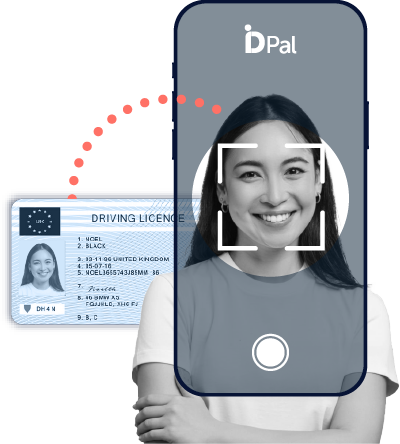
2. Facial matching and liveness check: The process then applies AI-powered biometric analysis for facial matching to confirm that the person presenting the ID matches their document, while liveness testing detects the real, true owner of the ID is present – not a deepfake, spoof or replay attack fraud attempt.
3. Automated address verification: Customer address details are automatically verified against trusted data sources during the same process, confirming she or he currently lives at that address. In this way a customer is no longer required to upload a separate proof of address.
4. Built-in AML screening: Automated AML screening checks the identity against sanctions, PEP and watchlists, assessing risk before automatically completing a customer due diligence report with confirmed verification record for secure storage and instant audit trail.
This AI-enhanced, document-led, database-supported approach to 2+2 checks delivers customer due diligence and strengthens identity fraud defences. By matching documents to the document owner, to confirm the results of data-matching and connect the data to a real person from a verified identity document.
AI-driven IDV confidence
AI improves decision confidence in 2+2 identity checks by analysing all verification signals together to produce a clear, risk-based outcome. Risk assessment is more reliable than rules-based systems because it adapts to the overall assessment of risk rather than relying on fixed thresholds in individual checks. AI improves rules-based 2+2 eIDV by:
- Simultaneously applying AI analysis to identity data, documents, and biometrics
- Detecting subtle inconsistencies across these attributes
- Detecting synthetic identities, deepfake and forged ID documents
- Confirming genuine user presence through facial matching and liveness testing
- Screening customer prospects against sanctions, Politically Exposed Persons (PEPs) and adverse media lists for risk assessment
- Reducing manual effort with real-time verification and auditable KYC reporting
The future of AI-enhanced identity verification
Every day, AI-driven identity fraud attempts are growing more sophisticated. Standard 2+2 identity verification checks struggle to react to new risks and detect the latest threats. As fraud becomes more sophisticated, the future is AI-enhanced, multi-layered identity verification. Rather than a standalone 2+2 verification check, dynamic, real-time risk assessment with AI analyses delivers fast, reliable KYC decisions and automated AML compliance.
Frequently asked questions
What is Electronic Identity Verification (eIDV)?
Electronic identity verification (eIDV) is a digital process that remotely confirms a person’s identity using data sources, such as government records or credit files. It is used by financial services and other regulated industries to meet AML/KYC compliance requirements and prevent fraud during remote customer onboarding or authentication.
What are Know Your Customer (KYC) checks?
Businesses use Know Your Customer (KYC) checks to verify the identity and risk profile of customers. They typically involve confirming personal details, identity documents and sometimes source of funds. KYC is used by financial services and other regulated sectors to prevent fraud, money laundering, and to comply with legal and regulatory requirements.
See AI-powered 2+2 verification in action
If your current identity checks feel rigid, slow or stretched by rising fraud risk, it may be time to take a closer look at what AI-powered 2+2 verification can do to help.
Request a demo of ID-Pal today to see how this AI-driven 2+2 solution works in practice. We’ll walk you through how it supports regulatory requirements, sharpens fraud detection and helps your teams make clearer, more confident decisions from day one.