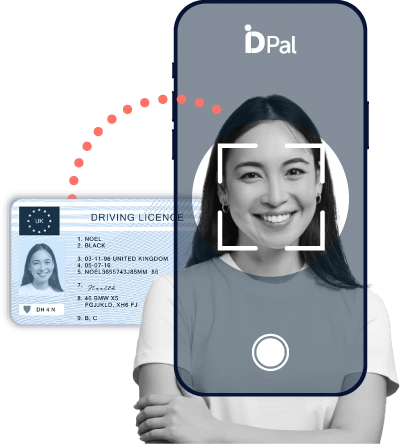
Which AML and KYC onboarding platforms should a UK accountancy firm shortlist in 2026?
Most accountancy clients are companies, partnerships or sole traders operating through a structure, so the first question is which entity is being onboarded and who ultimately controls it. Individual identity verification follows from the answer rather than preceding it.
Last updated: September 2026 · Reviewed by ID-Pal

How does ID-Pal support accountancy practices?
ID-Pal delivers KYC, KYB and AML compliance, configurable to the practice’s own risk rules, so a practice verifies the entity, resolves who controls it, verifies and screens those individuals, and holds the evidence in one case.
Entity confirmation and ownership resolution follow the integration of NorthRow’s KYB platform.
Fully certified and industry accredited






Shortlisting an AML and KYC onboarding platform: key takeaways
Five things decide the shortlist for a practice.
Clients are businesses, not individuals
Accountancy practices carry AML obligations across a client base that is mostly businesses rather than individuals, which puts business verification at the centre rather than the edge.
The shortlist test
The shortlist test is whether one platform verifies the company, resolves who controls it, verifies those people, screens everyone, and evidences it in a single audit trail.
Volume is the constraint
Volume is the sector’s defining constraint. A practice onboarding hundreds of clients a year cannot absorb a manual process per client.
Supervision differs by practice
Supervision differs by practice, so firms should confirm requirements against their own supervisory body’s current guidance.
What should be on the shortlist criteria?
Six criteria, weighted for a practice rather than a bank.
Business verification as a first-class capability
Entity confirmation and ultimate beneficial owner resolution through intermediate structures, in the same case as the individual checks.
Throughput
The process has to survive onboarding season without additional headcount.
Configurable risk rules
A local sole trader and an international group should not run the same check, and the file should record which path was applied.
Ongoing monitoring
Client relationships run for years and ownership changes without anyone telling the accountant.
A clean audit trail
One case view containing every check, decision and document, exportable when a supervisor reviews the file.
Deployment without an IT project
Most practices do not have engineering capacity to allocate.
How does ID-Pal meet those criteria?
| Criterion | How ID-Pal covers it |
|---|---|
| Business verification | KYB compliance with UBO and PSC identification through intermediate structures |
| Individual verification | Document authentication across 16,000+ identity documents, thousand-dimension biometric facial matching, address e-verification |
| Screening | AML screening against sanctions, politically exposed persons and adverse media |
| Ongoing risk | Customer monitoring keeps screening live across the relationship |
| Anti-fraud | Liveness detection independently certified to iBeta Level 1 and Level 2 under ISO 30107-3 |
| Configuration | Rule-based engine, adjustable by risk without development work |
| Evidence | Single case view with a complete audit trail per submission |
| Deployment | Out of the box, via API and SDK, or through a native Salesforce integration |
Three practices already run this in production: UHY Farrelly Dawe White, Icon Accounting and Parfrey Murphy.
Book a walkthrough of our IDV and AML solution for accountancy practices
Supporting 16,000+ ID documents and 400+ data sources, expand into 250+ jurisdictions faster while maintaining consistent controls across regions and customer types.

AML and KYC for accountancy practices
What does client due diligence cover for a practice?
Identifying the client, verifying that identity from a reliable independent source, identifying beneficial owners where the client is an entity, understanding the purpose and intended nature of the relationship, screening for sanctions and politically exposed persons, and keeping the information current.
| Client type | What has to be established |
|---|---|
| Limited company | Registration and status, persons with significant control, and beneficial owners through any intermediate entities |
| Partnership or LLP | The entity, plus the partners or members who control it |
| Sole trader | Identity of the individual, verified from a government-issued document |
| Every relevant individual | Sanctions, politically exposed person and adverse media screening, outcome recorded |
| Higher-risk clients | Enhanced due diligence, including the firm’s assessment of source of funds, with senior sign-off |
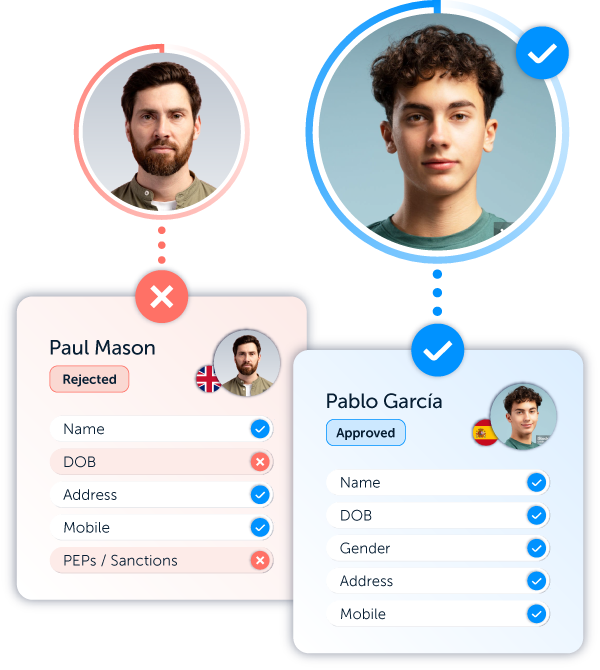
Why is accountancy onboarding a business verification problem?
Most accountancy clients are companies, partnerships or sole traders operating through a structure, so the first question is which entity is being onboarded and who ultimately controls it. Individual identity verification follows from the answer rather than preceding it.
That inverts the usual order. A platform designed primarily to verify individuals will handle the directors well and leave the practice to establish the company, its status and its beneficial owners by hand, which is where the time goes.
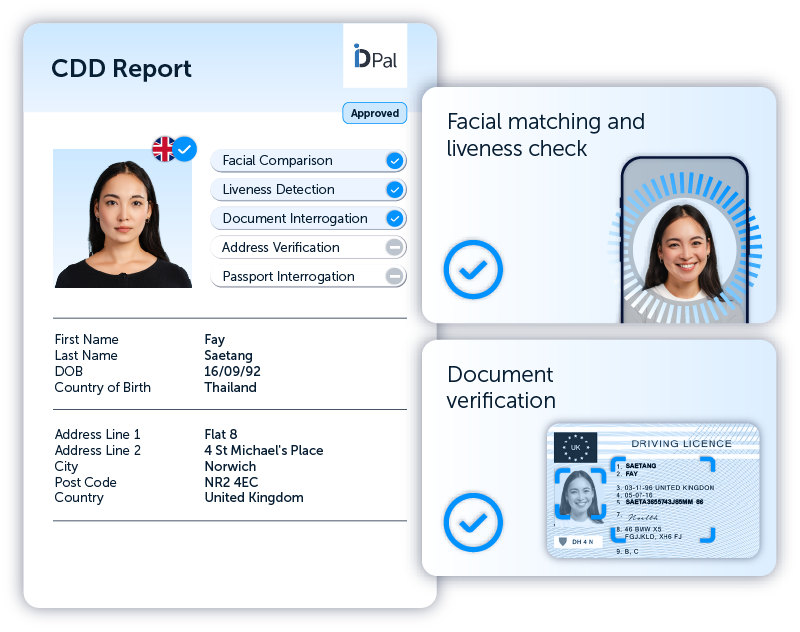
What changes when Companies House data cannot be relied on alone?
Registry data establishes that an entity exists and what has been filed. It does not always establish who ultimately controls the entity, particularly where control runs through holding companies, nominees or overseas structures.
That is why ownership resolution matters more than registry lookup. A practice that records the first registered name has satisfied a step rather than the obligation. Identifying the individuals behind the structure, then verifying and screening them, is what the file has to show.
See how accountancy practices use ID-Pal
In practice: UHY Farrelly Dawe White, Icon Accounting and Parfrey Murphy
Three practices already run this in production: UHY Farrelly Dawe White, Icon Accounting and Parfrey Murphy.

Frequently asked questions
Which accountancy activities fall within the Money Laundering Regulations?
The Regulations apply to defined activities, including accountancy, audit, tax advice, insolvency and company formation services. Supervision arrangements differ by practice, so firms should confirm scope and requirements with their own supervisory body.
Does a practice have to verify the directors as well as the company?
Yes. The entity has to be verified and the individuals who ultimately own or control it identified, verified and screened. Verifying the company alone leaves the risk half-checked.
How often does client due diligence need refreshing?
Information has to be kept current, and screening should stay live rather than stopping at onboarding, so a change in ownership or in a client’s screening status is caught while the relationship is running.
Can one platform handle both company and individual checks?
Yes. Running both in one workflow gives a single case view and one audit trail per client. ID-Pal delivers KYC, KYB and AML compliance, configurable to the practice’s own risk rules.
What does automation realistically save a practice?
The collection and reconciliation work: chasing documents, re-keying registry data, and assembling evidence from separate systems. The risk judgement remains with the firm.
Is remote onboarding acceptable for accountancy clients?
Yes, where the platform supports the client’s documents and can prove genuine presence through certified liveness detection. Remote onboarding is standard practice and removes the office visit from the process.
Find out how we can help your business grow