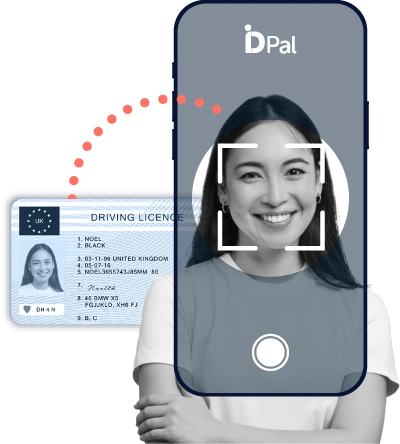


Getting Know Your Customer (KYC) onboarding right sets the tone for your entire customer relationship. It’s the first real interaction a customer has with your business, and it carries a lot of weight. Move too slowly and you risk losing legitimate customers. Move too quickly without the right checks in place and you expose the business to fraud, regulatory scrutiny, and potential financial crime.
For compliance teams, KYC onboarding sits at the centre of risk management. It’s where you decide who you’re doing business with, what level of risk they present, and what controls need to be applied from day one. With growing regulatory expectations and more complex customer profiles, the process has become more detailed and more demanding. Add in digital onboarding, remote verification, and new types of financial activity, and it’s clear why many firms are rethinking how they approach it.
This guide breaks down what effective KYC onboarding looks like in practice, how to balance compliance with customer experience, and where technology can support a more consistent and scalable approach.
Table of contents
What is KYC onboarding?
KYC onboarding refers to the process of verifying a customer’s identity and assessing their risk before establishing a business relationship. It forms part of a wider anti-money laundering framework and is designed to prevent fraud, money laundering, and other forms of financial crime.
At its core, KYC onboarding involves collecting key information about a customer, confirming that the information is accurate, and understanding the nature of their activities. This can include identity verification, proof of address, screening against sanctions and politically exposed person lists, and assessing the purpose of the relationship.
It doesn’t stop once the customer is onboarded. The information gathered at this stage feeds into ongoing monitoring, helping firms spot unusual behaviour and respond appropriately. When done well, KYC onboarding provides a clear view of who your customers are and the level of risk they bring, giving compliance teams a solid foundation to work from.
5 essential steps for KYC onboarding and AML compliance
According to Thomson Reuters research, 92% of firms estimated that current Know Your Customer (KYC) onboarding processes cost roughly $28.5m. On the flip side, the UN estimated that the cost of global money laundering annually is between $800 billion – $2 trillion which makes up 2-5% of global GDP.
With such disparity, and with reports that only 1% of money laundered can be detected and acted upon by the authorities, regulatory bodies are pushing businesses further by updating Anti-Money Laundering (AML) compliance requirements to increase detection rates.
#1: Collect data, assess and deliver customer verification
Before entering into any transactions with a new customer, regulated businesses must identify if they are bad actors at the point of KYC onboarding. As a minimum, a business must collect the relevant data to evidence the customer’s visual identity, as well as their name and address. With increasing cases of fraud, further enhanced due diligence can be applied depending on a business’s risk appetite. Additional information may include verification for date of birth, identity documents and third-party account verification.
For business onboarding, the verification process should include the business registration number, name and registered address, and date of incorporation, as well as information on the company officers, and Ultimate Beneficial Owners.
By using a digital onboarding solution with clever APIs, the information requested can be personalised using conditional logic (a set of rules) to mimic legal logic. Once the data has been uploaded, the system records the data and runs a check against the information sources held within the platform. With digital solutions being hosted in the cloud, customers can upload their documents or conduct biometric facial recognition from anywhere at any time, meaning a result can be given for verification within seconds.
#2: Information sources
To provide the verification required above, regulated businesses should align themselves to a provider that can supply reliable data from a variety of sources – quickly and within GDPR requirements. Using manual processes and manual look-ups can be very time consuming and costly, whilst a slow onboarding process is likely to cause a negative experience for the customer. If the process is fragmented and there are too many hurdles to overcome the customer will abandon and the business will be left with a leaky sales funnel.
According to research, 63% of European consumers surveyed have abandoned a digital banking app during onboarding in 2020. By partnering with a software provider that enables a single source for verification, and that integrates with an existing CRM, onboarding times can be reduced from days to minutes. Automation not only shortens timelines for client AML/KYC onboarding, but also delivers perpetual KYC for consistent, transparent and robust output, for audit trail purposes.
#3: Conduct ongoing client due diligence (CDD)
KYC compliance does not always have to be retrospective after onboarding – it can be a proactive process that can be used as a competitive advantage. Effective ongoing Client Due Diligence (CDD) lessens risk, increases knowledge of the customer, and promotes opportunity. A thorough CDD process will also identify instances where Enhanced Due Diligence (EDD) is required.
The last few years have shown us that effective ongoing monitoring is crucial to achieve compliance. Basic customer due diligence is important on an ongoing basis to ascertain if a customer moves into a higher risk status.
Once a client has been onboarded, businesses must be able to implement enhanced due diligence where indicated, such as identifying any politically exposed persons (PEPs) or identifying any connected entities and Ultimate Beneficial Owners (UBOs).
An effective automated KYC onboarding process will enable regular CDD/EDD checks to be run very simply, either by regulation triggers, or by flags that are raised from breaches in the risk rules that have been predetermined for that business.
#4: Remediate KYC data
An effective system for KYC/KYB onboarding will prove invaluable when it comes to ongoing monitoring and remediation. A business will benefit from using an automated platform as the single source of truth for holding its compliance data. When required, it is far simpler to instigate remediation by using a series of ‘rules’ to implement remediation projects.
KYC onboarding/remediation campaigns can be delivered in bulk via an automated platform. Customers can receive personalised communications directly connected to their record, far quicker than any manual process.
Remediation can be managed effectively – if due to a key event or periodic review, and made seamless and GDPR compliant.
#5: Prepare for regulatory audits
Regulators do not expect businesses to stop all fraud. They do however expect to see that a risk assessment has been undertaken and that processes are in place to achieve due diligence. Having a secure audit trail, of all changes and modifications to the customer record and the ongoing interactions, is vital for CDD.
An audit trail provides a backbone of creating a resilient compliance programme for the entire lifecycle of the customer. As businesses look to grow, they will need an effective KYC onboarding programme that can not only scale with the business, but also delivers an audit trail that can be easily managed and used to protect the business.
Regulators and businesses can be confident that the automated single source of truth meets all the latest regulations, such as the 5th and 6th Money Laundering directives. With high levels of automation and matching of data, the right customer or entity can easily be identified, and false positives avoided.
With different jurisdictions requiring different KYC identity authentication and due diligence, one size certainly doesn’t fit all. The expectation is that AML fines will increase over the coming years, so businesses need to get their ducks in a row when thinking about their KYC onboarding and AML requirements.
5 common barriers to effective KYC client onboarding
Truly knowing who your clients are can prove challenging, particularly for larger organisations with many different departments and siloed processes. Firms must balance financial crime risk, compliance and customer experience within an ever-changing regulatory environment. Please see the six most common barriers to effective (KYC) client onboarding.
Ultimately, the perspectives of each side need to come to alignment on the balance between freedom and direction. RBA is an evolving concept in a dynamic industry and these apparently disorganised attitudes on either side are unlikely ever to be fully resolved. However, it is valuable for all participants to engage regularly and try to map a consistent understanding aligned with the shared objective of a well-functioning market, resistant to abuse by criminality.
Verification sources
When looking at your compliance system, it’s also important to understand where the information is coming from. You may have multiple proofs of address for a single person, but if the underlying source is the same, then that only constitutes one source. If you verify an identity document, have you relied on a certified copy of an original document from sources unknown, have you verified the machine-readable zone, or has an expert-review looking for detailed security features? All approaches are valid in certain scenarios and your approach may need to vary depending on the risk of that particular customer. A UK citizen depositing £300 may require a different approach from a non-EU citizen depositing £500,000. It is important to come up with an approach that takes into account the information that you know about your customer and can be tailored to handle both cases without excessive friction.
Poor amber management
Amber management is the term that we give to all those customer applications that have been flagged for review and need additional due diligence to get them through the onboarding system. They may only be 10% of cases, but they eat up the vast majority of your staff time and cost. By carefully designing an automated system that reflects your specific business risks, you can help to minimise the number of “ambers”. This will ensure that you only receive alerts on the issues that really matter – saving you time whilst increasing the chance that your team will spot the bad actors.
Internal barriers
KYC verification is often performed by many different teams at different points within the customer journey. For example, the sales team may be involved in completing initial onboarding to open a client’s account, a separate team may need to verify KYC prior to any transaction and the compliance team may need to verify approving changes to standing data. Some firms have not integrated these separate KYC checks into a single system, and so are missing out on the opportunity to improve operational efficiency of their compliance processes. We know of one customer who cut their business onboarding time from 2 weeks, to 1 day by combining information between different teams.
Automation vs manual
Automation is essential, but it is not the only answer. The important thing is to automate what can be automated, and to highlight issues so that your manual team can be effective. If the team sees 1000 possible sanction matches a day, and they are all false positives, the chance of them missing the one genuine ‘hit’ is reduced. If they are spending all their time checking that the details on an identity document match the supplied name and date of birth, they are not focussing on spotting the one fake identity document. However, even with machine learning, a computer can only go so far – some things just need a human. The best systems combine the latest digital technology with experienced humans.
Legacy systems
After a few years of operation, many firms will end up with customer records in multiple different systems, and verified to different standards, giving problems with both compliance and record management. At some stage, the legacy systems will need to be decommissioned and all the data transferred to the latest system, and records brought up to the latest standards. The temptation is to restrict costs, by leaving data on the legacy system, but this just builds up a compliance issue for the future.
KYC onboarding in a hybrid world
Keeping pace with regulatory change has become a constant challenge for financial services firms, particularly as hybrid working has become the norm. The shift toward digital, remote, and flexible ways of working has changed how compliance teams operate, while also creating new opportunities for financial crime. At the same time, customer expectations have moved on. People now expect fast, simple onboarding that works from anywhere, without compromising security.
For compliance teams, this creates a balancing act. Traditional, manual processes are difficult to manage across distributed teams and can introduce inconsistencies, delays, and unnecessary risk. Documents stored across different systems or locations make it harder to maintain a clear audit trail, and gaps in processes can be exploited. As a result, many firms are turning to cloud-based compliance platforms that provide a centralised view of customer data and case management. This allows teams to work from anywhere while maintaining consistency and control.
Data security is another area under pressure. With employees accessing systems remotely, firms need tighter controls around who can access what, and from where. A single, integrated platform for KYC onboarding and ongoing monitoring can reduce the risks associated with fragmented systems and multiple access points. It also simplifies compliance by bringing everything into one place, from identity verification through to enhanced due diligence and remediation.
Customer experience has also shifted. Requiring individuals to attend a branch or submit documents multiple times creates friction and increases the likelihood of drop-off. Hybrid onboarding models give customers the flexibility to verify their identity either in person or remotely, helping firms meet expectations while expanding into new markets. Faster, more convenient onboarding is no longer a nice-to-have; it directly impacts conversion and retention.
To support this, many firms are adopting biometric verification. Facial recognition and liveness detection tools offer a way to replicate in-person checks in a remote setting, reducing fraud risks while keeping the process straightforward for users. These technologies help confirm that a real person is present, rather than a spoofed image or video, which has become a growing concern.
Finally, onboarding is only the starting point. Ongoing monitoring is now expected to be continuous rather than periodic. Customer risk profiles can change quickly, and firms need systems that can track updates in real time and flag potential issues as they arise. A digital-first approach to compliance, supported by scalable technology, allows firms to manage this complexity while staying aligned with regulatory expectations.
KYC onboarding FAQs
What is KYC onboarding and why is it important?
KYC onboarding is the process of verifying a customer’s identity before allowing them to access products or services. It is essential for preventing fraud, meeting regulatory requirements, and ensuring businesses understand who they are dealing with from the outset.
What information is required during KYC onboarding?
KYC onboarding typically requires personal details such as name, date of birth, and address, along with official identification documents like passports or driving licences. For businesses, it may also include company registration details and beneficial ownership information.
How does KYC onboarding differ for individuals and businesses?
For individuals, KYC focuses on identity verification and address checks. For businesses, the process is more complex, involving verification of company registration, directors, and ultimate beneficial owners, as well as understanding the nature of the business.
What are the key steps in a KYC onboarding process?
The KYC onboarding process usually includes identity verification, document validation, risk assessment, sanctions and PEP screening, and ongoing monitoring. These steps ensure that customers are legitimate and any potential risks are identified early.
How long does KYC onboarding take?
The duration of KYC onboarding can vary depending on the complexity of the customer and the tools used. Simple individual checks can be completed in minutes with digital solutions, while business onboarding may take longer due to additional verification requirements.
How can businesses improve their KYC onboarding process?
Businesses can improve KYC onboarding by adopting digital verification tools, automating document checks, reducing manual processes, and ensuring a smooth user experience. A well-optimised process helps reduce onboarding friction while maintaining strong compliance standards.