

Bringing a new customer on board should be straightforward. Yet for many compliance teams in financial services, the reality involves stacks of paperwork, back-and-forth requests for documentation, and hours of repetitive checks. These delays frustrate prospective customers, strain internal resources, and leave your organisation exposed to regulatory risk. AML compliance is essential, but the way you approach it determines whether onboarding becomes a bottleneck or a competitive advantage.
This article explains why relying on manual KYC and regulatory checks creates AML bottlenecks in onboarding. You will learn about the root causes of these delays, their impact on compliance teams, and how automated verification can help you onboard customers faster while staying audit-ready.
Key takeaways: Why manual AML checks slow onboarding
- Siloed compliance teams and disconnected systems are a primary cause of duplicated effort during onboarding.
- Repetitive document requests and unstructured data collection drain resources and extend customer wait times.
- High volumes of inaccurate matches consume compliance capacity and delay approvals for genuine applicants.
- ID-Pal automates identity verification and AML screening in a single workflow, reducing bottlenecks.
- Automated audit trails and real-time decisioning help organisations stay compliant while onboarding faster.
What causes manual AML onboarding bottlenecks?
Before you can address slow onboarding, you need to understand what drives the delays in the first place. AML bottlenecks rarely stem from a single problem. Instead, they result from a combination of fragmented processes, outdated workflows, and data quality issues.
Many financial institutions have compliance responsibilities spread across multiple teams. Front-office staff collect initial documentation, middle-office analysts perform identity checks, and back-office teams handle ongoing monitoring. When these groups operate in silos, information does not flow efficiently. The same customer details may be collected multiple times, and incomplete records create gaps that require repeated follow-up.
Fragmented teams and disconnected systems
Compliance departments often share KYC workloads across teams that do not communicate effectively. Each handoff introduces risk of duplication and delay. When teams use separate systems that do not integrate, data must be manually re-entered at each stage. This introduces errors, extends processing time, and creates inconsistency in how checks are applied.
A single onboarding case may touch five or more systems before a decision is reached. Each interaction represents an opportunity for information to be lost, misinterpreted, or delayed. For high-risk entities, file touch times can reach ten to twenty-five hours according to industry research. This overhead quickly compounds when you are onboarding dozens or hundreds of customers each month.
Unstructured processes and paper-based workflows
Customer data collection in many organisations still involves cumbersome paperwork. Documents arrive in inconsistent formats. Names and addresses may be spelled differently across submissions. Compliance analysts must manually extract, verify, and input this information before any checks can begin.
This reliance on unstructured data slows the entire workflow. Rather than spending time on genuine risk assessment, your team is occupied with administrative tasks that add no value to the decision-making process. Paper-based processes also make it harder to maintain the audit trails regulators expect.
How do manual checks affect your compliance team?
When your AML checks depend heavily on manual review, your team absorbs the consequences. Staff spend disproportionate time on repetitive tasks, leaving less capacity for complex investigations or relationship management. Burnout becomes a real concern as analysts work through backlogs that never seem to shrink.
High volumes of inaccurate initial matches compound the problem. When screening systems flag large numbers of potential risks, analysts must review each one individually. Many turn out to be benign, but the review still takes time. This resource drain diverts attention from genuine threats and extends the onboarding timeline for legitimate customers.
The cost of customer abandonment
Long onboarding timelines do not just frustrate your team. They cost you customers. Prospective clients who encounter repeated requests for documentation or extended wait times may simply abandon the process and go elsewhere. In a competitive market, slow onboarding directly impacts revenue.
Research from RegTech Analyst highlights how KYC bottlenecks in digital finance push customers toward providers with faster, more user-friendly experiences. Balancing thorough compliance with customer expectations has become a strategic priority for organisations across the financial sector.
What role does automation play in reducing bottlenecks?
Automation addresses the root causes of onboarding delays by replacing repetitive manual tasks with AI-powered workflows. Rather than collecting documents, manually inputting data, and running separate checks across disconnected systems, you can handle identity verification and AML screening in a single, integrated flow.
Automated decisioning enables low-risk applicants to be approved in real time, without waiting in a queue for manual review. For higher-risk cases, automation flags the relevant concerns and routes the file to an analyst with all the supporting information already compiled. This targeted approach maximises efficiency without compromising thoroughness.
Real-time verification and ongoing monitoring
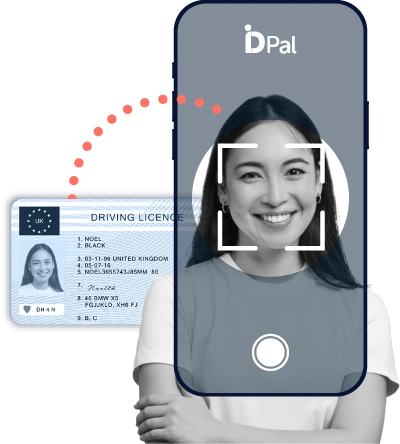
ID-Pal enables real-time KYC verification that delivers results in seconds rather than days. Customers submit their documents through a mobile or web interface, and the platform performs document authentication, biometric checks, and database validation automatically. The outcome is returned immediately, allowing your team to proceed with onboarding without delay.
Compliance does not end at onboarding. ID-Pal supports ongoing AML monitoring by continuously rescreening individuals and businesses against updated watchlists, sanctions lists, and adverse media sources. This ensures your risk assessments remain current throughout the customer relationship, not just at the point of acquisition.
What should you look for in an automated AML solution?
Not all automation platforms deliver the same benefits. When evaluating solutions for your onboarding workflow, look for capabilities that address the specific bottlenecks your team faces. Integration flexibility matters. A platform that requires complex custom development may introduce new delays rather than eliminating existing ones.
Consider whether the solution handles both individual and business verification. AML compliance extends beyond personal identity to include director verification, beneficial ownership discovery, and corporate structure analysis. A unified platform that covers KYC and KYB in a single workflow simplifies your compliance stack and reduces handoff points.
Key features to consider
Real-time identity verification with biometric and document checks reduces data quality issues at the point of collection. Global coverage ensures you can onboard customers across jurisdictions without maintaining separate processes for each region. ID-Pal supports verification of 16,000+ identity documents from 250+ jurisdictions using 400+ trusted data sources.
Configurable workflows allow you to apply enhanced due diligence where risk warrants it, while streamlining low-risk onboarding. Automated screening against PEPs, sanctions lists, and adverse media sources adds an essential layer of fraud prevention without requiring separate integrations or manual lookups.
FAQs about why manual AML checks slow onboarding
What are the main causes of AML onboarding bottlenecks?
Siloed compliance teams, disconnected systems, and reliance on paper-based data collection are primary causes. When information must be manually transferred between teams or re-entered into separate systems, delays accumulate quickly. Poor data quality at the point of collection compounds the problem by generating inaccurate screening matches.
How do inaccurate matches affect compliance teams?
When screening systems return large numbers of irrelevant alerts, analysts must review each one manually. This consumes time and attention that could be directed toward genuine risk assessment. ID-Pal reduces inaccurate matches by verifying identity details accurately before screening begins, improving data quality and screening precision.
Can automation replace human judgment in AML compliance?
Automation handles repetitive tasks like data collection, document verification, and initial screening. It does not replace human judgment for complex risk decisions. Instead, it supports your team by surfacing relevant information and flagging cases that require expert review, allowing analysts to focus where their expertise adds value.
How does ID-Pal help organisations stay audit-ready?
ID-Pal generates a detailed audit trail for every verification, including document checks, biometric results, and screening outcomes. Client Due Diligence reports are created automatically for each submission and stored securely. When regulators request evidence, your team can retrieve complete records quickly and demonstrate consistent compliance.
What types of organisations benefit from automated AML onboarding?
Banks, credit unions, fintech companies, insurers, and professional services firms all benefit from automated onboarding. Any organisation subject to AML regulations that onboards customers can reduce bottlenecks by automating identity verification, document checks, and watchlist screening. ID-Pal supports verification across 250+ jurisdictions globally.