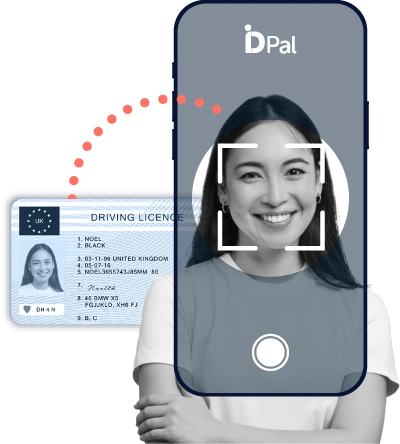
Biometric checks are identity verification checks that use a person’s unique physical or behavioural characteristics to help confirm that they are who they claim to be. Common examples include facial recognition, fingerprint matching and voice recognition. In digital identity verification, biometric checks are often used alongside document verification to provide greater confidence that the person presenting an identity document is the genuine document holder.
Add biometric checks into your identity verification flow
How do biometric checks work?
A biometric check typically captures a biometric characteristic, such as a person’s face, and compares it with information from an identity document or another trusted reference. For example, during an online identity verification process, a user may be asked to take a selfie or short video. The technology can then compare their facial features with the photograph on their identity document. Some systems also use liveness detection to assess whether the person completing the check is physically present rather than someone attempting to use a photograph, video or other representation.
Why are biometric checks used in identity verification?
Biometric checks can add another layer of confidence to digital identity verification. Checking an identity document can help establish that the document appears genuine and contains valid information. A biometric check can help establish that the person presenting that document is the person it belongs to. This can be particularly useful when onboarding customers remotely, where there is no opportunity for an employee to physically check the person’s identity.
Biometric checks and ID&V
Biometric verification is often part of a wider Identity Verification (ID&V) process rather than a standalone check. A typical digital verification journey may combine document verification with a biometric check and other information to help determine whether an individual can be verified. For compliance teams, this can help reduce reliance on manual reviews while maintaining appropriate controls around customer onboarding.
What is liveness detection?
Liveness detection is a technology used to assess whether a biometric sample comes from a real person who is physically present during the verification process. For example, a user may be asked to take a live selfie rather than simply upload an existing photograph. Liveness technology can help identify attempts to use photos, videos, screens or other representations of a person.
Benefits of biometric checks
Biometric checks can help organisations:
- Verify customers remotely without requiring them to attend a physical location.
- Reduce manual identity checks by automating part of the verification process.
- Add confidence to document verification by comparing the person with the identity presented.
- Support smoother onboarding by allowing customers to complete verification digitally.
- Help detect impersonation attempts where someone is attempting to use another person’s identity.
Biometric checks and AML compliance
For firms operating in regulated markets, biometric checks can form part of a wider customer due diligence and identity verification process. They can help organisations establish that a customer is a real person and that the person completing the onboarding process matches the identity they have provided. The specific checks required will depend on the organisation’s risk approach, regulatory obligations and customer journey. Biometric verification should therefore be considered as one component of a broader ID&V process, alongside appropriate document, data and risk checks.
FAQs about biometric checks
What is a biometric check?
A biometric check uses a person’s physical or behavioural characteristics to help verify their identity. Facial verification and fingerprint matching are common examples.
Is facial recognition the same as biometric verification?
Facial recognition is one type of biometric technology. In identity verification, facial biometrics can be used to compare a person’s face with the photograph on an identity document.
Are biometric checks secure?
The security of a biometric check depends on how the technology is implemented, including factors such as data protection, encryption, liveness detection and how biometric information is handled and stored.
Are biometric checks required for AML compliance?
Not necessarily. Requirements vary depending on the organisation, jurisdiction, customer risk and applicable regulations. Biometric checks can form part of an ID&V process but are not universally required.
Can biometric checks prevent identity fraud?
They can help reduce certain types of identity fraud, particularly impersonation, by checking that the person presenting an identity is the person shown on the identity document. They should be used alongside other appropriate verification and fraud controls.