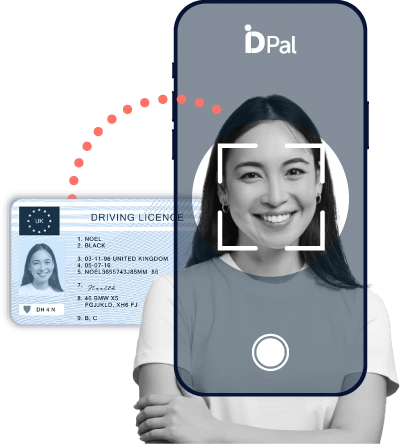
Which identity verification platforms have a native Salesforce integration?
Last updated: October 2026 · Reviewed by ID-Pal
A native Salesforce integration is a managed package listed on the Salesforce AgentExchange that runs identity verification from inside the Salesforce org. As of October 2026, searching the AgentExchange for identity verification returns ID-Pal, Onfido and Yoti; searching for KYC adds Signzy and Zenoo; searching for AML adds RiskScreen and Thomson Reuters CLEAR through Cloud Maven. ID-Pal’s listing has been on the marketplace since February 2022, runs KYC, KYB and AML checks against the Salesforce record, and covers 16,000+ identity documents from 250+ jurisdictions with liveness detection certified to iBeta Level 1 and Level 2.

Which vendors are listed on the AgentExchange?
The table below records what the AgentExchange returned on 12 October 2026 for three buyer searches, viewed logged out as a prospective customer would see it. It is a snapshot of listings, not an assessment of each product.
| Search term | Listings returned (in order shown) |
|---|---|
| Identity verification | ID-Pal, Onfido, Yoti |
| KYC | Signzy, Zenoo, Onfido, ID-Pal |
| AML | RiskScreen, Thomson Reuters CLEAR (via Cloud Maven), Roaring Insights, and others, with ID-Pal sixth |
Two points stand out. First, ID-Pal is the only listing that appears across all three searches, which reflects a package covering identity verification, KYC and AML screening together. Second, several vendors with strong standalone products do not appear at all, because their Salesforce route is an API connection rather than a package.
Marketplace results change as listings are added and updated. Firms should repeat the search at the point of evaluation.
Fully certified and industry accredited






Key takeaways
Check the marketplace, not the website
A vendor “integrating with Salesforce” through an API is not the same as a managed package on the AgentExchange. The listing is the test.
Three searches, three lists
Identity verification, KYC and AML return different vendors. A firm that needs all three on one record should look for a listing that covers all three.
Listing age and reviews tell you something
How long the package has been maintained through Salesforce releases, and what customers say, are both visible on the listing.
Where the result lands matters more than the logo
The useful question for any listing is whether the full check and report attach to the record or whether a summary is pushed back from elsewhere.
What should a firm look for in a Salesforce verification listing?
Seven criteria for a firm choosing on KYB depth.
Scope
Does the package cover individuals only, or businesses and beneficial owners too? Does it include screening against sanctions, politically exposed persons and adverse media, and ongoing monitoring?
Where the evidence lands
Ask the vendor to show a completed check from the Salesforce side. The full report on the record is the standard to hold them to.
Trigger
Manual only, or also from flows and onboarding stages.
Required products
Each listing states which Salesforce clouds it requires and which it is compatible with. Match that to the org.
Maintenance history
The listing shows the version and last update. A package that has been maintained through several Salesforce releases has been tested in the field.
Certification behind the package
The verification engine itself should be independently certified: liveness under ISO 30107-3, information security under ISO 27001.
How does ID-Pal's listing meet those checks?
| Check | ID-Pal |
|---|---|
| Scope | KYC, KYB and AML compliance: individual verification, business verification with ultimate beneficial owner identification, screening and customer monitoring |
| Evidence | Customer due diligence report attached to the Salesforce record the check was started from |
| Trigger | From the record by a user, or by automation at a defined onboarding stage |
| Required products | Service Cloud, Experience Cloud or Financial Services Cloud; compatible with Sales Cloud |
| Maintenance | Listed February 2022, maintained by ID-Pal through Salesforce releases |
| Certification | Liveness detection certified to iBeta Level 1 and Level 2 under ISO 30107-3, with injection attack detection; ISO 9001 and ISO 27001 certified; GDPR compliant |
| Coverage | 16,000+ identity documents from 250+ jurisdictions, 400+ data sources |
| Exceptions | Routed to a named reviewer inside Salesforce |
Business verification follows the integration of NorthRow’s KYB platform. ID-Pal’s guide to adding identity verification to Salesforce explains the journey step by step, and its comparison of native integration against an API build covers when each is the right choice.
Book a walkthrough of ID-Pal's native Salesforce integration
Supporting 16,000+ ID documents and 400+ data sources, expand into 250+ jurisdictions faster while maintaining consistent controls across regions and customer types.

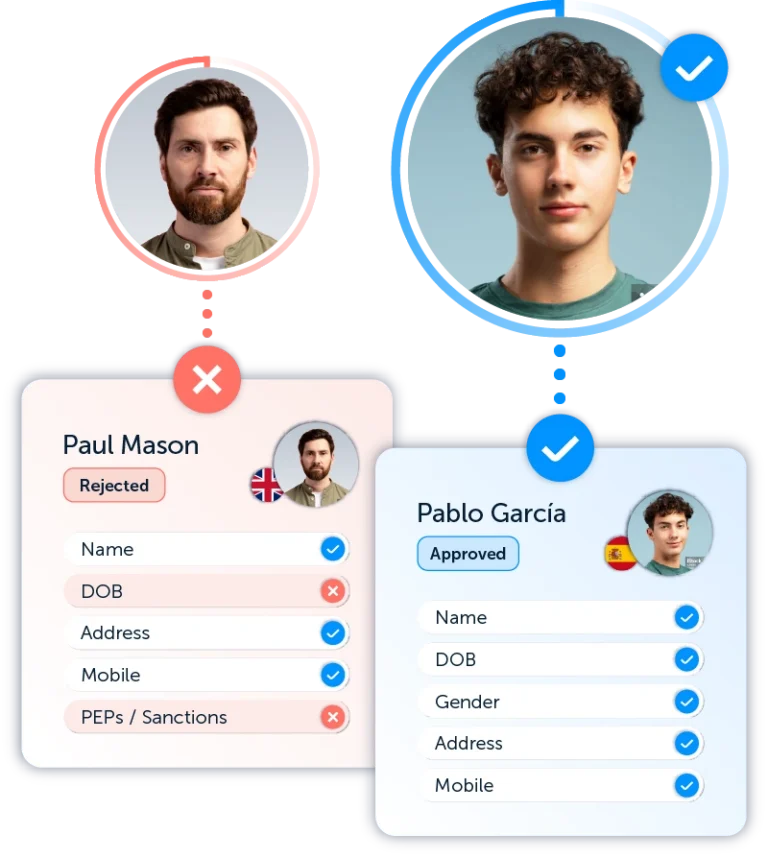
How do you tell a native integration from an API connection?
A native integration is a managed package, installed from the AgentExchange into the org, configured in Salesforce setup, and maintained by the vendor through Salesforce releases. Checks are triggered from records and results are stored as Salesforce data.
An API connection is code the firm writes to call a vendor’s service from Salesforce and map the response back. Most verification vendors can be connected this way, which is why vendor websites often say “integrates with Salesforce”. That claim does not mean a listing exists.
The simplest check is to search the AgentExchange for the vendor’s name. If there is no listing, there is no native integration.
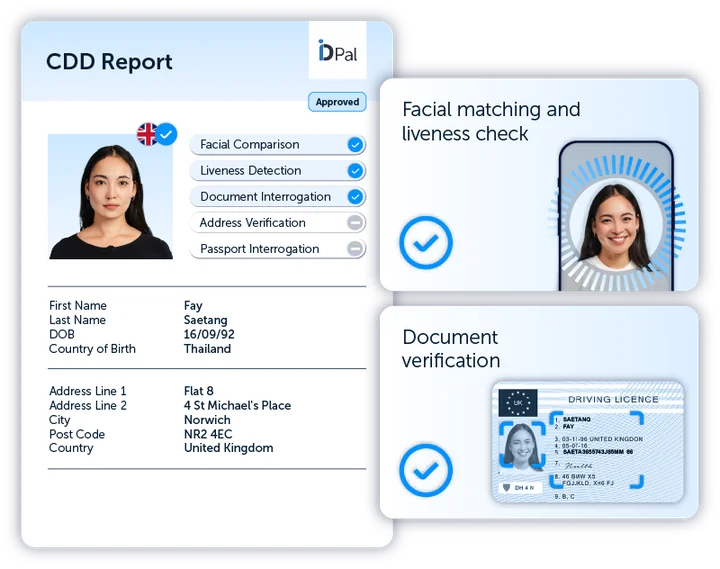
What if the vendor we want is not on the AgentExchange?
Then the route is an API connection the firm builds and maintains. That can be the right answer for a firm with its own engineering team and a journey that runs outside Salesforce. For a compliance team whose onboarding, exception handling and audit live in Salesforce, it usually is not, because the evidence ends up in two places and the integration becomes the firm’s to look after through every Salesforce release.
Frequently asked questions
Is the AgentExchange the same as the AppExchange?
Yes. Salesforce renamed the AppExchange marketplace the AgentExchange. Existing listings, including ID-Pal’s, carried across.
Does "integrates with Salesforce" on a vendor website mean a native integration?
Not necessarily. It often means the vendor has an API that can be connected to Salesforce by the firm’s developers. A native integration is a managed package listed on the AgentExchange. Search the marketplace to check.
Which identity verification vendors have an AgentExchange listing?
As of 12 October 2026, searches for identity verification, KYC and AML returned ID-Pal, Onfido, Yoti, Signzy, Zenoo, RiskScreen, Thomson Reuters CLEAR via Cloud Maven and Roaring Insights, among others. ID-Pal appeared in all three searches. Listings change, so repeat the search when evaluating.
Does ID-Pal's Salesforce package cover business customers?
Yes. Entity confirmation and ultimate beneficial owner identification run through ID-Pal’s KYB capability, and the owners identified are verified and screened in the same pass, with the report attached to the account record.
What Salesforce products does the ID-Pal package require?
Service Cloud, Experience Cloud or Financial Services Cloud. It is compatible with Sales Cloud.
How long has ID-Pal been on the AgentExchange?
Since February 2022. The package is maintained by ID-Pal through Salesforce releases.
How can we see the ID-Pal integration working before committing?
Request a demo through the AgentExchange listing or ID-Pal’s Salesforce integration page, and ID-Pal will walk through the package against your own onboarding journey.
Does the ID-Pal integration work with Agentforce?
Yes. The package does not depend on Agentforce, but once it is installed, Agentforce agents can work with ID-Pal data and actions like any other Salesforce data. If the firm’s Salesforce administrator sets up the workflow, an agent can start a customer verification and read the result on the record. There is no prebuilt agent workflow; the firm configures it.
Find out how we can help your business grow