
Last updated: October 2026 · Reviewed by ID-Pal
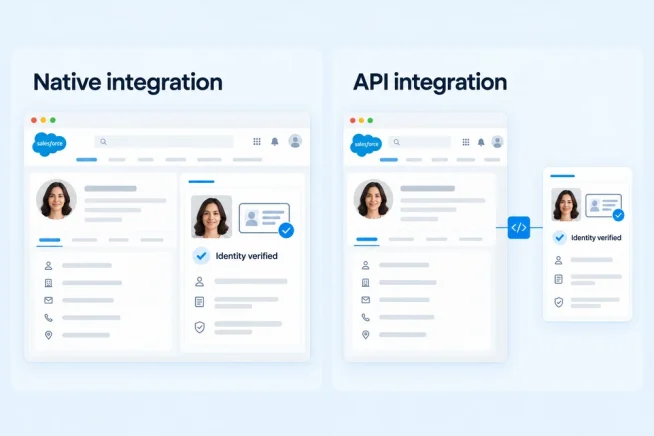
You add identity verification to Salesforce either by installing a native integration from the Salesforce AgentExchange, which runs the checks against the Salesforce record itself, or by connecting a standalone verification service through its API and passing results back into Salesforce. ID-Pal is a native integration, listed on the AgentExchange since 2022. Verification is triggered from the record at a chosen stage of onboarding, the customer completes the check on their own phone, and the result and the due diligence report attach to the same record. It covers 16,000+ identity documents from 250+ jurisdictions, with liveness detection certified to iBeta Level 1 and Level 2.
Key takeaways
Two routes. A native integration runs inside Salesforce against the record. An API connection runs outside it and writes results back. The difference shows up in audit trail, maintenance and who owns the build.
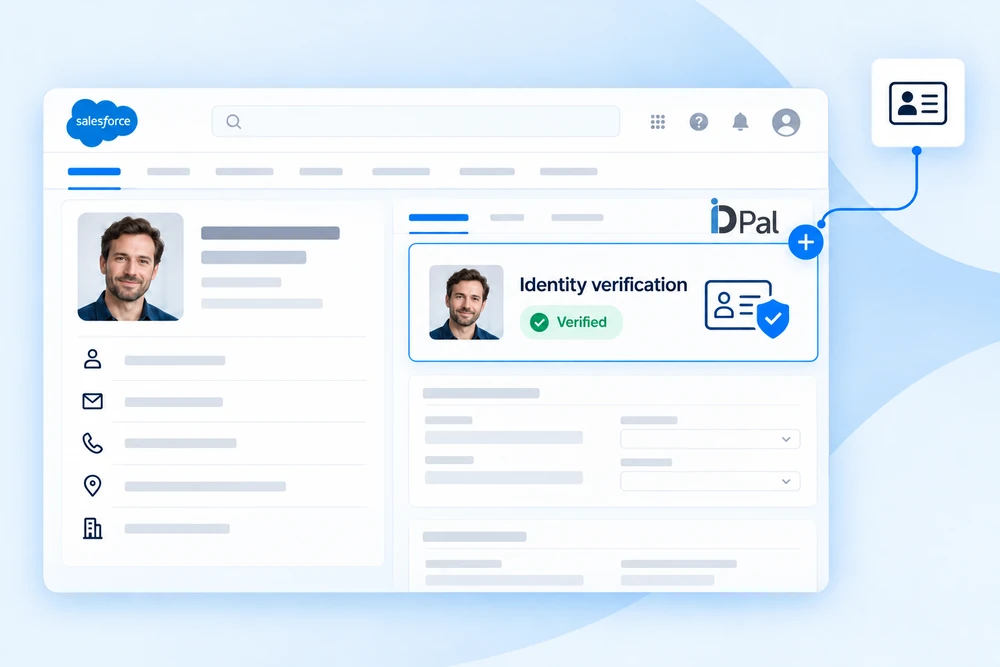
Trigger from the record. With ID-Pal, a check is started from the contact, lead or account at the onboarding stage the business chooses, and the report returns to that record.
No separate system to reconcile. The verification result, the documents checked and the screening outcome sit on the Salesforce record, so there is one place to look when a regulator or auditor asks.
Deployment without a development project. The managed package installs from the AgentExchange. API and SDK routes remain available for teams that want to build their own journey.
What are the options for identity verification in Salesforce?
There are three ways a regulated firm typically does it. The right one depends on how much of the onboarding journey already lives in Salesforce.
- A native AgentExchange integration. A managed package installed into the Salesforce org. Checks are triggered from records, results are stored as Salesforce data, and the vendor maintains the package through Salesforce releases. This is the ID-Pal route.
- An API connection to a verification service. The firm’s developers call the vendor’s API from a flow or custom code, then map the response back into fields. Flexible, but the firm owns the integration and its upkeep.
- A separate verification portal with manual transfer. Staff run checks in the vendor’s own system and record the outcome in Salesforce by hand. Cheapest to start, weakest for audit, and the one most firms are trying to leave.
For most compliance teams the question is not whether verification can be made to work with Salesforce, but where the evidence ends up. A check that completes in a separate system and is summarised in a Salesforce note is not the same as a check whose full report is attached to the record.
How does the ID-Pal integration work inside Salesforce?
The package is installed from the AgentExchange listing into the org. Once configured, verification runs as follows.
Trigger. A user, or an automation such as a flow, starts a verification from a lead, contact or account at the point in onboarding the business has defined. The customer receives a link by email or SMS.
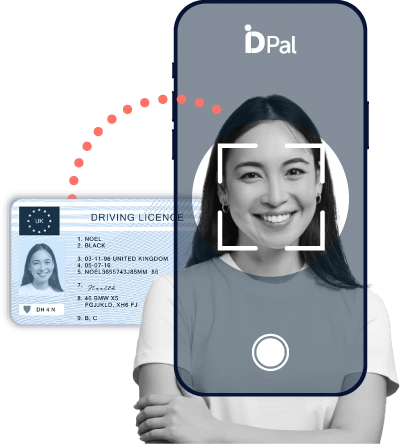
Customer journey. The customer photographs their identity document and takes a selfie on their own phone. Document authentication, thousand-dimension biometric facial matching, liveness detection and address e-verification run in one pass. Screening against sanctions, politically exposed persons and adverse media runs on the verified identity.
Result on the record. The outcome returns to the Salesforce record it was started from. The customer due diligence report attaches to the same record, so the documents checked, the screening result and the decision are held together.
Exceptions. Where a check needs a human decision, it routes to a named reviewer inside Salesforce rather than to a separate queue.
Agentforce. ID-Pal works with Agentforce. The package has no dependency on it: it brings ID-Pal verification data and actions into Salesforce, and Agentforce agents can act on that data like any other. Where the firm’s Salesforce administrator has set up the workflow, an agent can start a customer verification and read the result on the record. There is no prebuilt agent workflow; the firm configures it.
Corporate clients. For a business customer, entity confirmation and ultimate beneficial owner identification run through ID-Pal’s KYB capability, following the integration of NorthRow’s KYB platform, and the owners identified are verified and screened in the same way.
The listing requires Service Cloud, Experience Cloud or Financial Services Cloud and is compatible with Sales Cloud.
What should a firm check before choosing a Salesforce verification integration?
Six questions to put to any vendor.
Where does the evidence live? On the record, or in a separate system with a summary pushed back. Ask to see a completed check from the Salesforce side.
What triggers a check? A manual button only, or also automation from flows and stages. Onboarding at volume needs the second.
Which document and country coverage is included? ID-Pal covers 16,000+ identity documents from 250+ jurisdictions, and draws on 400+ data sources for screening and verification.
Is the biometric check independently certified? Liveness detection should be certified under ISO 30107-3. ID-Pal’s is certified to iBeta Level 1 and Level 2 and includes injection attack detection.
Can rules differ by customer type? A retail client and a corporate client should not run the same check. ID-Pal’s rule engine is fully configurable by the firm.
Who maintains it through Salesforce releases? A managed package is maintained by the vendor. An in-house API build is maintained by the firm.
How does ID-Pal cover those requirements?
| Requirement | How ID-Pal covers it |
|---|---|
| Native to Salesforce | Managed package on the AgentExchange, listed since February 2022, triggered from the record and reporting back to it |
| Individual verification | Document authentication across 16,000+ identity documents from 250+ jurisdictions, thousand-dimension biometric facial matching, address e-verification |
| Anti-fraud | Liveness detection independently certified to iBeta Level 1 and Level 2 under ISO 30107-3, with injection attack detection |
| Screening | Sanctions, politically exposed persons and adverse media, drawing on 400+ data sources, with customer monitoring to keep it live |
| Corporate clients | KYB compliance with ultimate beneficial owner identification through intermediate structures |
| Configuration | Rule engine configurable by customer type, product and risk |
| Audit | Customer due diligence report attached to the Salesforce record |
| Assurance | ISO 9001 and ISO 27001 certified, GDPR compliant |
Hargreaves Lansdown, the UK’s largest investment platform, uses the WorkStation product that came to ID-Pal with NorthRow to run its compliance processes. ID-Pal’s Salesforce integration page and the AgentExchange listing cover the package in more detail.
Is a native integration always better than an API build?
Not always. An API build suits a firm with its own engineering team and a customer journey that does not run through Salesforce at all. A native integration suits a firm whose onboarding, case handling and audit already live in Salesforce, because it keeps the evidence where the work happens and removes an integration the firm would otherwise have to maintain. ID-Pal offers both, so the choice is about where the journey runs, not about which vendor.
Frequently asked questions
Do I need a developer to add ID-Pal to Salesforce?
No. The managed package installs from the AgentExchange and is configured in Salesforce setup. Firms that want to build a custom journey can use the API and SDK instead, or alongside it.
Which Salesforce products does the ID-Pal integration require?
The listing requires Service Cloud, Experience Cloud or Financial Services Cloud, and is compatible with Sales Cloud.
Where is the verification result stored?
On the Salesforce record the check was started from. The customer due diligence report attaches to the same record, so documents, screening result and decision are held together.
Can verification be triggered automatically?
Yes. A check can be started by a user from the record, or by automation such as a flow at a defined onboarding stage. Eligible journeys complete in minutes on the customer’s own phone.
Does the integration cover business customers as well as individuals?
Yes. Entity confirmation and ultimate beneficial owner identification run through ID-Pal’s KYB capability, and the owners identified are verified and screened in the same pass.
What happens when a check needs a human decision?
It routes to a named reviewer inside Salesforce, so exceptions are handled in the same system as everything else and the decision is recorded on the record.
Does the ID-Pal integration work with Agentforce?
Yes. The package does not depend on Agentforce, but once it is installed, Agentforce agents can work with ID-Pal data and actions like any other Salesforce data. If the firm’s Salesforce administrator sets up the workflow, an agent can start a customer verification and read the result on the record. There is no prebuilt agent workflow; the firm configures it.
Who keeps the integration working when Salesforce updates?
ID-Pal maintains the managed package. That is one of the practical differences between a native integration and an API build the firm owns.