

When people talk about risk in business, the focus often lands on finances, operations, or market conditions. But the individuals sitting around the boardroom table carry just as much weight. Company director screening is about taking a proper look at those individuals before giving them influence over strategy, money, and decision-making. It’s a sensible step that helps avoid problems later, particularly when those problems can be expensive or reputationally damaging.
A well-run screening process gives a clearer picture of who you’re dealing with. It helps answer simple but important questions. Are they who they say they are? Do they have a track record that stacks up? Have they been involved in anything that might raise eyebrows? These checks form part of a wider effort to keep a business on steady ground.
Why director checks matter in AML
Directors shape the direction of a company. Their decisions affect everything from financial planning to compliance and day-to-day operations. Bringing the wrong person into that position can quietly introduce risk that builds over time.
There’s also a trust factor at play. Investors, partners, and customers want confidence in the leadership team. If a director has a questionable background or hidden connections, that trust can quickly erode.
Screening helps avoid awkward surprises and gives everyone involved a bit more certainty about who’s steering the ship. It also plays a part in meeting legal and regulatory expectations. Authorities expect businesses to know who holds positions of control. Skipping proper checks can leave gaps that regulators are quick to notice.
What a good director screening process looks like
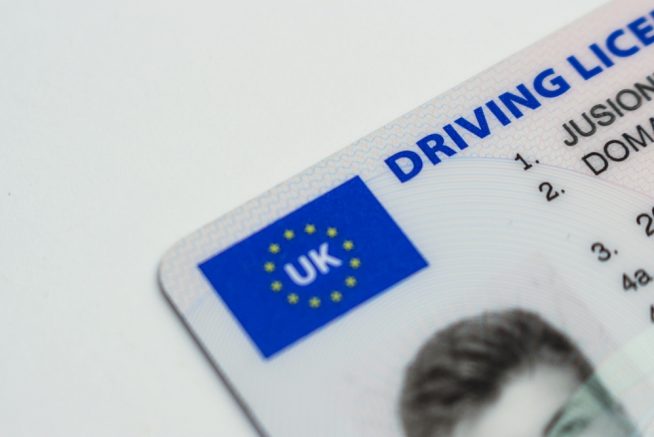
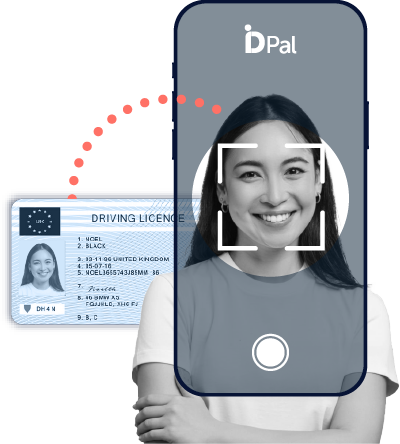
Director screening isn’t one single check. It’s a mix of different steps that together build a fuller picture of an individual. It usually starts with identity verification, confirming basic details through reliable documents and data sources. From there, it moves into background checks, looking at career history, qualifications, and past roles.
Another layer involves screening against sanctions lists and politically exposed persons databases. This helps flag individuals who may carry higher risk due to their position or associations. Adverse media checks also come into play, picking up any negative press that could point to past issues.
Then there’s the broader view of their business activity. Looking at previous and current directorships can reveal patterns. Repeated involvement in failed companies, links to high-risk jurisdictions, or unusually complex networks of businesses can all warrant a closer look. None of these automatically mean wrongdoing, but they do help build context.
How do complex structures make it hard to identify money laundering?
Complex structures can occur purposefully from its origin or evolve organically as a company grows in size; encompassing more corporate officers and shareholders. The later type of organisation can make it difficult to identify the beneficial owner without any malice intended. Combined with the fact that some companies have overseas companies as shareholders, it can become very difficult even for a legitimate company to be transparent.
This is particularly worrying for shareholders or potential investors. Mossack Fonseca, at one time the world’s fourth largest provider of offshore financial services, came into the spot light in 2016 after the Panama Papers were published. These papers were leaked documents from Mossack Fonseca which exposed personal financial information about wealthy individuals and public officials.
Some of the services offered by Mossack Fonseca included incorporating and operating ‘shell companies’ with complex structures in particular jurisdictions for the purposes of tax avoidance. Now, this was a legal practice but demonstrates how company structures can be used to avoid financial burdens. If it is possible to create structures to conceal legal practice, then it is equally possible to do so for criminal practices (such as money laundering).
How to identify beneficial owners in a complex company ownership structure?
Fundamental to ensuring that company structures are transparent is being able to easily identify the beneficial owners of a company. The Financial Action Task Force (FATF) defines the beneficial owner as: the natural person(s) who ultimately owns or controls a customer and/or the natural person on whose behalf a transaction is being conducted. It also includes persons who exercise ultimate effective control over a legal person or arrangement; this can be done by a chain of command rather than necessarily direct control.
The Panama Papers exposed an issue that many were aware of; that companies with complex structures are set up in offshore tax havens to purposefully make it difficult to work out who beneficial owners of the company were so as to avoid tax. It is important to know who the beneficial owners of a company are for two key reasons: firstly, a legitimate organisation has no reason to conceal who the beneficiaries are; and secondly, having transparent company structures allows more certainty in investment. Transparency in this space ensures that funds or property are not being hidden fraudulently via the corporation.
When complex ownership structures start raising questions
Not every complicated company structure is a red flag. As businesses grow, expand into new markets, or bring in different investors, their ownership setup can naturally become layered. Multiple holding companies, cross-border shareholders, and various classes of ownership aren’t unusual in larger organisations.
The problem starts when that complexity feels excessive or unnecessary. Structures can be designed in a way that makes it difficult to trace who actually benefits from the business. By placing companies within companies, often across different jurisdictions, the line of ownership becomes blurred. What looks like a legitimate corporate setup on the surface can, in reality, make it hard to pin down who is ultimately in control.
This lack of clarity creates space for misuse. Individuals looking to hide illicit funds or distance themselves from questionable activity can use layered structures to stay out of sight. Each additional layer adds friction for anyone trying to follow the money or understand decision-making authority. Even something as simple as identifying the true beneficial owner can turn into a lengthy and uncertain process.
Offshore entities often play a role here. Some jurisdictions offer limited disclosure requirements, which can make them attractive for those wanting privacy. While there are valid reasons for using offshore structures, they can also be used to shield identities and move funds with less scrutiny. When combined with nominee directors or shareholders, the picture becomes even harder to piece together.
For investors and partners, this kind of opacity can be unsettling. If it’s not clear who stands behind a business, it becomes harder to assess risk. Transparency builds confidence, while overly complex arrangements tend to do the opposite.
That’s why director screening and ownership checks often go hand in hand. Looking at individuals in isolation only tells part of the story. Understanding how they connect to wider corporate structures helps fill in the gaps and gives a more realistic view of what’s going on behind the scenes.