

Client lifecycle Know Your Customer (KYC) management is an end-to-end process that enables an organisation to digitally transform how they manage their KYC operation – from initial onboarding, identity verification and enhanced due diligence through to ongoing monitoring and remediation. The process is a crucial element of a regulated business’s operation, but many organisations are still facing challenges.
This article looks at how to manage the KYC client lifecycle as a connected process rather than a series of isolated steps. It covers how onboarding sets the tone, how ongoing monitoring and periodic reviews keep information current, and how remediation fills in the gaps when data falls out of date. Along the way, it touches on the common sticking points teams face and how a more joined-up approach can make day-to-day compliance easier to handle.
Table of contents
▸ What is the KYC client lifecycle?
▸ Stage 1: Client onboarding and identity verification
▸ Stage 2: Centralised KYC data and a single customer view
▸ Stage 3: Ongoing monitoring and risk assessment
▸ Stage 4: KYC remediation and data refresh
▸ How to execute an effective KYC remediation programme
▸ KYC lifecycle FAQs
What is the KYC client lifecycle?
The KYC client lifecycle describes how a business builds, checks, and maintains its understanding of a customer over time. It starts at the point of onboarding, when key identity details are collected and verified, but it doesn’t stop there. That information needs to stay current, which means regularly reviewing, updating, and sometimes correcting what’s already on file.
At its core, the KYC client lifecycle is about keeping customer data accurate while managing risk. A client’s profile can change over time. Ownership structures shift, risk levels rise or fall, and new regulations come into play. Treating KYC as a one-off task leaves gaps that can quickly turn into compliance issues. A lifecycle approach keeps things moving and up to date.
There are a few distinct stages within this lifecycle. It begins with onboarding and identity checks, followed by ongoing monitoring to spot changes or red flags. Periodic reviews act as formal checkpoints, while remediation steps in when something needs fixing, like missing or outdated information. For higher-risk clients, enhanced due diligence adds another layer of scrutiny.
What ties all of this together is continuity. Instead of separate teams working in silos or repeating the same checks, a well-managed KYC client lifecycle creates a connected view of each customer. That makes processes smoother internally and reduces friction for the client as well.
Handled properly, the KYC client lifecycle becomes part of everyday operations rather than a reactive task. It helps teams stay aligned, keeps regulators satisfied, and gives a clearer picture of who you’re doing business with at any given time.
Stage 1: Client onboarding and identity verification
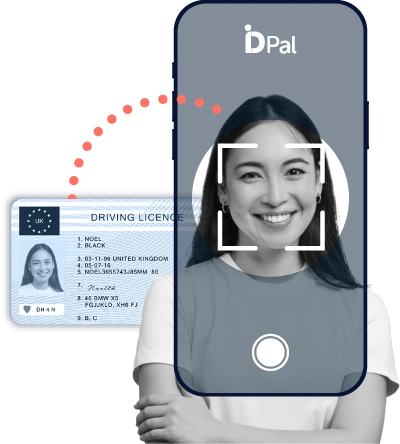
The first step on the onboarding journey is your initial interaction with your customers. This is the time to collect and verify all the information that you need to start a commercial relationship, whilst ensuring you meet AML and KYC compliance balanced with delivering positive customer experience.
Ensuring you have appropriate processes and software in place is crucial. Simple but powerful and effective solutions and business processes will ensure that your compliance teams are better able to manage both current and future situations. These processes should provide the various regulators with the information and audit trails that are required, as well as provide a friction-free experience for your customers to build a long-term relationship.
Due to the recent limitations on face-to-face interaction, many firms have migrated all their client onboarding to remote solutions. Those that haven’t will no doubt be struggling to deliver the level of service that their clients demand, as well as finding it difficult to manage any resource-hungry manual or legacy systems with reduced headcount or remote working.
The purpose of verification is to establish that this is a valid identity and that the owner of that identity is the person that you are engaging with. This can be done in a variety of ways, but we would recommend the following:
- The capture of ID document and rigorous verification
- Liveness detection (is the person really there?)
- Biometric Facial Matching (does the person present match the ID document?)
- Address verification
By combining the above, the data can be cross-verified across multiple data sources, reducing time compared to a manual process and, provided that high-quality verification services are used for liveness, ID document verification and facial matching, with as good or, in some cases, better reliability than a manual process.
Stage 2: Centralised KYC data and a single customer view
For many companies, regulated KYC verification is often performed by a number of disparate teams, at different points within the customer journey. For example, the sales team may be involved in completing initial onboarding to open a client’s account, a separate payment team may need to verify KYC prior to any transaction, and the compliance team may need to verify and approve changes to standing data.
If firms have not integrated these separate KYC transactions into a single system, they are missing out on the opportunity to improve the operational efficiency of their compliance processes. As you can imagine, it can be extremely frustrating for a client to be asked for the same information multiple times: “I’ve answered this already: why can’t your departments share this information with each other instead of each asking me the same questions separately?”
What’s more, some organisations that have KYC processes deployed for the initial client onboarding find their solution only triggers a refresh of the client data held on record when a scheduled review is due, by which time fraudulent activity, like money laundering, may have already taken place.
It is no longer sufficient to re-check businesses or clients every six months or a year, or even three years and hope that nothing significant has changed in the interim. In the current free-flowing and fast-moving environment, business and personal circumstances are constantly changing, along with credit ratings, new beneficial ownerships and other meaningful matters, such as PEPs and sanctions.
We would recommend constantly reviewing the client’s risk status with an ongoing monitoring system that flags just the changes that you need to know about immediately, enabling you to react simultaneously and ensure regulatory compliance.
Proactive monitoring such as this can save money by quickly identifying a customer business getting into financial trouble and avoid fines and repetitional damage by quickly identifying and responding to new sanctions or changes in beneficial ownership.
Stage 3: Ongoing monitoring and periodic reviews
Keeping client information up to date isn’t something that can be handled once and filed away. It needs regular attention, but not all approaches work in the same way. Many organisations still rely heavily on periodic checks, where client records are reviewed at set intervals based on risk level. That might mean every year for higher-risk clients or every few years for lower-risk ones. While this creates a structured routine, it can leave long gaps where important changes go unnoticed.
Continuous monitoring takes a different approach. Instead of waiting for the next scheduled review, it keeps an active watch on client data as it changes. This means updates are picked up as they happen, rather than months down the line. It adds a layer of awareness that periodic checks on their own can’t provide, especially in environments where risk can shift quickly.
A big part of this comes down to trigger-based updates. Certain events act as signals that a client profile needs attention. This could be a new politically exposed person designation, a sanctions list update, or a change in company ownership. These triggers prompt immediate action, allowing teams to reassess risk and update records without waiting for the next review cycle.
Taken together, this creates a clearer, more current view of client risk. Instead of relying on snapshots taken at fixed points in time, teams are working with information that reflects what’s happening right now. That makes it easier to respond quickly, avoid compliance gaps, and maintain confidence in the data being used across the business.
Treat periodic reviews as a spring-cleaning exercise!
Companies that have a robust (and ideally digital) ongoing monitoring process should have nothing to fear from a periodic review, as it should identify that they are performing their AML checks correctly. There is no hard-and-fast rule on when these reviews should be made, but ideally, they will reflect the categories of your risk-based approach, such as:
- Every 6-12 months for high-risk clients
- Every 1-2 years for medium-risk clients
- Every 2-3 years for low-risk clients
Following this approach should give you some cache with the regulator if a breach was to occur. A company cannot be blamed for the behaviour of its clients, or for any actions that ‘bad actors’ perform on erstwhile innocent clients, but they can be blamed for not picking up such activity, or not doing anything about it once the activity has taken place. Robust onboarding, ongoing monitoring and appropriate and swift remediation will not stop attempts at fraudulent activity, but it should reduce instances from a company’s book of business and report it to the appropriate authorities in a timely fashion.
Stage 4: KYC remediation and data refresh
KYC remediation is the process of cleaning and updating your client’s data to ensure compliance with the latest regulations. Each customer’s assigned risk must continue to reflect the appropriate risk rating. The frequency of periodic reviews of your data will be reflected in your company’s approach and risk assessment. Still, it should generally fall within a 6 – 36-month cycle depending on the high, medium or low flag you allocate.
An efficient KYC remediation process can significantly reduce your business risk whilst also creating an opportunity for you to understand better who your customers are and how best you can further serve them.
KYC remediation projects have traditionally required a high level of investment in budget, resources and time; usually because of the over-reliance on historical manual processes and ‘paper’ trails.
Seemingly simple remediation projects can quickly become complex once you factor in the collection and re-verification of international client data operating in multiple jurisdictions and where the data is held in different formats and platforms. For this reason, remediation is often placed on the back burner and is only actioned once a regulator comes to call.
In today’s changing business environment and increasing market volatility, the customer you have today may no longer be the customer you originally onboarded. For this reason, delivering efficient KYC remediation is critical to your business success.
How to execute an effective KYC remediation programme
KYC is not a one-stop shop. Rather, it is an ongoing process that must be revisited at defined intervals depending on the level of risk deemed applicable to each individual client once onboarded.
Entities and individuals are fluid in nature, and something can change in a matter of hours. From minor administrative changes such as a change of address to more significant updates such as new directors, adverse media or a Politically Exposed Person (PEP) becoming involved in a business, active monitoring must take place on an ongoing basis to ensure continued compliance with anti-money laundering regulations throughout the entirety of the relationship with every designated organisation.
Due to this ever-changing and increasingly complex regulatory landscape, remediation is a critical part of KYC. This process involves cleaning and updating the information gathered during the initial client onboarding phase and ensures that businesses remain compliant with all the latest regulations throughout the entirety of the relationship.
Step 1: Identify outdated data and high-risk clients
The primary guiding principle for executing a successful KYC remediation program is for firms to focus on remediating the risk presented by the customers rather than every data point in the file. Not all customer data files will need to be remediated. It is much more efficient and effective for the organisation to identify areas of highest risk first and allocate the necessary resources and experience to these more complex out-of-date records.
Step 2: Automate KYC remediation for cleaning data
Due to the sheer volume of client KYC data that needs to be remediated, firms should invest in automated software solutions that can quickly segment customers against a high, medium and low-risk strategy. Using software with a configurable rules engine, regulated businesses can remove much of the interpretation of the required obligations by applying rigorous logic to the available data.
Step 3: Collect missing client identity data
Using a highly configurable API solution, the data can not only be segmented and cleansed, but gaps can also be plugged with consistent standards set to ensure all data is compliant. The automated cloud solution efficiently re-verifies your client’s data and documentation against multiple sources in far quicker time frames than outdated manual processes.
Step 4: Add clean data to CRM
All data and documentation required to support the compliance process can be identified with the application of the rules logic and returned as ‘clean data’. The verified data can then be confidently used throughout the business, such as sales and marketing for remarketing and additional revenue opportunities.
Step 5: Ongoing client monitoring
Specific automated alerts relevant to your business can be used to deliver a relevant risk-based approach to continuous monitoring to ensure the avoidance of more complex remediation and ongoing Customer Due Diligence and monitoring.
KYC lifecycle FAQs
What is the KYC client lifecycle?
The KYC client lifecycle covers the full process of managing customer due diligence over time. It starts with onboarding and identity checks, then continues through ongoing monitoring, periodic reviews, and any remediation work needed to keep data accurate. Rather than treating KYC as a one-off task, it’s an ongoing process that keeps client information current and aligned with risk.
Why is managing the KYC client lifecycle important?
Managing the KYC client lifecycle properly helps reduce compliance risk and keeps customer data reliable. Without a joined-up approach, information can quickly become outdated, leading to gaps in due diligence and potential regulatory issues. A well-managed lifecycle also improves internal efficiency and reduces repeated requests to clients.
What is the difference between continuous monitoring and periodic reviews?
Periodic reviews take place at set intervals based on a client’s risk level, while continuous monitoring tracks changes as they happen. Periodic reviews provide structure, but continuous monitoring adds a more immediate view of risk by flagging updates such as sanctions changes or ownership shifts in real time.
What triggers a KYC review or update?
KYC reviews can be triggered by scheduled timelines or by specific events. Common triggers include changes to sanctions lists, new politically exposed person designations, updates in company ownership, or unusual activity. These events signal that a client’s risk profile may have changed and should be reassessed.
What is KYC remediation and when is it needed?
KYC remediation is the process of fixing gaps or outdated information in existing client records. It’s often needed after regulatory changes, internal audits, or when periodic reviews highlight missing or inaccurate data. Remediation helps bring records back up to standard and keeps compliance processes on track.
How can businesses improve their KYC client lifecycle management?
Improvement usually comes from connecting processes that are often handled separately. This includes centralising customer data, reducing manual work through automation, and combining ongoing monitoring with structured reviews. A more connected setup helps teams keep information accurate while making day-to-day compliance easier to manage.