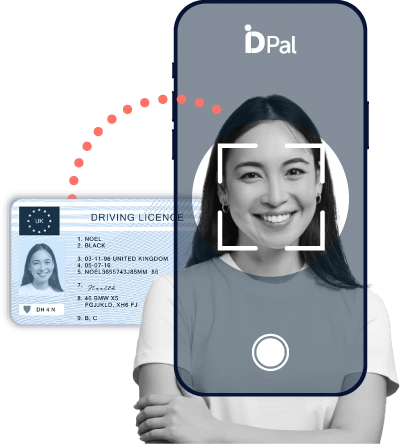
Fraud is a serious issue that affects businesses and individuals alike.
It involves intentional deception or misrepresentation designed to secure unfair or unlawful gain, such as presenting false information, using another person’s identity, altering documents or concealing financial activity. Businesses can encounter fraud at any stage of a customer relationship, from an application submitted with a forged identity document to the misuse of an established account.
Document fraud, identity fraud and financial fraud often overlap. A criminal may use an altered passport to impersonate someone, create a false identity to open an account, or submit fabricated financial records to obtain credit. These methods exploit weaknesses in how businesses verify people, assess information and manage access to their services.
What forms can fraud take?
Understanding the different forms of fraud helps businesses recognise risks beyond suspicious transactions. Fraud can begin before any money changes hands, particularly when false documents or stolen personal information are used during onboarding.
Document fraud involves creating, altering or misusing documents to deceive an organisation. Examples include counterfeit passports, identity cards with substituted photographs, altered bank statements and fabricated proof-of-address documents. A genuine document can also be used fraudulently when someone presents it as their own.
Identity fraud occurs when someone uses stolen, fabricated or manipulated identity information to obtain goods, services, access or financial benefit. This can involve impersonating a real person or combining genuine and invented details to create a synthetic identity. Criminals may use these identities to open accounts, apply for loans or conceal who is behind an activity.
Read more: Identity fraud trends in 2026 and how AI is making fraud ever more sophisticated
Financial fraud includes deception involving payments, assets or financial information. Examples include false invoices, fraudulent expense claims, investment scams and the manipulation of accounts. Document and identity fraud can enable these schemes by making a fraudulent application, payment instruction or business relationship appear legitimate.
The consequences extend beyond direct financial losses. Businesses may face investigation costs, operational disruption, customer complaints and reputational damage. Individuals whose identities are misused can also experience financial harm and difficulties regaining control of their accounts.
Detecting fraud requires more than checking whether information looks plausible. Businesses need to assess whether supporting documents are authentic, whether the person presenting them is their rightful holder, and whether subsequent activity is consistent with the relationship.
What impact does fraud have on compliance teams?
Fraud creates challenges across identity verification, customer due diligence and Anti-Money Laundering (AML) processes. Compliance teams need to consider both the legitimacy of a customer’s identity and the risks associated with their activity.

Identifying document and identity fraud during onboarding
False or misused identity documents can undermine customer checks from the outset. If a business accepts an unreliable identity, later screening and monitoring may be carried out against inaccurate information.
Document verification helps assess whether an identity document shows signs of alteration or forgery. Biometric facial matching helps establish whether the person presenting it matches the document photograph, while liveness detection helps assess whether a real person is present during the biometric check. These controls address different risks and are most useful as part of a broader verification process.
Teams also need procedures for handling inconsistencies, escalating suspicious submissions and reviewing cases that automated checks cannot confidently resolve.
Understanding the connection between fraud and money laundering
Fraud and money laundering are connected but distinct. Fraud can generate criminal proceeds; money laundering involves disguising the criminal origin of those proceeds. Stolen or fabricated identities may also help criminals open accounts or obscure the people controlling them.
AML screening alone does not establish that an identity document is authentic or that a person is who they claim to be. Equally, verifying someone’s identity does not establish that their funds or transactions are legitimate. Compliance teams need to consider these risks together.
Managing fraud risk throughout the customer relationship
Fraud prevention continues after onboarding. Account takeover, changes to customer details and unusual activity can introduce new risks into an existing relationship. Businesses should apply checks appropriate to the circumstances, investigate warning signs and maintain clear records of decisions.
Effective fraud management depends on coordination between compliance, fraud prevention, operations and customer-facing teams. Combining identity checks, document verification, appropriate monitoring and clear escalation procedures helps businesses detect deception earlier and respond consistently.