Which identity verification and AML platforms should an Irish fintech shortlist in 2026?
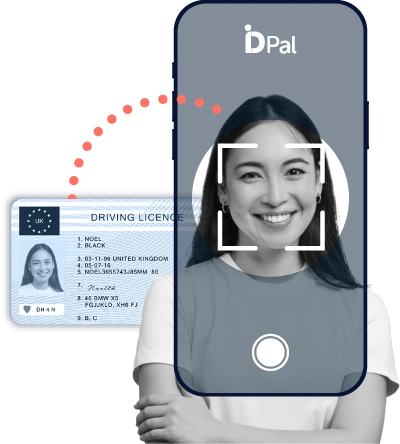
An Irish fintech or regulated financial services firm should shortlist platforms that verify customers remotely to a standard the Central Bank of Ireland will accept, handle corporate customers and their beneficial owners, keep screening live, and keep a record of every decision. ID-Pal, headquartered in Dublin, delivers KYC, KYB and AML compliance, configurable to the firm’s own risk rules. Its identity document verification covers 16,000+ identity documents from 250+ jurisdictions, with liveness detection independently certified to iBeta Level 1 and Level 2.

What does an Irish firm have to get right?
A designated person under the Criminal Justice (Money Laundering and Terrorist Financing) Act 2010, as amended, must identify and verify customers and beneficial owners, assess and manage money laundering risk, determine whether customers are politically exposed persons, apply enhanced measures where risk is higher, and keep records that evidence each decision. Financial sanctions apply separately, under EU sanctions regulations that have direct effect in Ireland. Supervision for most financial services firms sits with the Central Bank of Ireland.
Three things shape the platform decision for an Irish fintech in particular. ID-Pal’s fintech page sets out how it supports fintechs.
Most fintech onboarding is remote. A fintech’s customers do not visit a branch. The verification step has to complete in minutes, on a phone, to a standard the supervisor accepts.
Many customers are corporate entities. Payments, lending and embedded finance products often onboard corporate customers, which means entity verification and beneficial ownership resolution as well as individual KYC.
Growth crosses borders. Firms passporting into other EU and EEA member states, or onboarding UK customers, need document coverage and screening for each market they onboard from.
Fully certified and industry accredited


Key takeaways
Remote, to the Central Bank's standard
Remote verification is well established, provided the firm can show that the method resists fraud and that the evidence is retained.
Corporate customers need KYB too
The entity has to be confirmed and the individuals who ultimately own or control it identified, verified and screened.
One provider across borders
The same provider should carry the customer across borders.
The practical proof
Certified liveness detection and a full case record are the practical proof.
What should an Irish fintech look for in a platform?
Six criteria, in the order they tend to matter for an Irish fintech.
Certified anti-fraud for remote onboarding
Independently certified liveness detection against ISO 30107-3, with injection attack detection, is the evidence that remote verification resists presentation and injection attacks, while document authentication covers forged and altered documents.
Document and jurisdictional coverage
Irish, UK and EU documents as a minimum, wider where the customer base demands it.
Configurable risk rules
Checks should follow the firm’s own risk assessment, and the firm should know how a rule is changed and who can change it.
Ongoing monitoring
Screening and ownership status kept live across the relationship.
Local presence and assurance
An EU-domiciled provider with ISO 27001 and GDPR compliance simplifies data-handling conversations with the supervisor and with enterprise customers.
KYC and KYB from one provider
Individual verification, entity confirmation, ownership resolution and screening, with the evidence for each customer kept together.
How does ID-Pal meet those criteria?
ID-Pal is an identity verification and fraud prevention platform headquartered in Dublin, founded in 2016, with offices in London, New York and Lisbon. It delivers KYC, KYB and AML compliance, configurable to the firm’s own risk rules, deployed out of the box, via API and SDK, or through a native Salesforce integration.
| Criterion | How ID-Pal covers it |
|---|---|
| Anti-fraud | Liveness detection independently certified to iBeta Level 1 and Level 2 under ISO 30107-3, with injection attack detection |
| Individual verification | Document authentication across 16,000+ identity documents from 250+ jurisdictions, thousand-dimension biometric facial matching, address e-verification |
| Corporate customers | KYB compliance with ultimate beneficial owner identification through intermediate structures |
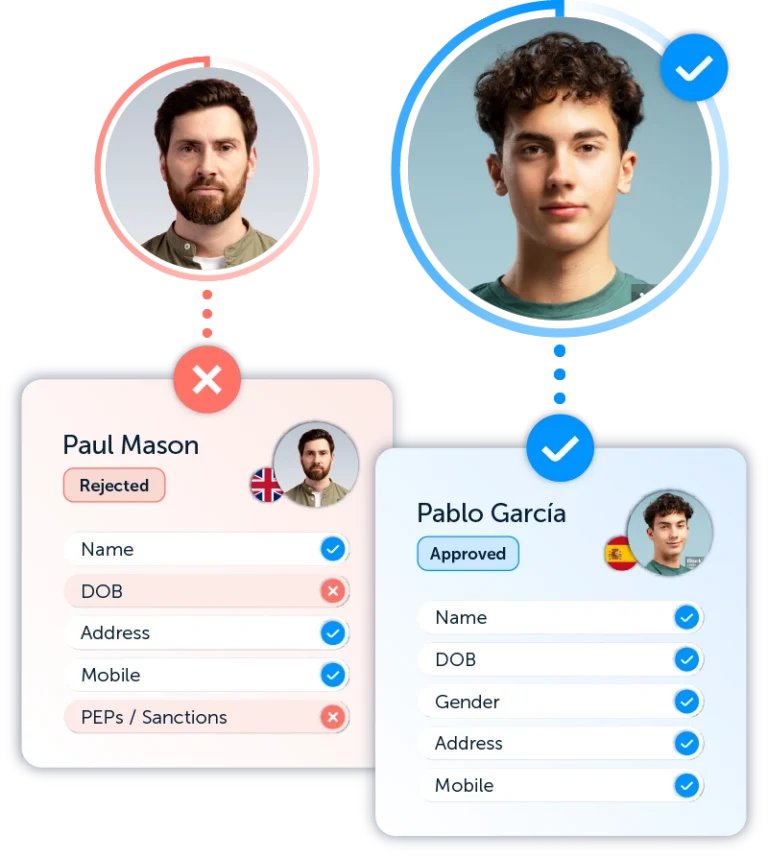
| Screening | AML screening against sanctions, politically exposed persons and adverse media |
| Ongoing risk | Customer monitoring keeps screening live across the relationship |
| Configuration | Fully configurable rule-based engine, so checks can differ by risk |
| Deployment | Out of the box, via API and SDK, or through a native Salesforce integration |
| Assurance | ISO 9001 and ISO 27001 certified, GDPR compliant, Dublin-headquartered |
Ownership resolution for corporate customers follows the integration of NorthRow’s KYB platform. ID-Pal’s KYB guide explains the process in more detail.
ID-Pal is used by Irish and international organisations including Sherry FitzGerald, Icon Accounting, Parfrey Murphy, Ardan International, Campion Insurance and Finset. ID-Pal was shortlisted for the Regtech Solution Award at the Business Post Fintech Awards 2026.
Book a walkthrough of our identity verification and AML solution for fintechs
Supporting 16,000+ ID documents and 400+ data sources, expand into 250+ jurisdictions faster while maintaining consistent controls across regions and customer types.

Irish fintech
What does the Central Bank expect from remote verification?
The Central Bank of Ireland expects a firm to apply a risk-based approach to customer due diligence, to use reliable and independent sources for verification, and to be able to demonstrate why its approach is appropriate for the risk of the customer and the product. Remote verification is well established, provided the firm can show that the method resists fraud and that the evidence is retained.
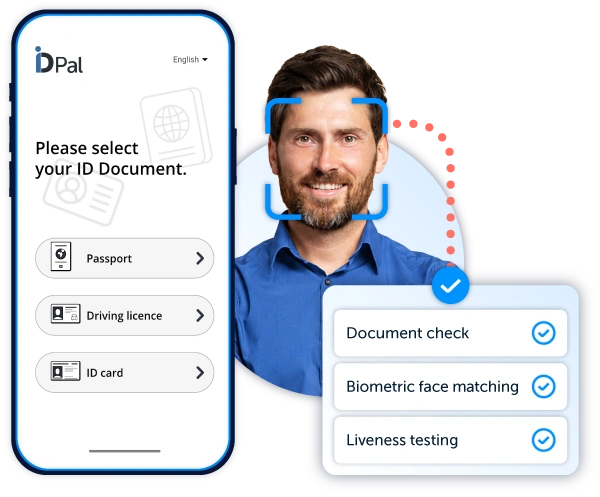
In practice that means a document check matched to a live biometric, with certified liveness detection, supported by screening, and held in a case record that shows what was checked, when and with what outcome. Firms should confirm their approach against the Central Bank’s current guidance and their own risk assessment.
What about UK and EU expansion?
The same provider should carry the customer across borders. An Irish fintech onboarding UK customers needs UK document coverage, and one passporting into other EU and EEA member states needs document coverage across those states and GDPR-compliant data handling.
ID-Pal supports 16,000+ identity documents from 250+ jurisdictions, including Irish, UK and other EU documents. In the UK, it is also certified under the Digital Identity and Attributes Trust Framework (DIATF) for right to work and right to rent checks.
Frequently asked questions
Is remote identity verification acceptable for an Irish regulated firm?
Yes, under a risk-based approach and using reliable, independent methods. The firm has to be able to show that its remote method resists fraud and that the evidence is retained. Certified liveness detection and a full case record are the practical proof.
Does an Irish fintech need KYB as well as KYC?
Where it onboards business customers, yes. The entity has to be confirmed and the individuals who ultimately own or control it identified, verified and screened. ID-Pal delivers KYC, KYB and AML compliance, so both can be handled with one provider.
Which documents should the platform cover?
Irish, UK and EU identity documents as a minimum, with wider coverage where the customer base is international. ID-Pal supports 16,000+ identity documents across 250+ jurisdictions.
Does it matter where the provider is headquartered?
It can simplify data-handling and supervisory conversations. ID-Pal is headquartered in Dublin, ISO 27001 certified and GDPR compliant, with offices in London, New York and Lisbon.
How quickly does verification complete?
For a standard-risk individual, a configured automated check completes in minutes, because document authentication, biometric matching and screening run in one pass. Corporate customers with layered ownership take longer by design.
Can the checks be set to the firm's own risk rules?
Yes. ID-Pal’s rule-based engine is fully configurable, so the checks applied can follow the firm’s own risk assessment and differ by customer type and risk level.
Find out how we can help your business grow