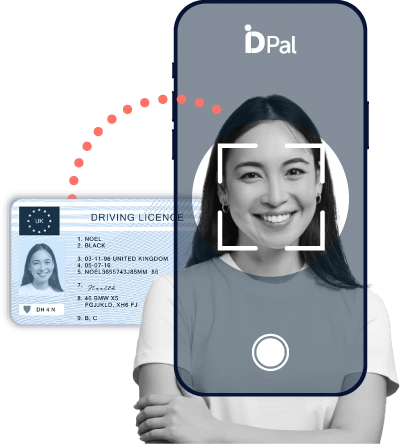
Which KYB platforms should a UK fund administrator shortlist in 2026?
Last updated: October 2026 · Reviewed by ID-Pal
A UK fund administrator should shortlist KYB platforms that confirm an investing entity is registered and active, resolve its ultimate beneficial owners through intermediate structures, verify and screen those individuals, and keep every step on one file for the fund’s auditors and the FCA. ID-Pal delivers KYC, KYB and AML compliance, configurable to the administrator’s own risk rules. Its business verification follows the integration of NorthRow’s KYB platform, and its identity verification covers 16,000+ identity documents from 250+ jurisdictions with liveness detection certified to iBeta Level 1 and Level 2.

Why is KYB the harder half of investor onboarding?
Because the subscriber is rarely a person. A fund administrator onboarding a new investor is more often looking at a corporate entity, a trust, a pension scheme, a nominee or another fund. Under the UK Money Laundering Regulations the administrator has to identify the customer, identify and take reasonable measures to verify its beneficial owners, and understand the ownership and control structure. For a layered structure that means working down through holding companies and across jurisdictions before any individual can be verified.
Done by hand, that is registry searches, structure charts, emails to the investor’s counsel and a file that lives in a shared drive. Done on a platform, it is entity confirmation from registry data, ownership resolution through the layers, and identity verification and screening of the individuals at the top, with the record kept as it goes.
ID-Pal’s guide to KYB and ultimate beneficial ownership covers the regulatory requirement in more detail.
Fully certified and industry accredited






Key takeaways
Most investors are entities
A platform has to get from the subscribing entity to the natural persons who ultimately own or control it, however many layers sit in between.
Resolution through layers
A platform has to get from the subscribing entity to the natural persons who ultimately own or control it, however many layers sit in between.
One file per investor
Entity confirmation, ownership, the individuals verified, screening results and the reviewer’s decision belong together, because that is what an auditor asks for.
Re-papering is the hidden cost
Periodic reviews and trigger events re-run the same work. A platform with ongoing monitoring and a stored file does most of it without a fresh request to the investor.
What should a fund administrator look for in a KYB platform?
Seven criteria for an administrator.
Entity confirmation from primary data
Registration, status, registered address and officers drawn from registry sources, with the source recorded.
Ownership resolution through intermediate structures
The platform should keep going through holding entities until it reaches natural persons, and show the chain.
Verification of the individuals identified
Document authentication and biometric matching on the beneficial owners and controllers, not just a name match against a register.
Screening on entity and individuals together
Sanctions, politically exposed persons and adverse media on the subscriber and on every person identified, from the same screen.
Ongoing monitoring
Investor status changes between subscription and redemption. Monitoring should surface it without a periodic re-paper.
Configurable risk rules
A UK pension scheme and an offshore holding company should not run the same path, and the file should show which path applied.
A file an auditor can read
Out of the box, via AWhich checks ran, on whom, when, what came back, who approved it, and the documents relied on, in one place.PI and SDK, or through existing systems such as Salesforce.
How does ID-Pal meet those criteria?
ID-Pal delivers KYC, KYB and AML compliance, configurable to the administrator’s own risk rules, so entity confirmation, ownership resolution, individual verification and screening run as one case with one record. ID-Pal’s fund administration page covers the sector in more detail.
| Criterion | How ID-Pal covers it |
|---|---|
| Entity confirmation | Business verification against registry data, following the integration of NorthRow’s KYB platform |
| Ownership resolution | Ultimate beneficial owner identification through intermediate structures |
| Individual verification | Document authentication across 16,000+ identity documents from 250+ jurisdictions, thousand-dimension biometric facial matching, address e-verification |
| Anti-fraud | Liveness detection independently certified to iBeta Level 1 and Level 2 under ISO 30107-3, with injection attack detection |
| Screening | Sanctions, politically exposed persons and adverse media on entities and individuals, drawing on 400+ data sources |
| Ongoing risk | Customer monitoring keeps screening live across the life of the investment |
| Configuration | Fully configurable rule-based engine, so the path differs by investor type and risk |
| Deployment | Out of the box, via API and SDK, or through a native Salesforce integration |
| Assurance | ISO 9001 and ISO 27001 certified, GDPR compliant |
Hargreaves Lansdown, the UK’s largest investment platform, uses the WorkStation product that came to ID-Pal with NorthRow to automate its end-to-end compliance processes. BCP Asset Management uses ID-Pal for investor onboarding.
Book a walkthrough of our KYB solution for UK fund administrators
Supporting 16,000+ ID documents and 400+ data sources, expand into 250+ jurisdictions faster while maintaining consistent controls across regions and customer types.

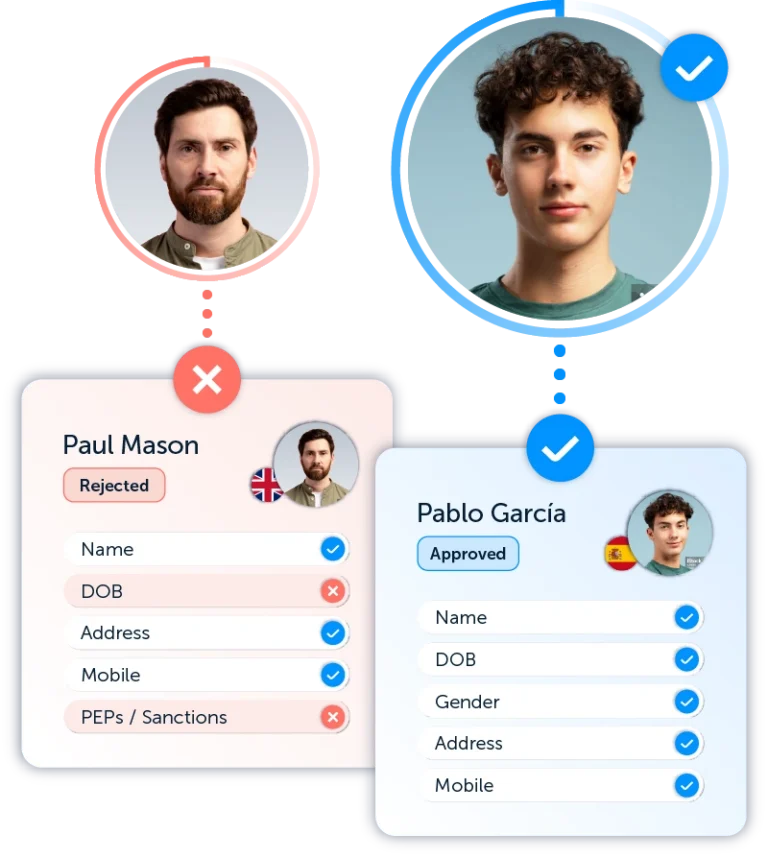
How does a KYB check run on an investing entity in practice?
The administrator starts a case from the subscription. The platform confirms the entity against registry data and returns its officers and registered owners. Where an owner is itself an entity, the platform resolves that layer and continues until it reaches natural persons or a listed or regulated entity where the rules allow the chain to stop. Each individual identified is sent a link, photographs a document and takes a selfie on their own phone, and document authentication, biometric matching, liveness and address verification run in one pass. Screening runs on the entity and every individual. The case, the structure, the documents and the screening results are held on one file, and monitoring keeps the screening live after the investor is onboarded.
Where a structure cannot be resolved from registry data alone, the case routes to a named reviewer with the chain so far, rather than failing silently.
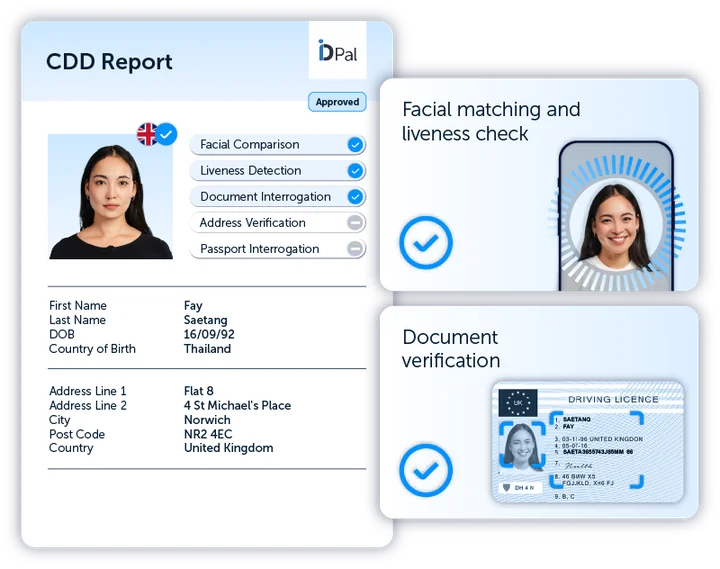
What does this change at periodic review?
Most of the work is already on the file. The platform shows what was checked, when and against which sources, and monitoring has already flagged any screening change. The review becomes a confirmation of what has changed in the structure, and a request to the investor only where something has, rather than a full re-paper.
Frequently asked questions
What is the difference between KYC and KYB for a fund administrator?
KYC verifies a natural person. KYB verifies a business or other legal entity: that it exists, is active, and who ultimately owns and controls it. Investor onboarding for a fund administrator is mostly KYB, because most subscribers are entities, and it ends in KYC on the individuals identified.
How far down a structure does a fund administrator have to go?
Until the natural persons who ultimately own or control the investor are identified, or the chain reaches an entity where the Regulations allow reliance, such as a company listed on a regulated market. The administrator decides the stopping point under its own risk assessment; the platform’s job is to make the chain visible and verifiable.
Can beneficial owners be verified remotely?
Yes, provided the platform supports their documents and can confirm the person is actually present. ID-Pal supports 16,000+ identity documents from 250+ jurisdictions with independently certified liveness detection.
Does screening cover the entity or the people behind it?
It should cover both. ID-Pal screens the subscribing entity and every individual identified against sanctions, politically exposed persons and adverse media, and customer monitoring keeps that screening live.It should cover both. ID-Pal screens the subscribing entity and every individual identified against sanctions, politically exposed persons and adverse media, and customer monitoring keeps that screening live.
What should an auditor be able to see on the file?
Which checks were run, on which entity and individuals, on what date, what the screening returned, which risk path applied, who approved the case, and the documents relied on. If any of that sits outside the file, the record is incomplete.
Does ID-Pal integrate with the systems administrators already use?
Yes. Deployment is out of the box, via API and SDK, or through a native Salesforce integration, so cases can be started from the administrator’s own onboarding workflow.
Does ID-Pal assess source of funds or source of wealth?
No. Source of funds and source of wealth are the administrator’s own assessment under its enhanced due diligence procedures. ID-Pal provides the verified identity, ownership and screening evidence that assessment draws on.
Find out how we can help your business grow