

Customer onboarding has changed dramatically over the past decade.
Financial institutions are expected to verify identities quickly, meet increasingly strict regulatory requirements and deliver a smooth experience for customers who are used to doing everything online. At the same time, compliance teams face growing pressure to detect fraud, prevent financial crime and maintain clear audit trails.
This is where eKYC comes in.
Electronic Know Your Customer (eKYC) allows organisations to verify customer identities digitally, replacing many of the manual processes traditionally associated with onboarding. What was once a paper-heavy exercise can now be completed remotely, often within minutes.
See how eKYC can support your AML process
What is eKYC?
For years, customer identity verification followed a familiar pattern. A customer submitted documents, compliance teams reviewed them manually and onboarding moved forward once the checks were complete.
The process worked, but it was often slow. Missing documents, manual reviews and back-and-forth emails could add days to customer onboarding.
eKYC, short for Electronic Know Your Customer, was developed to solve that problem.
It allows organisations to verify a customer’s identity digitally rather than relying on paper forms or in-person checks. Customers can submit information online, upload identification documents and complete verification from a phone or computer.
For regulated institutions, eKYC has become a key part of meeting Know Your Customer (KYC) and Anti-Money Laundering (AML) requirements while keeping onboarding efficient.
Why does eKYC matter?
Financial institutions are required to know who their customers are, understand the risks they present and take reasonable steps to prevent money laundering, terrorist financing and fraud. Identity verification sits at the centre of those obligations.
Most AML regulations do not specifically require organisations to use eKYC. Instead, they require firms to verify customer identities and apply appropriate customer due diligence (CDD) measures.
eKYC has become a widely accepted way of meeting those requirements in a digital environment.
At an international level, the standards published by the Financial Action Task Force (FATF) provide the foundation for many AML frameworks around the world. FATF recommends that organisations identify and verify customers using reliable, independent sources and encourages the use of digital identity systems where appropriate.
In the UK, firms must comply with the Money Laundering Regulations 2017, which require customer due diligence before establishing business relationships. The Financial Conduct Authority also provides guidance on the use of electronic verification methods as part of customer onboarding.
🔗 You might also like: A complete guide to Anti-Money Laundering (AML) regulations in the UK
Across the European Union, AML requirements are shaped by successive Anti-Money Laundering Directives, including provisions that support electronic identification and digital verification methods.
In the United States, financial institutions must comply with Customer Identification Program (CIP) requirements under the USA PATRIOT Act, alongside broader AML obligations.
For compliance teams, the key point is that eKYC does not replace regulatory requirements. It provides a digital way to meet them. Regulators still expect firms to take a risk-based approach, maintain records of customer verification activities and apply enhanced due diligence where higher risks are identified.
An automated onboarding process is only effective if the underlying controls align with the organisation’s AML programme and regulatory obligations.
As digital onboarding becomes the norm across financial services, regulators are increasingly recognising eKYC as a practical and reliable method for verifying identities.
How does eKYC work?
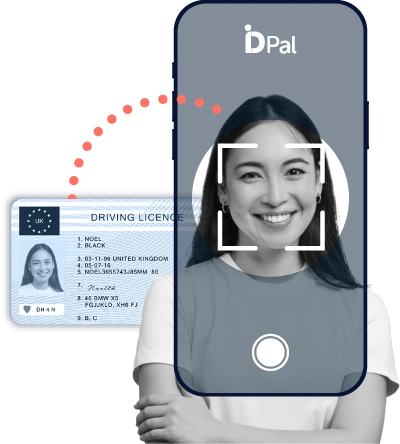
Most eKYC processes follow the same basic steps. A customer enters their personal details through an online application. They are then asked to upload an identity document, such as a passport or driving licence. The system analyses the document and checks that it is genuine. Information can be extracted automatically and compared against the details provided by the customer.
Many firms also use biometric verification. This usually involves asking the customer to take a selfie or complete a short liveness check. The image is compared with the photo on the identity document to confirm that the applicant is the person they claim to be.
Once identity checks are complete, the customer may be screened against sanctions lists, politically exposed person (PEP) databases and other AML data sources.
If no issues are identified, the application can move forward. If concerns are found, the case can be escalated for further review.
eKYC vs traditional KYC
The difference between eKYC and traditional KYC comes down to how customer information is collected and verified.
Traditional KYC often relies on physical documents and manual reviews. Customers may need to visit a branch, send certified copies of documents or wait for compliance teams to complete checks.
eKYC moves those steps online. Identity documents can be uploaded digitally, checks can be completed automatically and records are stored electronically. This reduces the amount of manual work involved and shortens onboarding times. For compliance teams dealing with high volumes of applications, that difference can be significant.
Where is eKYC most used?
eKYC is now widely used across financial services. Banks use it to onboard new customers remotely. Payment providers use it to verify account holders before transactions take place. Investment firms apply eKYC checks before opening trading accounts. It has also become common among fintech companies, digital banks, insurance providers and cryptocurrency platforms operating under AML regulations.
Any organisation that needs to verify customer identities while meeting regulatory requirements is likely to use some form of eKYC.
Benefits of eKYC
- Faster onboarding: Long onboarding processes can frustrate customers and create pressure on internal teams. eKYC reduces delays by automating much of the identity verification process. In many cases, checks that once took days can be completed in minutes.
- Less manual work: Compliance teams spend a considerable amount of time reviewing documents and validating information. Automated verification reduces repetitive tasks and allows analysts to focus on higher-risk cases that require human judgement.
- Better fraud detection: Fraudsters continue to use increasingly sophisticated methods to bypass onboarding controls. Many eKYC platforms include document authentication, facial matching and liveness detection, making it harder to use fake or stolen identities.
- More consistent checks: Manual reviews can vary between individuals and teams. Automated verification applies the same checks to every application, helping firms maintain a consistent approach across their customer base.
- Stronger audit records: Regulators expect firms to demonstrate how customer verification decisions were made. Digital verification creates a record of checks performed, documents reviewed and screening results. This information can be retrieved quickly during audits or regulatory reviews.
Frequently asked questions about eKYC
What does eKYC stand for?
eKYC stands for Electronic Know Your Customer. It refers to the digital process of verifying a customer’s identity.
Is eKYC the same as KYC?
No. KYC is the broader process of identifying and verifying customers. eKYC is the digital method used to complete those checks.
Is eKYC compliant with AML regulations?
In many jurisdictions, regulators allow digital identity verification as part of AML compliance programmes. Requirements vary by country and industry.
What documents are used in eKYC?
Most organisations accept documents such as passports, driving licences and national identity cards. Some may also request proof of address.
How long does eKYC take?
Many checks can be completed within a few minutes, although higher-risk customers may require additional review.