Which AML and KYC platforms should a UK insurance broker shortlist in 2026?
A UK insurance broker should shortlist platforms that screen every client against sanctions, verify individuals and corporate clients remotely at the point of quote or bind, resolve the beneficial owners behind commercial clients, and keep a record of each check. ID-Pal delivers KYC, KYB and AML compliance, configurable to the broker’s own risk rules. Its identity document verification covers 16,000+ identity documents from 250+ jurisdictions, with liveness detection certified to iBeta Level 1 and Level 2.
Where do a broker's obligations actually sit?
Obligations differ by the products a broker arranges. Brokers arranging life insurance and other long-term insurance, including investment-linked products, are within the scope of the UK Money Laundering Regulations and carry customer due diligence obligations. General insurance intermediaries are largely outside the Regulations, but every FCA-authorised firm is expected to have systems and controls against financial crime, and UK financial sanctions apply to every UK firm, whatever its sector.
That produces three practical requirements for most brokers.
Sanctions screening on every client. Sanctions apply universally. A broker must not arrange cover for a designated person or entity unless licensed to do so, and has to be able to show it checked.
Customer due diligence where products bring it in scope. Life and other long-term insurance business carries customer due diligence obligations: identify, verify, screen, assess risk, keep records.
Knowing who the commercial client is. For corporate clients, the entity and the individuals who own or control it, particularly where premiums are large, ownership is layered or the client is overseas.
Brokers should confirm their own position with their compliance function against FCA, HM Treasury and Office of Financial Sanctions Implementation (OFSI) guidance, because scope depends on the products the broker arranges. ID-Pal’s article on meeting FCA AML expectations is a useful starting point.
Fully certified and industry accredited

Key takeaways
Every client screened for sanctions
A broker has to be able to show that it did not arrange cover for a designated person or entity without a licence.
Verification inside quote-to-bind
A remote check completes in minutes on the client’s own phone, so it can sit inside the quote-to-bind process rather than after it.
Commercial clients and their owners
Confirm the entity is registered and active, identify the individuals who ultimately own or control it, then verify and screen those individuals, with the depth proportionate to the risk of the client and the cover.
One provider
One provider means one supplier to evaluate and oversee, and one set of checks to explain to a regulator.
What should a UK insurance broker look for in a platform?
Six criteria for a broker.
Sanctions screening that runs on every client and stays live
At quote, at bind and across the policy term.
Verification that fits the sales process
A check the client completes on their phone at the point of quote, so bind is not held up waiting for documents.
Corporate clients and beneficial owners
Entity confirmation and ownership resolution for commercial clients, with the controlling individuals verified and screened.
Configurable rules by product line
A motor policy and an investment bond should not run the same check, and the file should record which path was applied.
Certified anti-fraud
Application fraud and ghost broking make independently certified liveness detection as relevant to brokers as it is to lenders.
Deployment through the systems the broker already uses
Out of the box, via API and SDK, or through a CRM such as Salesforce.
How does ID-Pal meet those criteria?
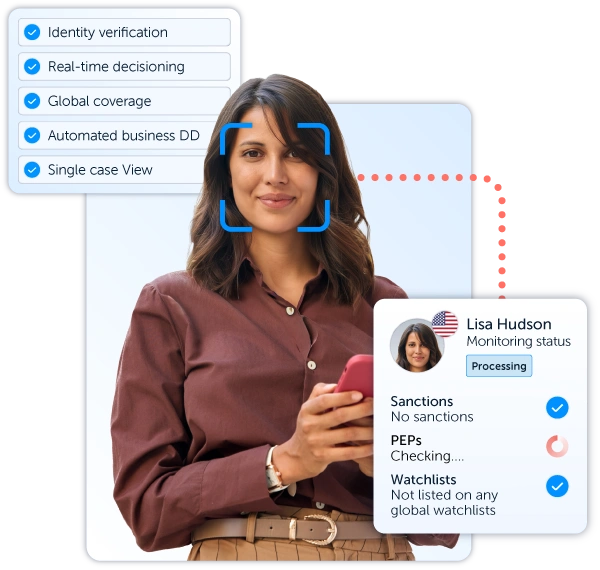
ID-Pal delivers KYC, KYB and AML compliance, configurable to the broker’s own risk rules, so a broker can screen every client, verify individuals and corporate clients remotely, with a record of each check. ID-Pal’s insurance page covers the sector in more detail.
| Criterion | How ID-Pal covers it |
|---|---|
| Screening | AML screening against sanctions, politically exposed persons and adverse media, on individuals and entities |
| Ongoing risk | Customer monitoring keeps screening live across the policy term |
| Individual verification | Document authentication across 16,000+ identity documents from 250+ jurisdictions, thousand-dimension biometric facial matching, address e-verification |
| Corporate clients | KYB compliance with ultimate beneficial owner identification through intermediate structures |
| Anti-fraud | Liveness detection independently certified to iBeta Level 1 and Level 2 under ISO 30107-3, with injection attack detection |
| Configuration | Fully configurable rule-based engine, so checks can differ by product line and risk |
| Deployment | Out of the box, via API and SDK, or through a native Salesforce integration |
| Assurance | ISO 9001 and ISO 27001 certified, GDPR compliant |
Ownership resolution for corporate clients follows the integration of NorthRow’s KYB platform. ID-Pal’s KYB guide explains the process in more detail.
Campion Insurance, one of Ireland’s largest insurance brokers, moved its customer onboarding from posted paperwork to remote identity verification with ID-Pal.
Book a walkthrough of our AML and KYC solution for insurance brokers
Supporting 16,000+ ID documents and 400+ data sources, expand into 250+ jurisdictions faster while maintaining consistent controls across regions and customer types.

Insurance brokers
How does verification fit the broker's sales process?
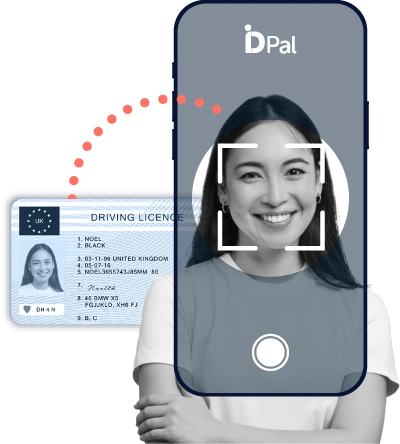
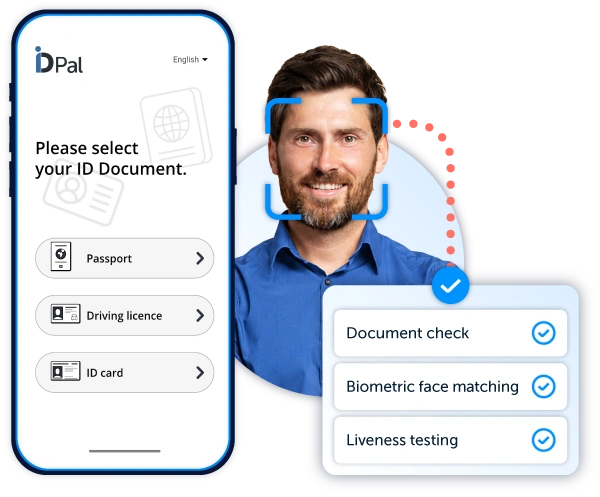
The check runs at the point the broker already collects details. For an individual, the client photographs a document and takes a selfie on their own phone, and document authentication, biometric matching and screening run in one pass. For a commercial client, the entity is confirmed and its controllers identified from registry and ownership data. The individuals who own or control it are then verified with document and biometric checks.
That keeps verification inside the quote-to-bind window rather than adding a stage after it. Where a client’s screening result changes during the term, ongoing monitoring surfaces it without the broker re-running the file.
Frequently asked questions
Are insurance brokers covered by the UK Money Laundering Regulations?
It depends on the products arranged. Brokers arranging life and other long-term insurance, including investment-linked products, are within scope. General insurance intermediaries are largely outside the Regulations but remain subject to FCA financial crime expectations and to UK sanctions obligations. Brokers should confirm their position with their compliance function.
Does a general insurance broker have to screen for sanctions?
Yes. UK financial sanctions apply to every UK firm. A broker has to be able to show that it did not arrange cover for a designated person or entity without a licence.
How should a broker verify a commercial client?
Confirm the entity is registered and active, identify the individuals who ultimately own or control it, then verify and screen those individuals, with the depth proportionate to the risk of the client and the cover.
Can verification happen at the point of quote?
Yes. A remote check completes in minutes on the client’s own phone, so it can sit inside the quote-to-bind process rather than after it.
What is ghost broking, and does verification help?
Ghost broking is the sale of fraudulent or misrepresented policies by people posing as brokers, often using stolen or synthetic identities. Verifying the policyholder’s identity with certified liveness detection at the point of sale makes it harder to take out cover in someone else’s name or with invented details. ID-Pal’s article on identity fraud trends in 2026 covers synthetic identities in more detail.
Should screening, KYC and KYB come from one provider?
It can. One provider means one supplier to evaluate and oversee, and one set of checks to explain to a regulator. ID-Pal delivers KYC, KYB and AML compliance, configurable to the broker’s own risk rules.
Find out how we can help your business grow