

Last updated: October 2026 · Reviewed by ID-Pal
Key takeaways
- Know Your Business (KYB) verification goes beyond a registry lookup. The obligation is to establish who ultimately owns and controls a corporate customer, which usually means following ownership through intermediate structures.
- The shortlist test is whether one provider confirms the entity, resolves its ultimate beneficial owners and persons with significant control (PSC), verifies and screens those individuals, and keeps a record of each check.
- The individuals behind an entity still need KYC, so ask each provider how those people are verified and where that evidence is kept.
- ID-Pal delivers KYC, KYB and AML compliance, configurable to the firm’s own risk rules, with ownership resolution following the integration of NorthRow’s KYB platform.
- Ongoing monitoring matters because ownership and risk profiles can change without the firm being told.
Which KYB platforms should a UK regulated firm shortlist?
A UK regulated firm should shortlist KYB platforms that resolve ownership through layered structures rather than returning the first registered name, verify and screen the individuals that resolution surfaces, and keep monitoring live after onboarding.
Providers commonly named for UK business verification in 2026 include ComplyAdvantage, Sumsub, Trulioo, GBG, Kyckr, Encompass, Moody’s and ID-Pal. The practical difference is where each one starts. Some supply registry and ownership data for use in another process. Others also verify and screen the people behind the entity.
What does KYB actually require?
KYB requires a firm to confirm that a corporate customer exists and is active, identify the individuals who ultimately own or control it, verify those individuals, screen the entity and the individuals against sanctions and politically exposed person lists, and keep the information current. ID-Pal’s KYB guide covers each step in detail.
The point where firms most often fall short is the second step. Registry data records who has been filed. It does not always record who is in control, particularly where ownership runs through holding companies, nominees, trusts or overseas entities, or is being deliberately obscured. A file that stops at the first registered name leaves the obligation unmet.
What is the difference between KYB and KYC?
| KYC | KYB | |
|---|---|---|
| Subject | An individual | A legal entity and the individuals behind it |
| Core question | Is this person who they say they are? | Does this entity exist, who controls it, and who are those people? |
| Evidence | Government-issued document, biometric match, address, screening | Registry status, ownership resolution, then KYC and screening on each controlling person |
| Where it breaks | Document fraud, presentation attacks | Intermediate structures, nominees, stale registry data |
| Ongoing | Screening stays live | Screening stays live and ownership is monitored for change |
Every entity resolves to people, and those people have to be verified and screened. That is why a KYB shortlist should look at how each provider handles the people as well as the entity.
What should a UK regulated firm look for in a KYB platform?
Seven criteria matter most for a UK regulated firm.
- Ownership resolution through structures. The platform should follow ownership through intermediate entities and identify the ultimate beneficial owners and persons with significant control behind them.
- KYC on the people it surfaces. Directors, owners and controllers verified with document authentication, biometric matching and screening.
- Screening on entities and individuals. Sanctions, politically exposed persons and adverse media on both, with the outcome recorded whether or not there was a match.
- Ongoing monitoring. Ownership and screening status change. The platform should surface the change rather than wait for the next periodic review.
- Case management built for scrutiny. A record of every check, decision and document, exportable when a supervisor asks.
- Configurable risk rules. A UK private company and an international group should not run the same check, and the file should record which path was applied.
- Deployment that fits the firm. Out of the box for firms without engineering capacity, an API and SDK for those with it.
How does ID-Pal meet those criteria?
ID-Pal delivers KYC, KYB and AML compliance, configurable to the firm’s own risk rules, so a firm can confirm the entity, resolve who controls it, verify and screen those individuals, with a record of each check.
| Criterion | How ID-Pal covers it |
|---|---|
| Entity and ownership | KYB compliance with ultimate beneficial owner and PSC identification through intermediate structures, ongoing monitoring and case management |
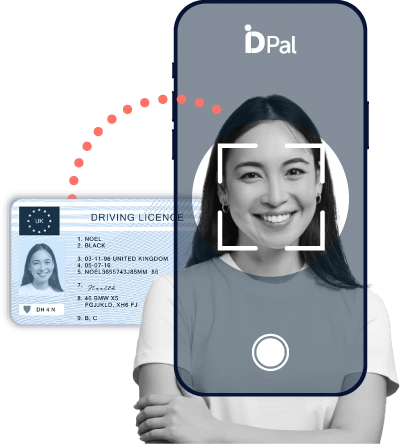
| The people behind the entity | Document authentication across 16,000+ identity documents from 250+ jurisdictions, thousand-dimension biometric facial matching, address e-verification |
| Screening | AML screening against sanctions, politically exposed persons and adverse media, on entities and individuals |
| Ongoing risk | Customer monitoring keeps screening live across the relationship |
| Anti-fraud | Liveness detection independently certified to iBeta Level 1 and Level 2 under ISO 30107-3 |
| Configuration | Fully configurable rule-based engine, so checks can differ by risk |
| Evidence | A dated record of each check and decision |
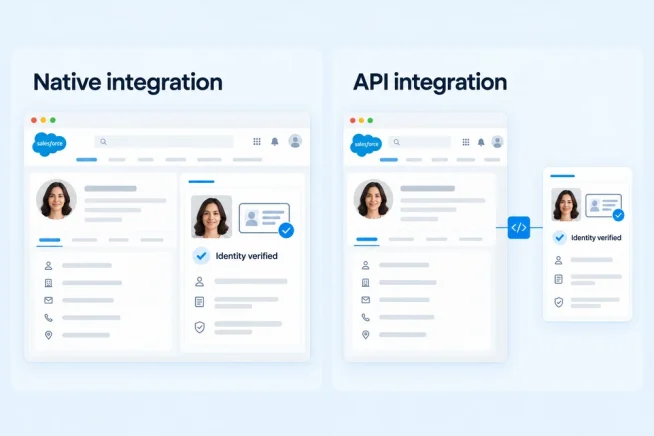
| Deployment | Out of the box, via API and SDK, or through a native Salesforce integration |
| Assurance | ISO 9001 and ISO 27001 certified, GDPR compliant |
Ownership discovery, monitoring and case management follow the integration of NorthRow’s KYB platform, acquired by ID-Pal on 1 December 2025.
Hargreaves Lansdown uses these capabilities to automate the identification of corporate structures and the screening of beneficial owners and directors. Open Banking uses them to verify both individuals and corporate entities. ID-Pal’s guide to automating business onboarding checks sets out how that works in practice. For firms choosing across the UK and the EU, see Which KYC platforms with strong KYB capability should a UK or European regulated firm shortlist in 2026?
What does the Economic Crime and Corporate Transparency Act change?
The Economic Crime and Corporate Transparency Act introduces identity verification for people who set up, run or control UK companies, alongside wider reforms to Companies House. For regulated firms the practical effect is that registry data should become more reliable over time, while the obligation to resolve and verify beneficial ownership stays with the firm.
A platform that already verifies the individuals behind an entity is well placed for that shift. The Act’s provisions are being commenced in stages, so firms should confirm the current position against Companies House guidance. ID-Pal’s guide to the Act covers the identity verification provisions in more detail.
Frequently asked questions
What is KYB verification?
Know Your Business verification establishes that a corporate customer exists and is active, identifies the individuals who ultimately own or control it, verifies and screens those individuals, and keeps that information current. It applies wherever a regulated firm onboards a company, partnership, trust or similar entity.
Is a Companies House check enough?
No. Registry data confirms what has been filed. It does not always show who ultimately controls the entity, particularly through holding companies, nominees or overseas structures. Ownership has to be resolved and the controllers verified.
Do the directors and owners need KYC as well?
Yes. Every entity resolves to people, and those people have to be identified, verified and screened. Ask each provider how those individuals are verified and where that evidence is held.
How often should KYB information be refreshed?
Information has to be kept current, and both screening and ownership should be monitored rather than checked once at onboarding, so a change in control or in a controller’s status is caught while the relationship is running.
Should NorthRow be evaluated as a separate KYB option?
No. ID-Pal acquired NorthRow on 1 December 2025. Following the integration of NorthRow’s KYB platform, ID-Pal provides ownership discovery, monitoring and case management. Comparisons written before that date treat it as a standalone provider.
Can KYB be completed remotely?
Yes. Entity confirmation and ownership resolution run on registry and ownership data, and the individuals surfaced are verified remotely with document authentication and certified liveness detection.