



Liveness testing

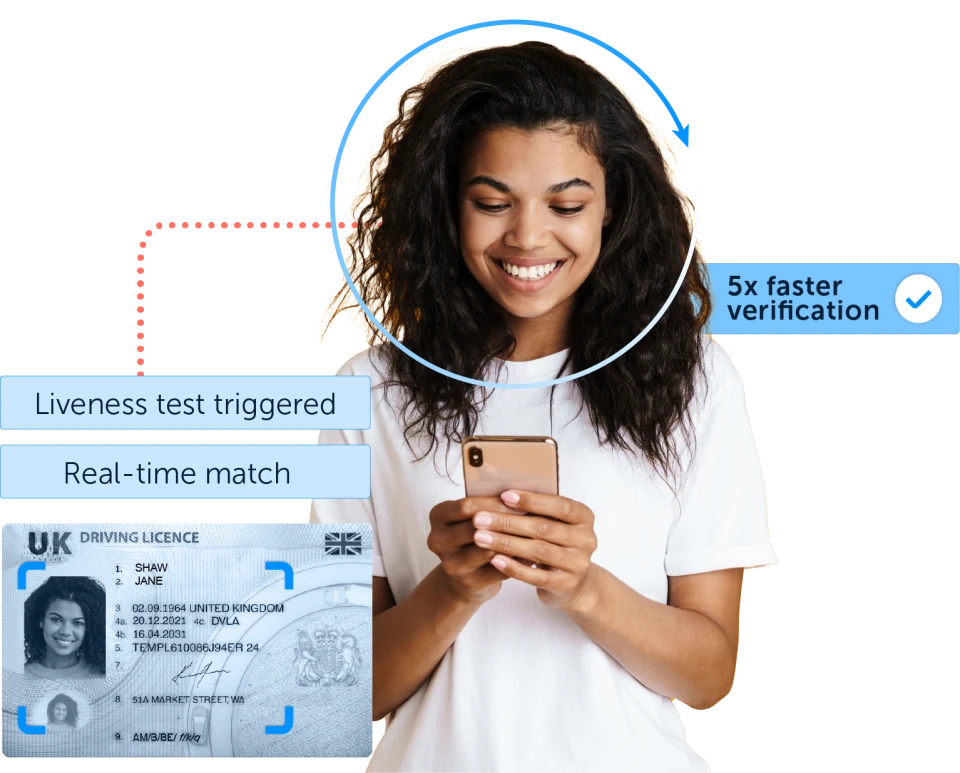
Our iBeta certified liveness testing confirms that the person submitting identity information is a real, live person.

liveness testing ibeta level1 ISO 30107-3 compliant
liveness checks ibeta level2 ISO 30107-3 compliant
Liveness Testing iBeta certified

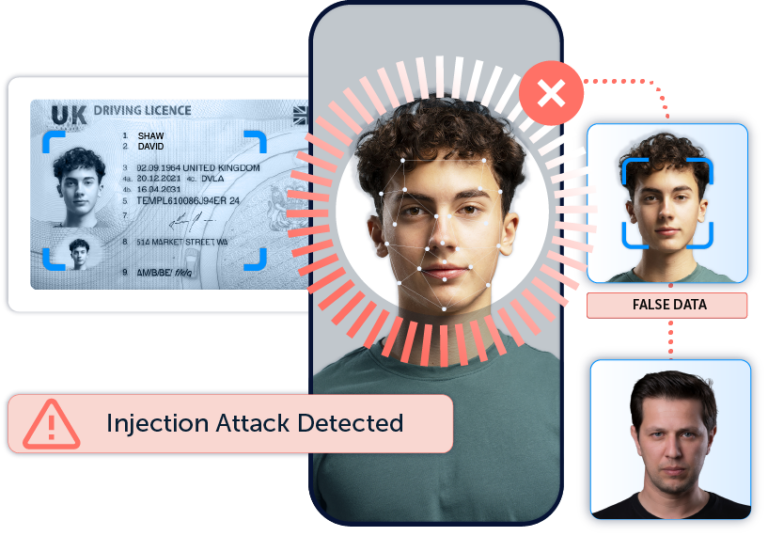
Detect and prevent fraud attempts

Detect the latest deepfakes and AI-driven fraud attempts and protect against presentation attacks.

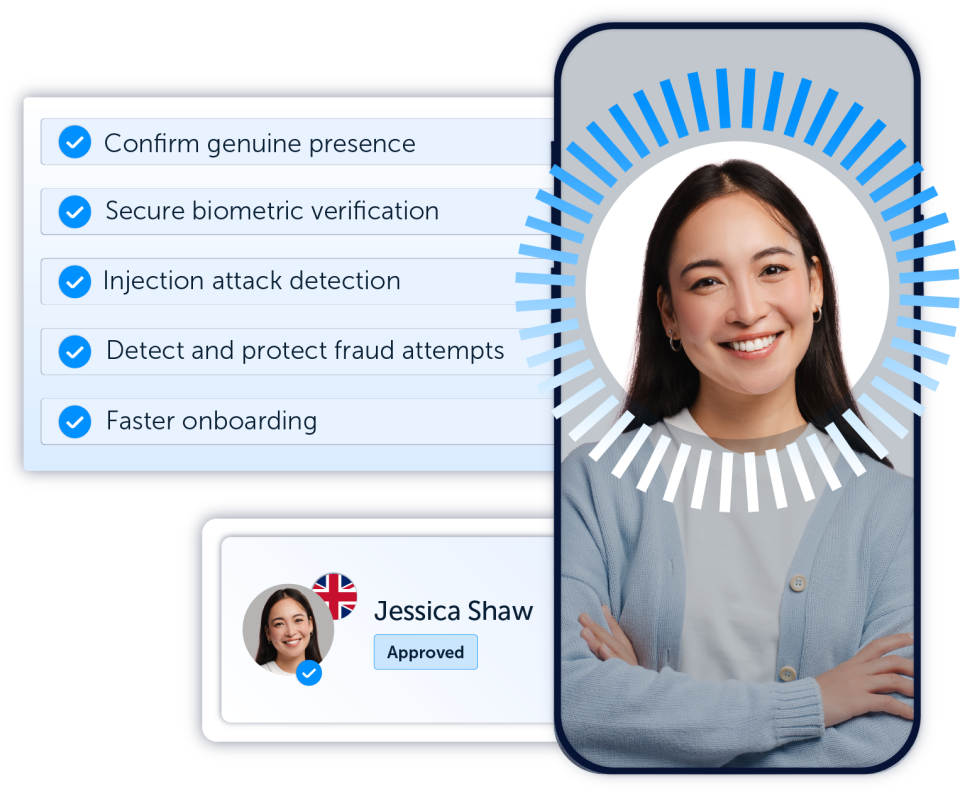
Confirm genuine identity and presence

Leverage iBeta certified liveness testing to confirm a real, genuine human is present. 

Speed up onboarding and build user trust

Provide fast, passive liveness verification with minimal user effort, reducing onboarding drop-off.

What is liveness testing?

Liveness testing is a biometric security measure used to verify that a real, live person is physically present during the identity verification process, rather than a spoof such as a photo, video, mask, or deepfake.

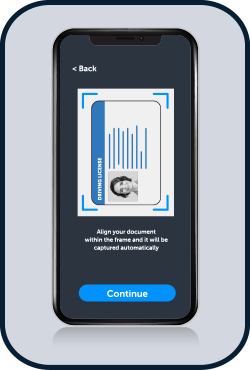
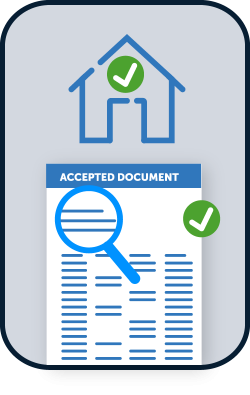
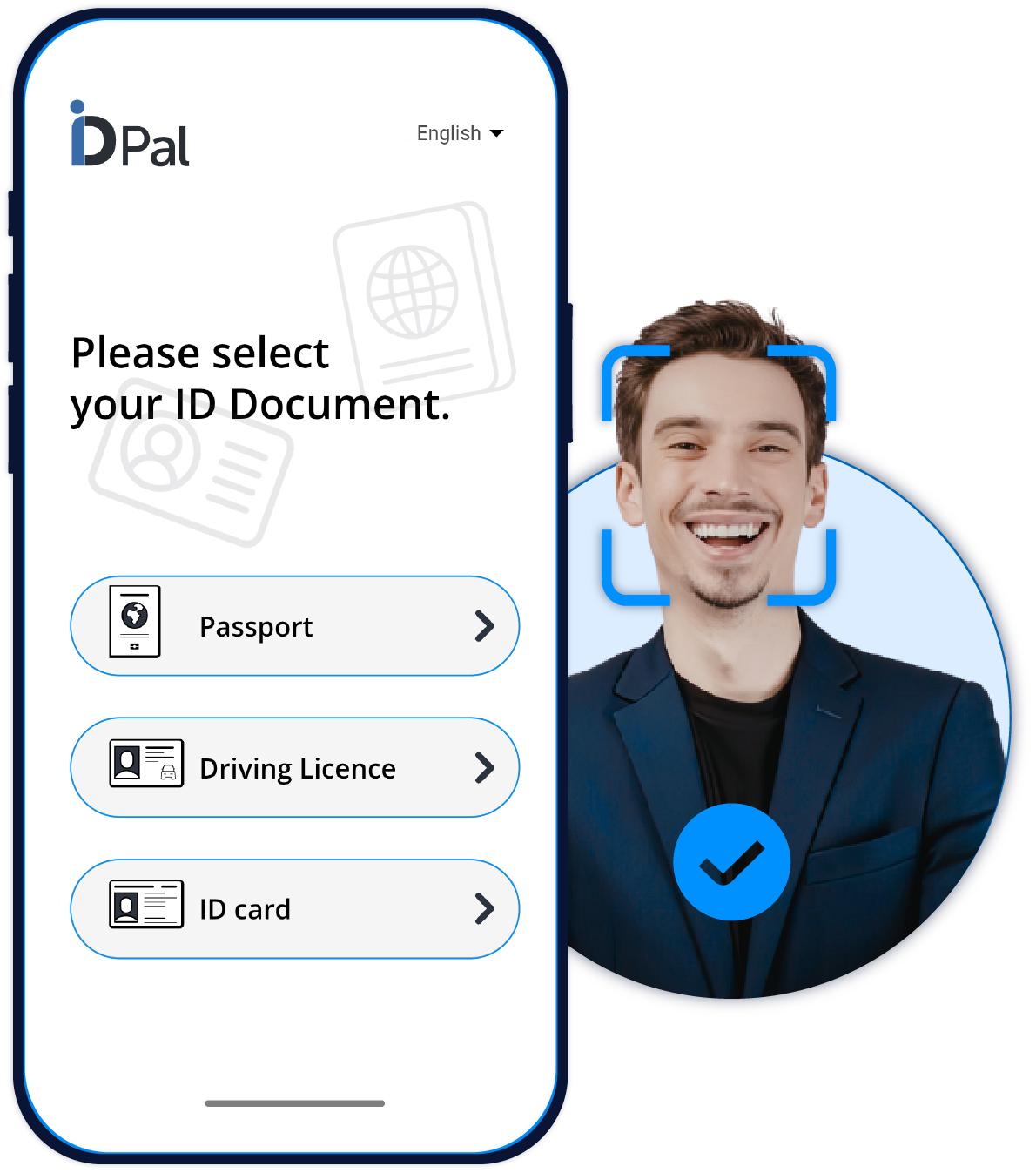
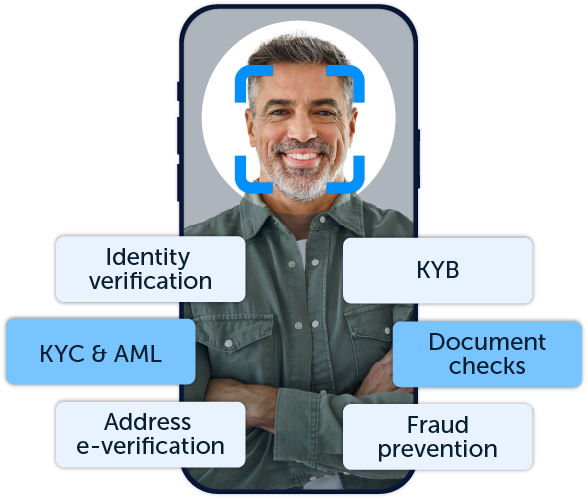
Liveness testing is combined with other checks, such as identity document and address verification, as part of an overall identity verification or KYC flow. 

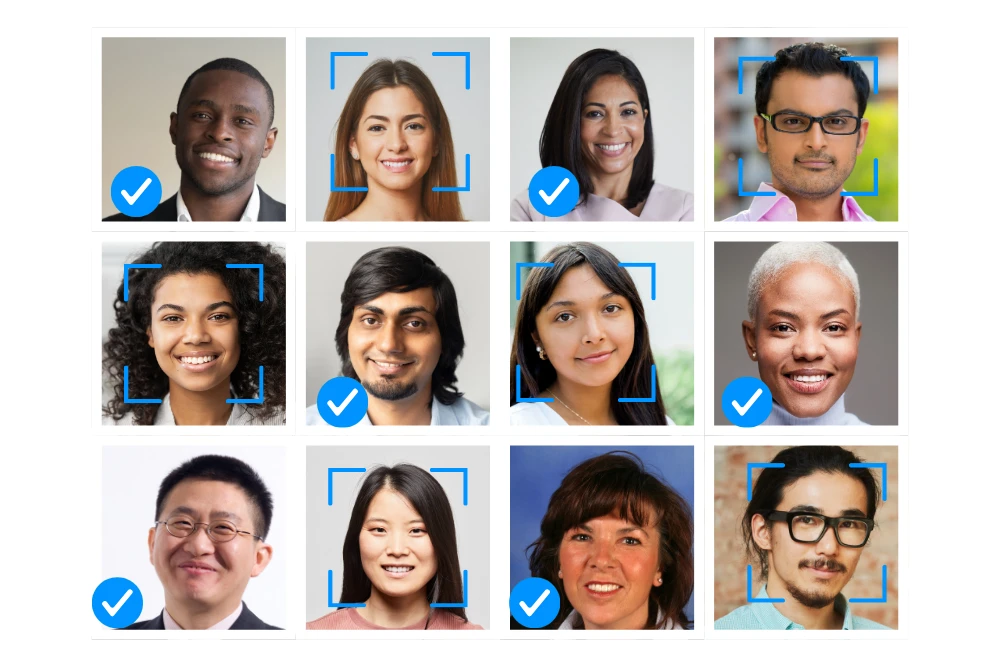
Grid of diverse people’s faces with verification check marks and detection frames, representing inclusive, bias-free identity verification technology

Why businesses trust ID-Pal for liveness testing

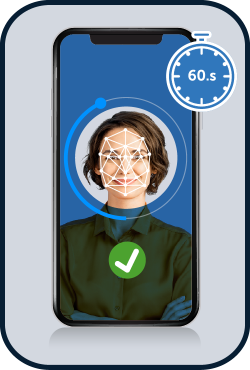
Passive liveness testing requires minimal input from the end user, making the identity verification process simple and easy.

Traditional liveness testing

Legacy liveness testing methods require a user to complete a series of actions to confirm that they are real, such as facial gestures, eye movement and lip movement. More effort is required which can result in higher drop-off rates when the user can’t or won’t complete a step.

Our approach

Our liveness testing technology uses iBeta certified software to confirm that the person submitting details is real. Minimal effort from the end user is required, which makes the process simple and quick. This means fewer drop-offs and more customers successfully completing onboarding at a much faster rate.

What are the benefits of passive liveness testing?

There are a number of advantages to passive liveness testing, from both a user experience and security standpoint.

Faster onboarding

From a user perspective, passive methods are faster and less annoying – no instructions or user prompts, retries or accessibility issues. This directly improves completion rates and reduces drop-offs and user error in your onboarding flows.

Fraud prevention

Traditional liveness testing relies on user prompts which are predictable and increasingly easy to spoof with replay attacks and deepfakes. Our technology uses iBeta certified software to confirm that the person submitting details is real, and is better suited to detecting modern threats.

Reduced data

Traditional liveness detection requires multiple frames, long video clips and stored challenge-response evidence. Passive liveness detection can achieve a decision with less biometric material, with lower processing costs and reduced exposure under GDPR and other data protection regulations.

0 %

Accuracy on verification results

0 +

Trusted
data sources

0 +

Identity
documents

0 +

Jurisdictions & countries

What our clients say

How liveness testing fits into our identity verification toolkit

Liveness testing is one of the technologies that enables ID-Pal to deliver online ID verification services.

The ID-Pal platform blends all our technologies and solutions into one seamless, simple flow that enables end-to-end identity verification, KYB, KYC and onboarding.

Fully certified and industry accredited

Other identity verification solutions

Explore more solutions that simplify online identity verification, onboarding and fraud prevention.

Request a demo

Have more questions? We’re here to help! Get in touch to find out more about our identity verification solutions.

100% AI-powered

Real-time verification

Zero access to customer data

Request Demo

Frequently asked questions

What is liveness testing?

Liveness testing is a biometric security control used to verify that the subject of a facial capture is a real, live human being physically present at the time of verification. Its purpose is to prevent presentation attacks – fraud attempts to impersonate a person using photos, videos, masks, screens, or synthetic media such as deepfakes.

Liveness testing does not identify who a person is – instead, it establishes if the user is a real human, interacting in real time, rather than a static or artificial representation. It is typically paired with document verification, facial matching and other checks in KYC and identity verification workflows.

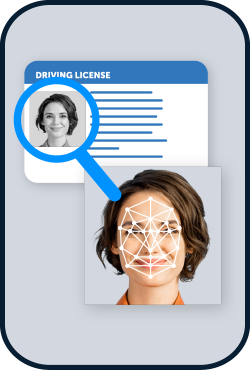
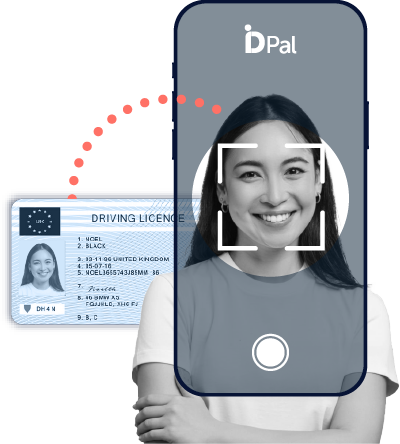
Blending liveness testing with biometric facial matching and document verification confirms not only that the person providing the information is present, but that they are the true owner of the documentation and that the documentation is authentic.

Active liveness requires the user to perform specific actions, such as blinking, smiling, or turning their head. Passive liveness operates without explicit user prompts, analysing signals from a single image or short video in the background. Passive methods typically deliver better user experience and higher conversion, while still meeting strong fraud-prevention thresholds when implemented correctly.

Passive liveness testing benefits include reduced infrastructure costs, unlike other solutions that require high bandwidth internet connections and large-scale server deployments to process video and using a single image approach that requires absolutely no participation delivers a better user experience; it improves automation rates and reduces customer abandonment for your business.

Effective liveness testing mitigates:

  • Photo attacks (printed images, phone displays)
  • Video replay attacks
  • Screen and virtual camera injection
  • 2D and 3D mask attacks
  • AI-generated and deepfake faces
  • Bot-assisted and scripted fraud attempts


Passive liveness testing is designed to handle scalable and automated fraud, not just one-off manual attacks.

Key considerations for businesses and organisations requiring a liveness testing solution  include independent testing results, false acceptance and rejection rates, device and camera compatibility, accessibility, privacy controls, and ease of integration.

Solutions should demonstrate resilience against emerging AI-driven fraud techniques, such as deepfakes, not just legacy photo or video attacks. They should also be designed to create minimal friction in the verification process to reduce user drop-off rates.

Discover more platform technologies

Learn more about ID-Pal’s technologies and solutions for identity verification and AML screening.

Find out how we can help your business grow